
The Key Difference
Adjectives and adverbs are both descriptive words, but they describe different things. Adjectives describe nouns or pronouns — they tell us what something is like. Adverbs describe verbs, adjectives, or other adverbs — they tell us how, when, where, or why something happens. Understanding this difference is essential for correct English grammar at the B1 level.
How to Spot the Difference
Ask yourself: What word is being described? If it's a noun or pronoun (person, place, thing, or idea), use an adjective. If it's a verb (action) or another adjective, use an adverb. Most adverbs are formed by adding -ly to an adjective: quick → quickly, slow → slowly.
Adjective vs Adverb: Side-by-Side Comparison
| Category | Adjective | Adverb |
|---|---|---|
| What it modifies | Modifies a noun or pronoun (describes a person, place, thing, or idea) | Modifies a verb, an adjective, another adverb, or an entire clause |
| Typical form | Base form (e.g., quick, happy, bright); no standard suffix required | Often formed by adding -ly to an adjective (e.g., quickly, happily, brightly); irregular forms also exist (e.g., fast, hard, well) |
| Position in sentence | Before the noun it modifies (attributive) or after a linking verb (predicative): the tall man / he is tall | Flexible position — can appear before or after the verb, at the start of a sentence, or directly before an adjective or adverb: She quickly left / Quickly, she left |
| Questions it answers | What kind? Which one? How many? How much? — e.g., a red car (what kind of car?) | How? When? Where? To what extent? How often? — e.g., she sang beautifully (how did she sing?) |
| Example word pairs | slow, careful, loud, bad, good, happy, bright, hard | slowly, carefully, loudly, badly, well, happily, brightly, hard |
| Positive example | She is a careful driver. (careful describes the noun driver) | She drives carefully. (carefully describes the verb drives) |
| Negative example | He is not a reckless person. (reckless modifies the noun person) | He does not drive recklessly. (recklessly modifies the verb drive) |
| Common mistakes | Using an adjective after a linking verb with an action verb: ✗ She felt badly (should be bad after the linking verb felt) | Using an adverb to modify a noun: ✗ a highly student (should be highly motivated student — adverb modifying the adjective) |
| Key signal words / tests | Can you place the word directly before a noun? Does it answer what kind or which? If yes → adjective | Does the word end in -ly? Does it modify a verb or adjective? Does it answer how, when, or where? If yes → adverb |
| Comparison and superlative | Short adjectives: add -er / -est → fast, faster, fastest; long adjectives: use more / most → more beautiful, most beautiful | Most adverbs use more / most → more quickly, most quickly; irregular: well → better → best; badly → worse → worst |
| Key Difference: An adjective describes what a noun is like (e.g., a quick runner), while an adverb describes how, when, where, or to what degree an action or quality occurs (e.g., she runs quickly). The simplest test: if the word modifies a noun or follows a linking verb to describe a subject, it is an adjective; if it modifies a verb, adjective, or another adverb, it is an adverb. | ||
Examples

She wore a beautiful dress to the party.
Adjective describing a noun (dress)
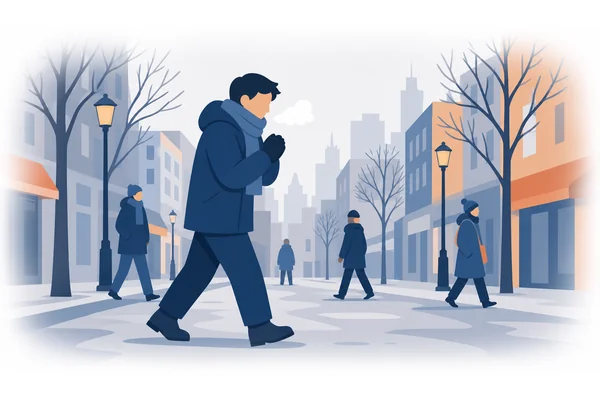
The weather is cold today.
Adjective describing the situation (with 'is')

He has a friendly personality.
Adjective describing a noun (personality)

She spoke beautifully at the conference.
Adverb describing a verb (spoke)
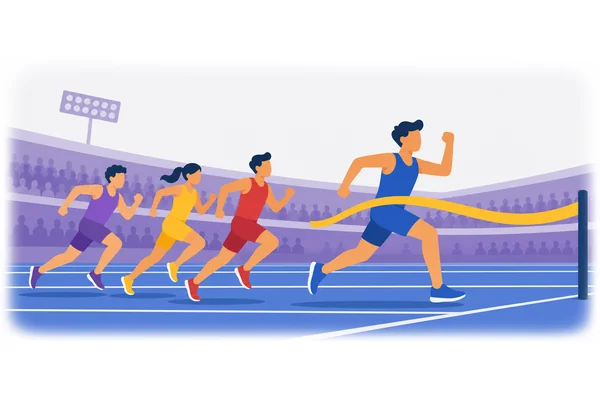
The runners moved quickly toward the finish line.
Adverb describing a verb (moved)

That movie was extremely interesting.
Adverb describing an adjective (interesting)
When to use it
Describing Objects
Use adjectives when you want to describe what something looks like or its qualities.
"I bought an expensive jacket." (adjective describing the noun 'jacket')
Describing Actions
Use adverbs when you want to describe how someone does something or how an action happens.
"She ran quickly to catch the bus." (adverb describing the verb 'ran')
Intensifying Descriptions
Use adverbs to strengthen or modify adjectives and other adverbs in your sentences.
"The movie was incredibly interesting." (adverb 'incredibly' modifies adjective 'interesting')
Signal words
adjective describes a noun
adverb describes a verb
adjective answers 'what kind'
adverb answers 'how'
adverbs often end in -ly
adjectives come before nouns
Common Mistakes
✕
Wrong
She played the piano beautiful.
✓
Correct
She played the piano beautifully.
Use an adverb (beautifully) to describe how she played the verb, not an adjective.
✕
Wrong
The food smelled deliciously.
✓
Correct
The food smelled delicious.
Verbs like 'smell,' 'taste,' and 'feel' are linking verbs. Use an adjective, not an adverb.
✕
Wrong
He walked very slow down the hallway.
✓
Correct
He walked very slowly down the hallway.
Use an adverb (slowly) to describe the verb (walked). 'Slow' is an adjective.
KEY TAKEAWAYS
What to Remember
- Adjectives describe nouns or pronouns and answer what something is like.
- Adverbs describe verbs, adjectives, or other adverbs and answer how, when, where, why.
- Many adverbs are formed by adding -ly to an adjective (quick → quickly).
- Some adverbs don't follow the -ly pattern and must be memorized individually.
- Use adjectives after linking verbs like "be," "seem," and "feel," not adverbs.