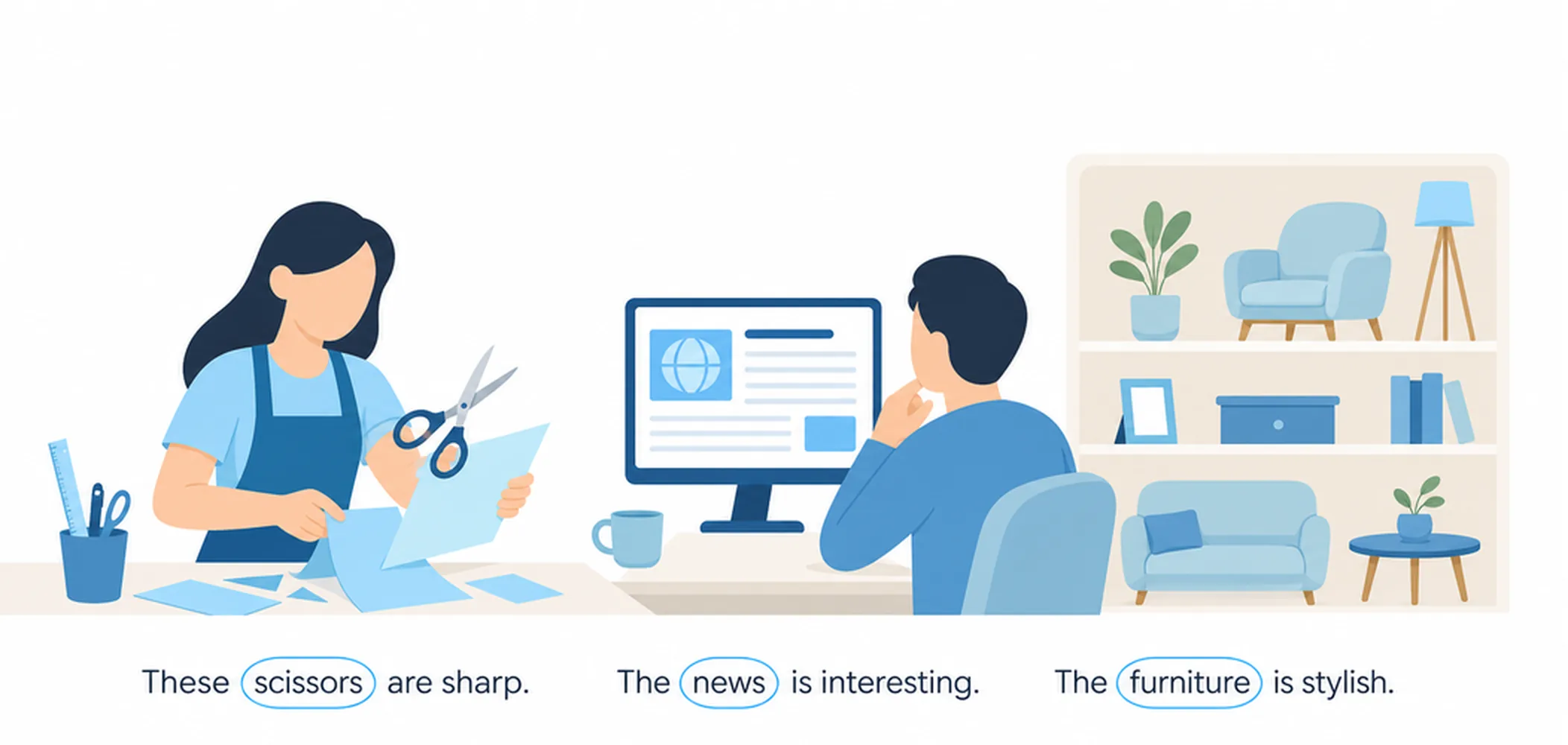
What are plural nouns that look singular?
Most plural nouns in English end with -s or -es (cats, boxes, buses). But some plural nouns do NOT end in -s. These nouns look singular, but they are actually plural. They are special nouns that change their spelling completely in the plural form. We call these irregular plurals.
Common plural nouns that look singular
Here are the most important plural nouns to learn. These are very common in English: people (plural of person), children (plural of child), men (plural of man), women (plural of woman), teeth (plural of tooth), feet (plural of foot). These words are plural, but they do not end in -s. We use them with plural verbs.
Other special plural nouns
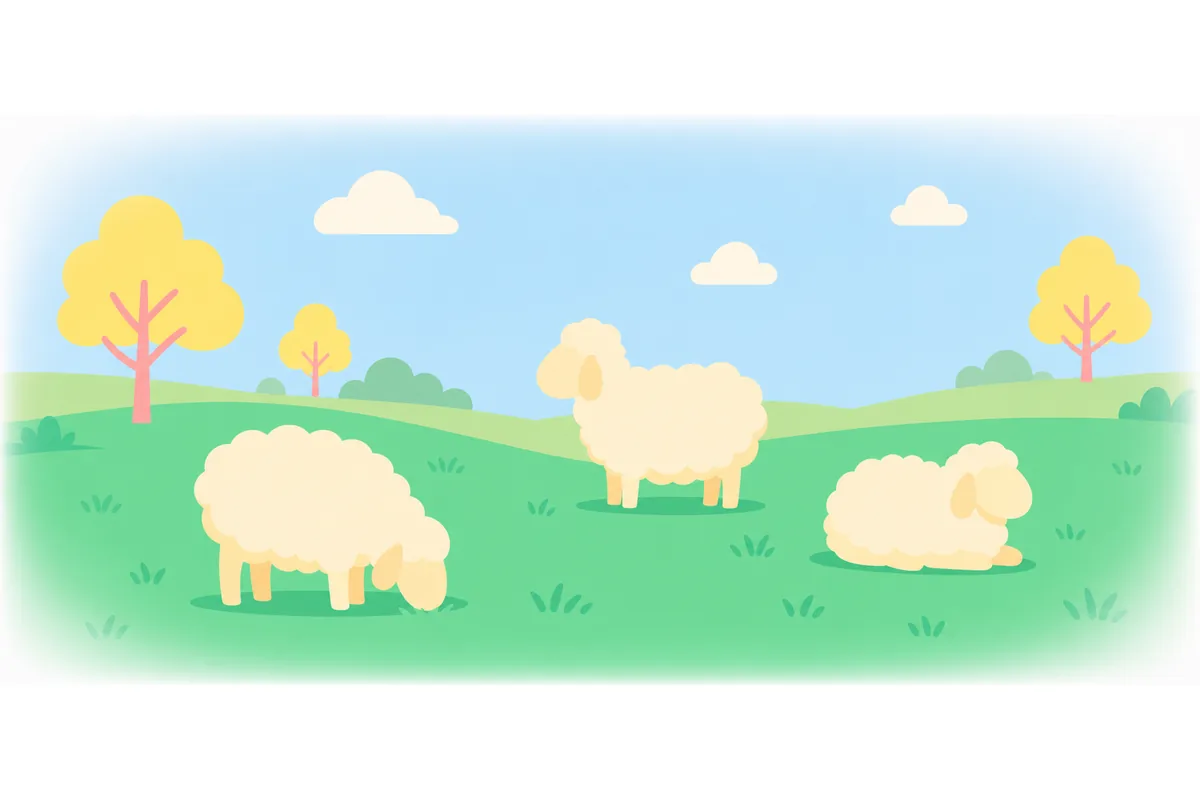
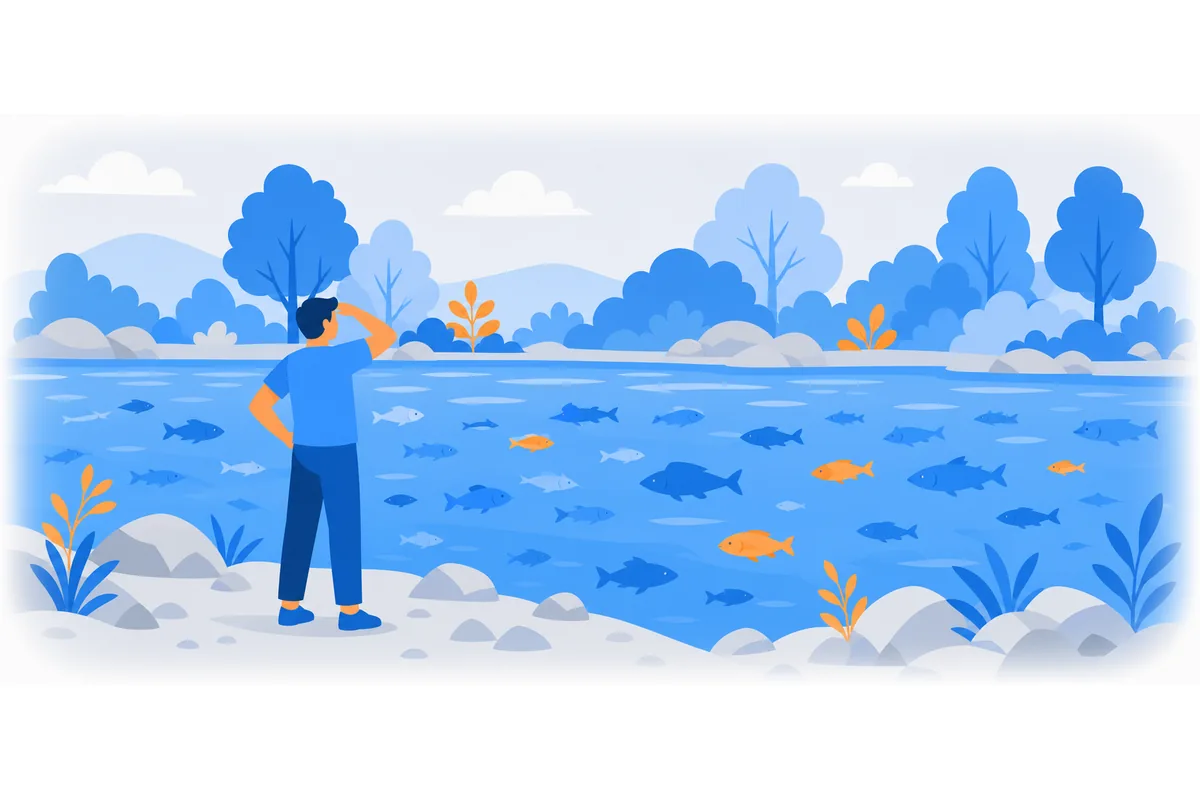
Some plural nouns have the same form as the singular. For example: sheep, fish, deer, and species. One sheep eats grass. Three sheep eat grass. The word does not change! These nouns are both singular and plural. We know they are plural because of the number word or the context.
Singular vs. Plural: Side-by-Side Reference
| Singular Form | Plural Form |
|---|---|
| man | men |
| woman | women |
| child | children |
| tooth | teeth |
| foot | feet |
| goose | geese |
| mouse | mice |
| louse | lice |
| ox | oxen |
| person | people |
Examples



What to Remember
- Most English plurals end in -s or -es, but some plurals look singular and change spelling completely.
- Irregular plurals like people, children, men, and women do not follow the standard -s or -es rule.
- Person becomes people, child becomes children, man becomes men, and woman becomes women in plural form.
- Tooth becomes teeth and foot becomes feet; these irregular plurals require memorization, not spelling rules.
- Remember: irregular plural nouns look different from their singular forms and cannot be identified by -s or -es.