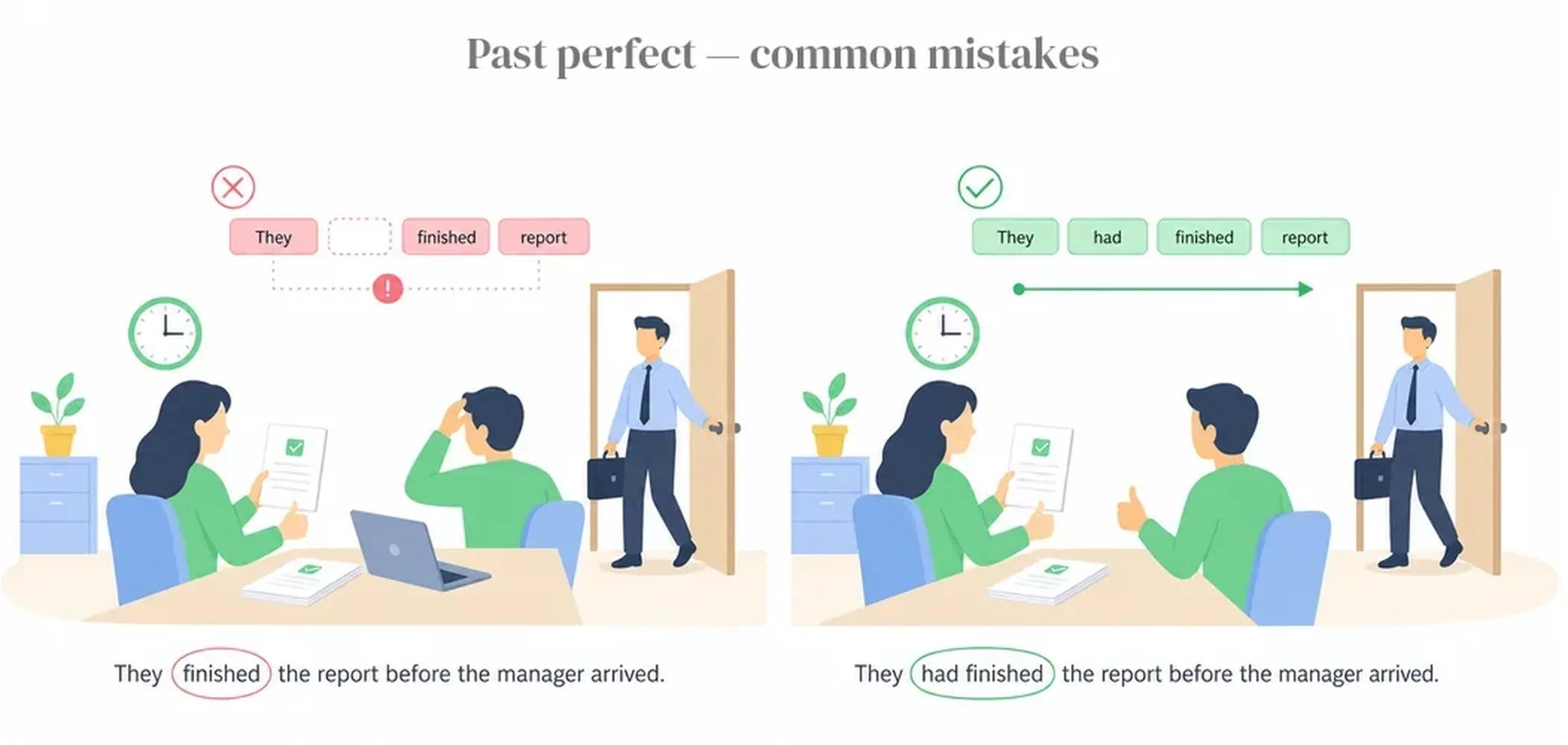
Why Learners Struggle with Past Perfect
The past perfect tense is tricky because it requires you to think about two past moments at the same time. You need to identify which action happened first, then use had + past participle for that earlier action. Many learners confuse it with simple past, overuse it, or forget that the structure must include both 'had' and the past participle. These mistakes are extremely common, especially when your native language doesn't have an equivalent structure.

Past Perfect vs Simple Past: Common Mistake Patterns
| Category | Incorrect: Simple Past (common mistake) | Correct: Past Perfect |
|---|---|---|
| Form | Subject + verb (past simple) e.g. went, ate, finished |
Subject + had + past participle e.g. had gone, had eaten, had finished |
| When to use | For a single completed action at a specific time in the past. Does not show the relationship between two past events. | For an action that was completed before another past action or a specific past time. Essential for showing sequence. |
| Positive example | "When she arrived, he left."Suggests he left at the same moment she arrived — meaning is unclear or wrong. | "When she arrived, he had already left."Clearly shows his departure happened before her arrival. |
| Negative example | "I didn't eat before the meeting started."Grammatically possible but misses the emphasis on the sequence of events. | "I hadn't eaten before the meeting started."Correctly shows the not-eating preceded the meeting's start. |
| Question example | "Did you lock the door before you left?"Acceptable in casual speech, but does not precisely convey the sequence. | "Had you locked the door before you left?"Precisely asks whether the locking occurred before the leaving. |
| Key signal words | yesterday, last week, in 2010, ago, then, at that momentLearners mistakenly use these with simple past even when a prior sequence is implied. | already, just, never, before, after, by the time, when, once, as soon as, for (+ duration before a past point)These words signal that the past perfect is required. |
Key Difference: The simple past simply states that something happened in the past, with no reference to any other past event. The past perfect is used when two events both occurred in the past and you need to make clear which one happened first. The most common learner mistake is using the simple past for both events — for example, "I ate before she arrived" — when the first event should be in the past perfect: "I had eaten before she arrived." If there is any sequence or "earlier-than" relationship between two past events, the earlier one almost always requires the past perfect.
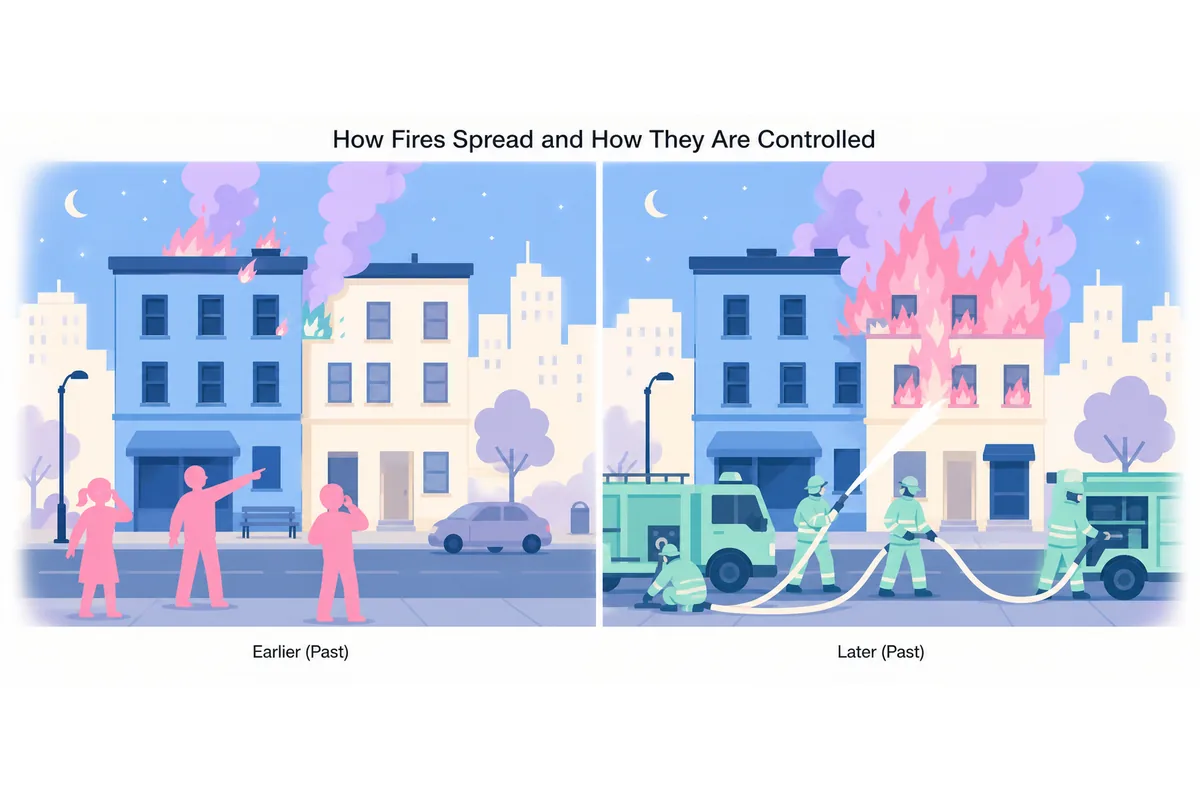
Examples



What to Remember
- Use had + past participle for the action that happened first in a sequence of two past events.
- Always identify which past action occurred earlier before deciding where to use past perfect.
- Don't confuse past perfect with simple past; past perfect shows the earlier of two past moments.
- Remember that past perfect requires both 'had' and the past participle—never omit either part.
- Avoid overusing past perfect; only use it when you need to show one past action happened before another.