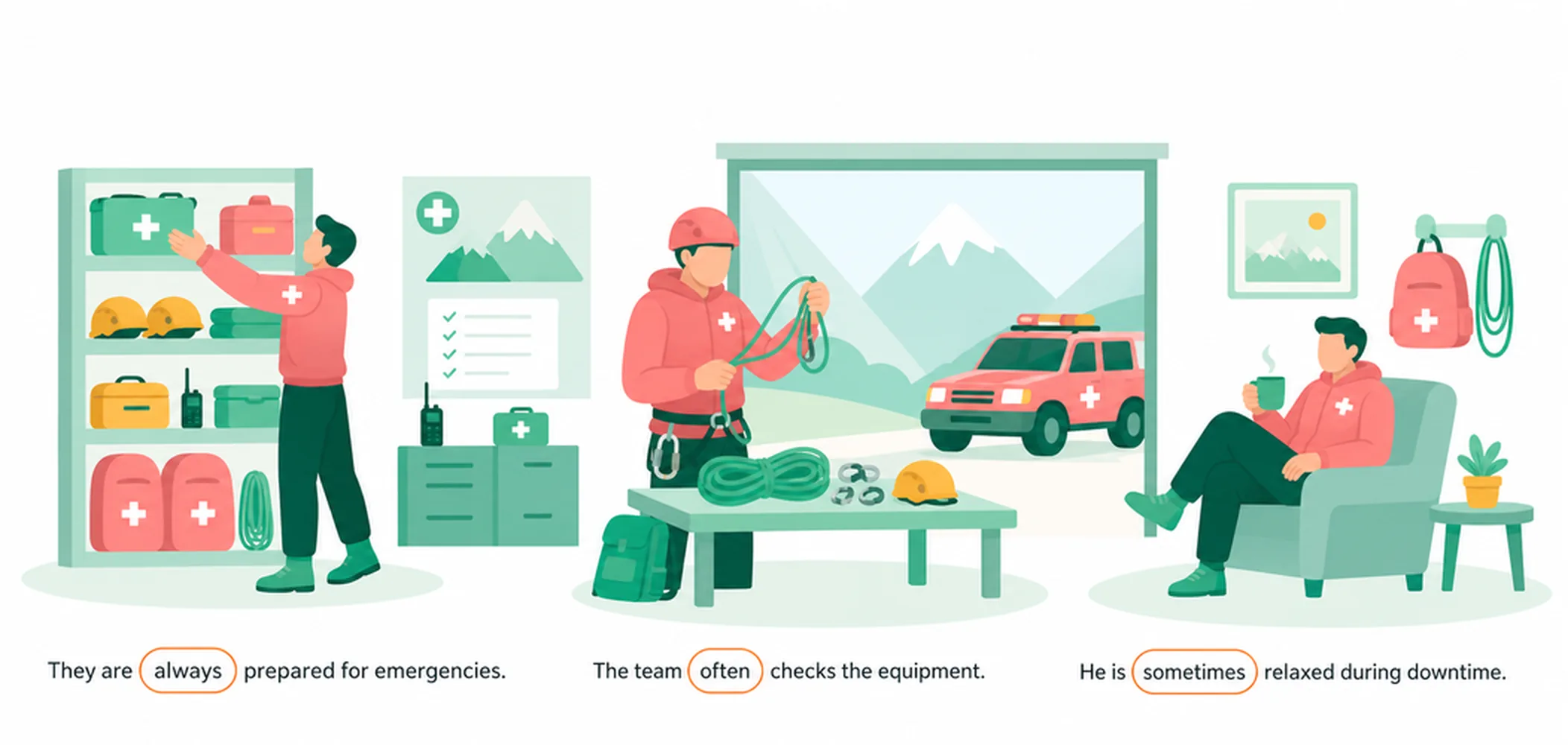
What Are Adverbs of Frequency?
Adverbs of frequency tell us how often something happens. Common adverbs of frequency include: always, usually, often, sometimes, rarely, seldom, and never. These adverbs help us describe habits, routines, and regular situations. When we use them with the verb 'be' (am, is, are, was, were), the word order is different from other verbs, so it's important to learn the correct structure.
Word Order: Adverbs of Frequency with 'Be'
With the verb 'be', the adverb of frequency comes AFTER the verb, not before it. This is the opposite of how we use adverbs of frequency with other verbs. The pattern is: Subject + BE + Adverb of Frequency + (Rest of sentence). For example: 'She is always happy' (correct), not 'She always is happy' (incorrect). Remember this rule applies to all forms of 'be': am, is, are, was, and were.
Practical Tips for Usage
In everyday English, adverbs like 'always', 'usually', and 'often' are the most common with 'be'. You'll hear them in conversations about daily habits and regular situations: 'I am usually tired on Mondays' or 'He is always late for meetings'. The adverb 'never' is also very useful for expressing negation without needing 'not': 'She is never rude' means the same as 'She is not ever rude', but sounds more natural.
All Forms of 'Be' with Adverbs of Frequency
| Pronoun | Positive | Negative | Question |
|---|---|---|---|
| Present Simple — Verb: am / is / are | |||
| I | I am always / usually / often / sometimes / rarely / never late. |
I am never / rarely / sometimes early. I am not always / usually / often on time. |
Am I always / usually / often on time? |
| You | You are always / usually / often / sometimes / rarely / never tired. |
You are never / rarely / sometimes wrong. You are not always / usually / often right. |
Are you always / usually / often busy? |
| He / She / It |
He is always / usually / often / sometimes / rarely / never home. She is always / usually / often / sometimes / rarely / never quiet. It is always / usually / often / sometimes / rarely / never cold. |
He is never / rarely / sometimes available. She is not always / usually / often late. |
Is he always / usually / often here? Is she never / rarely tired? |
| We | We are always / usually / often / sometimes / rarely / never together. |
We are never / rarely / sometimes apart. We are not always / usually / often busy. |
Are we always / usually / often on time? |
| You (plural) | You are always / usually / often / sometimes / rarely / never free. |
You are never / rarely / sometimes wrong. You are not always / usually / often correct. |
Are you always / usually / often together? |
| They | They are always / usually / often / sometimes / rarely / never ready. |
They are never / rarely / sometimes prepared. They are not always / usually / often early. |
Are they always / usually / often late? |
| Past Simple — Verb: was / were (irregular past forms) | |||
| I | I was always / usually / often / sometimes / rarely / never late. |
I was never / rarely / sometimes early. I was not always / usually / often wrong. |
Was I always / usually / often on time? |
| You | You were always / usually / often / sometimes / rarely / never tired. |
You were never / rarely / sometimes right. You were not always / usually / often correct. |
Were you always / usually / often busy? |
| He / She / It |
He was always / usually / often / sometimes / rarely / never home. She was always / usually / often / sometimes / rarely / never quiet. It was always / usually / often / sometimes / rarely / never cold. |
He was never / rarely / sometimes available. She was not always / usually / often late. |
Was he always / usually / often here? Was it never / rarely warm? |
| We | We were always / usually / often / sometimes / rarely / never together. |
We were never / rarely / sometimes apart. We were not always / usually / often late. |
Were we always / usually / often on time? |
| You (plural) | You were always / usually / often / sometimes / rarely / never free. |
You were never / rarely / sometimes ready. You were not always / usually / often prepared. |
Were you always / usually / often together? |
| They | They were always / usually / often / sometimes / rarely / never ready. |
They were never / rarely / sometimes prepared. They were not always / usually / often early. |
Were they always / usually / often late? |
1. Placement rule: With the verb be, adverbs of frequency always come after the verb, not before it.
Correct: She is always happy.
Incorrect: She always is happy.
2. Irregular forms: The verb be has unique irregular past forms:
am → was (I only) | is → was (he/she/it) | are → were (you/we/they)
3. Negative sentences: The adverb comes after be but before any adjective.
Correct: He is not always right. | She was never tired.
4. Questions: The adverb of frequency comes after the subject, not before it.
Correct: Are you always on time?
Incorrect: Are always you on time?
5. Frequency order (most to least):
always (100%) → usually (approximately 80%) → often (approximately 60%) → sometimes (approximately 40%) → rarely (approximately 10%) → never (0%)
Examples






What to Remember
- Adverbs of frequency (always, usually, often, sometimes, rarely, never) tell you how often something happens.
- With the verb 'be', place the adverb of frequency AFTER the verb, not before it.
- Example: "She is always late" — the adverb comes after 'is', not before it.
- With other verbs, adverbs of frequency come BEFORE the main verb, which is the opposite pattern.
- Common mistake: Don't say "She always is late" — this word order is incorrect with 'be'.