What Are Adverbs of Manner?
Adverbs of manner describe how an action is performed. They tell us the way or style in which something happens. Most adverbs of manner are formed by adding -ly to an adjective (quick → quickly, careful → carefully). These adverbs usually come after the main verb or at the end of the sentence. Understanding adverbs of manner helps you express actions more precisely and naturally in English.
Examples — page 1 of 5

She spoke softly to avoid waking the baby.
Everyday usage · How someone speaks

He drove dangerously on the wet road.
Common scenario · Manner of driving

The athlete ran quickly towards the finish line.
Sports context · Speed of action

She listened carefully to every word the teacher said.
School context · How someone listens

They worked together efficiently to complete the project.
Work context · How work is done
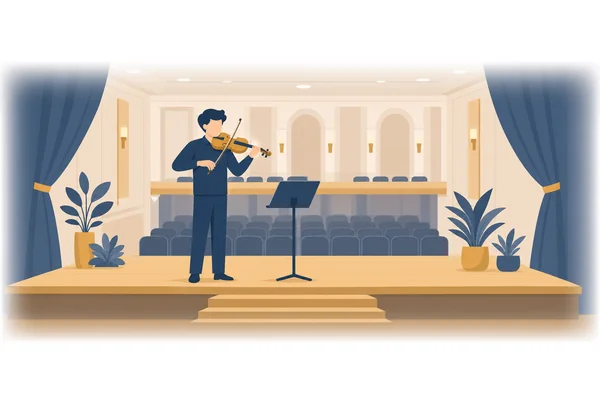
The musician played the violin beautifully at the concert.
Formal context · Quality of performance

He answered the question incorrectly during the exam.
Academic context · Accuracy of answer

She walked slowly through the museum, studying each painting.
Cultural context · Speed of movement

The children played happily in the park all afternoon.
Positive emotion · How children behaved

He explained the grammar rule clearly so everyone understood.
Teaching context · Manner of explanation
Signal words
softly
dangerously
quickly
carefully
efficiently
beautifully
incorrectly
slowly
happily
clearly
loudly
quietly
patiently
nervously
bravely
lazily
angrily
gently
rudely
politely
Common Mistakes
✕
Wrong
She spoke soft to me.
✓
Correct
She spoke softly to me.
Use the -ly adverb form to describe how an action is performed, not the adjective.
✕
Wrong
He runs quick in the morning.
✓
Correct
He runs quickly in the morning.
Adjectives cannot describe verbs; use the adverb form instead.
✕
Wrong
They finished the work careful and accurate.
✓
Correct
They finished the work carefully and accurately.
Multiple adverbs describing the same action should all use the -ly form.
✕
Wrong
She sang beautiful the song.
✓
Correct
She sang the song beautifully.
Adverbs of manner typically come after the verb and object, not between them.
KEY TAKEAWAYS
What to Remember
- Adverbs of manner describe how an action is performed, answering the question "how?"
- Most adverbs of manner are formed by adding -ly to an adjective (quick → quickly).
- Adverbs of manner typically come after the main verb or at the end of a sentence.
- Some adverbs of manner are irregular and don't follow the -ly pattern (well, fast, hard).
- Use adverbs of manner to add detail and precision when describing actions in English.