
What are adverbs of manner?
Adverbs of manner describe how an action happens. They answer the question 'how?' and tell us about the way something is done. Most adverbs of manner are formed by adding -ly to an adjective. For example, 'quick' becomes 'quickly', and 'careful' becomes 'carefully'. These adverbs help make your sentences more descriptive and interesting by giving specific details about actions.
How to form adverbs of manner
The most common way to form an adverb of manner is to add -ly to the end of an adjective. However, there are some spelling rules to remember:
| Rule | Example |
|---|---|
| If an adjective ends in -y, change it to -i before adding -ly | happy → happily |
| If an adjective ends in -le, change the -e to -y | gentle → gently |
Some adverbs of manner are irregular and don't follow the -ly pattern. Common examples include 'well', 'fast', and 'hard'. These adverbs have their own unique forms that must be memorized.
Where to place adverbs of manner
Adverbs of manner usually come after the main verb or after the object if there is one. For example: 'She speaks Spanish fluently' or 'He completed the task carefully'. In longer sentences with many words, the adverb of manner often appears at the end to avoid interrupting the flow. You can also place an adverb of manner at the beginning of a sentence for emphasis, but this is less common: 'Carefully, she opened the door.'
Common Adverbs of Manner
| Formation Rule | Adjective | Adverb of Manner | Example Sentence | Note |
|---|---|---|---|---|
| Regular: add -ly | slow | slowly | She walked slowly. | Most adjectives follow this rule |
| quick | quickly | He ran quickly. | — | |
| loud | loudly | They cheered loudly. | — | |
| clear | clearly | She spoke clearly. | — | |
| soft | softly | He whispered softly. | — | |
| calm | calmly | She waited calmly. | — | |
| Ends in -y: change to -ily | happy | happily | The children played happily. | Drop -y, add -ily |
| angry | angrily | He shouted angrily. | Drop -y, add -ily | |
| easy | easily | She solved it easily. | Drop -y, add -ily | |
| heavy | heavily | It rained heavily. | Drop -y, add -ily | |
| Ends in -le: change to -ly | gentle | gently | He touched it gently. | Drop -e, add -y |
| simple | simply | She explained it simply. | Drop -e, add -y | |
| terrible | terribly | He sang terribly. | Drop -e, add -y | |
| Irregular (no standard rule) | good | well | She sings well. | Most common irregular form; must be memorised |
| fast | fast | He drives fast. | Same form as adjective; fastly is not used | |
| hard | hard | She works hard. | Hardly means "almost not" — different meaning | |
| late | late | He arrived late. | Same form as adjective; lately means "recently" | |
| wrong | wrong | She went wrong. | Same form as adjective; no adverbial suffix needed |
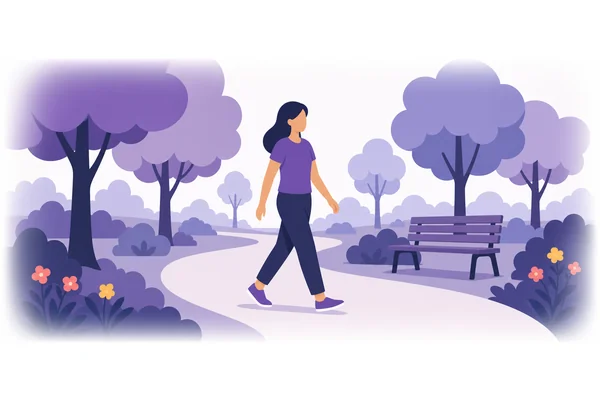
Examples





What to Remember
- Adverbs of manner describe how an action happens and answer the question 'how?'
- Most adverbs of manner are formed by adding -ly to an adjective base form.
- When an adjective ends in -y, change it to -i before adding -ly.
- Adverbs of manner make sentences more descriptive by providing specific details about actions.
- Some adverbs of manner are irregular and don't follow the standard -ly formation rule.