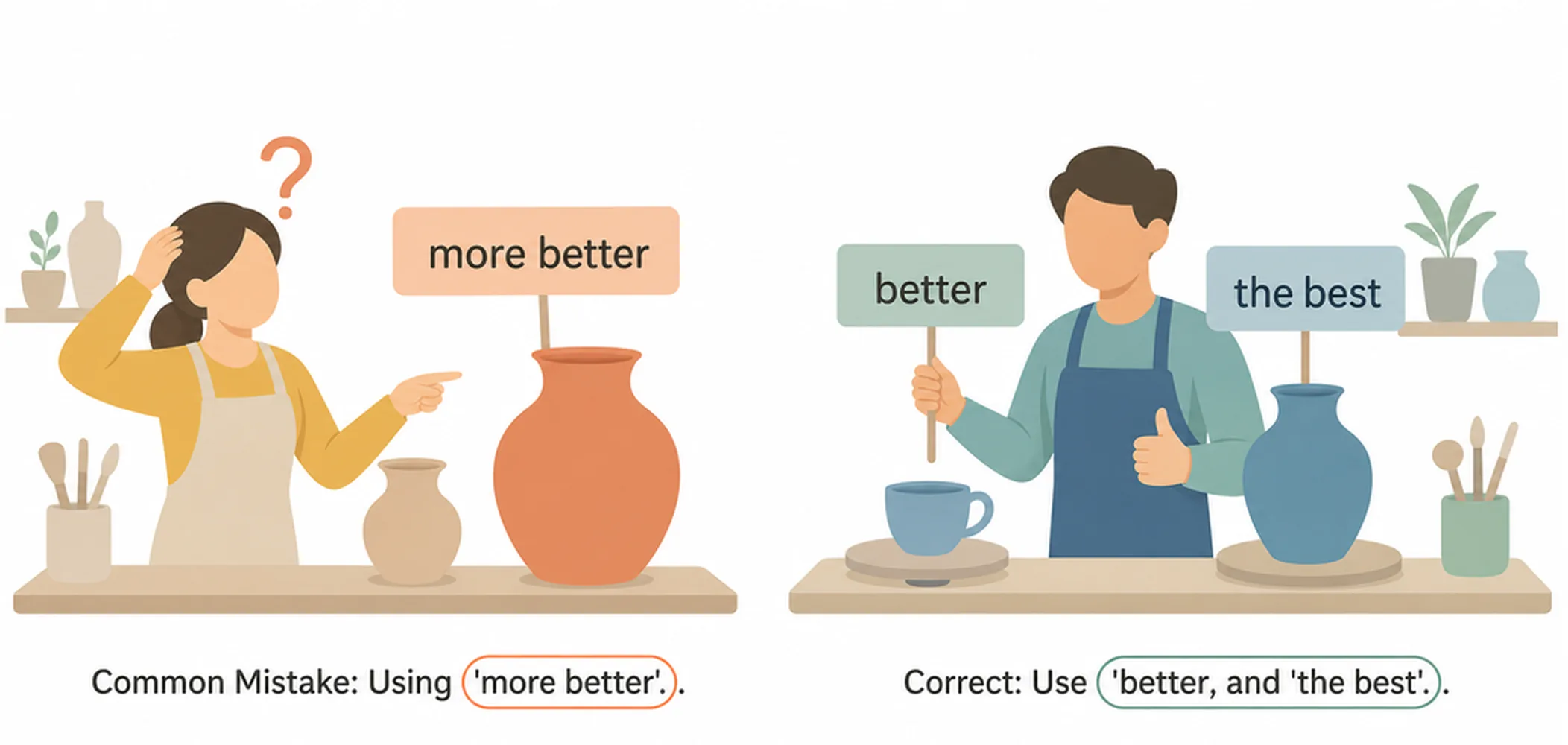
Why Learners Confuse Comparatives and Superlatives
Comparatives and superlatives are tricky because English has two different patterns: one-syllable adjectives use -er/-est, while longer adjectives use more/most. Additionally, some adjectives are irregular, and learners often mix up spelling rules or forget necessary words like 'the' with superlatives. Understanding these patterns will help you avoid the most common mistakes.
Which Pattern Should You Use? A Step-by-Step Guide
Choosing between the comparative and superlative forms depends on what you are comparing. Use this guide to identify the correct pattern for your sentence.
| Use Comparative When | Use Superlative When | Example |
|---|---|---|
| Comparing two things or people | Comparing three or more things or people | Comparative: "This book is longer than that one." Superlative: "This is the longest book in the series." |
| Showing a difference between one thing and another | Showing which one stands out most in a group | Comparative: "Sarah is taller than Emma." Superlative: "Sarah is the tallest in the class." |
| Using "-er" (short adjectives) or "more" (long adjectives) | Using "-est" (short adjectives) or "most" (long adjectives) | Comparative: "more expensive," "faster" Superlative: "most expensive," "fastest" |
| Expressing "A is X-er/more than B" | Expressing "A is the X-est/most of all" | Comparative: "Tokyo is busier than Kyoto." Superlative: "Tokyo is the busiest city in Japan." |
Quick Checklist: Count the Items
Comparing exactly 2 items? Use the comparative. Comparing 3 or more items? Use the superlative.
Common Mistake: Using the superlative when only two things are compared.
Wrong: "Of the two sisters, Maria is the tallest." Correct: "Of the two sisters, Maria is taller."
Form Guide for Short Adjectives (one or two syllables):
Comparative: Add -er (faster, bigger). Superlative: Add -est (fastest, biggest).
Form Guide for Long Adjectives (three or more syllables):
Comparative: Use "more" before the adjective (more beautiful, more intelligent). Superlative: Use "most" before the adjective (most beautiful, most intelligent).
Examples

My new apartment is larger than my old one, but it's also more expensive.
Comparing two things · Adjectives

She's the most talented musician in the orchestra.
Superlative · The is required
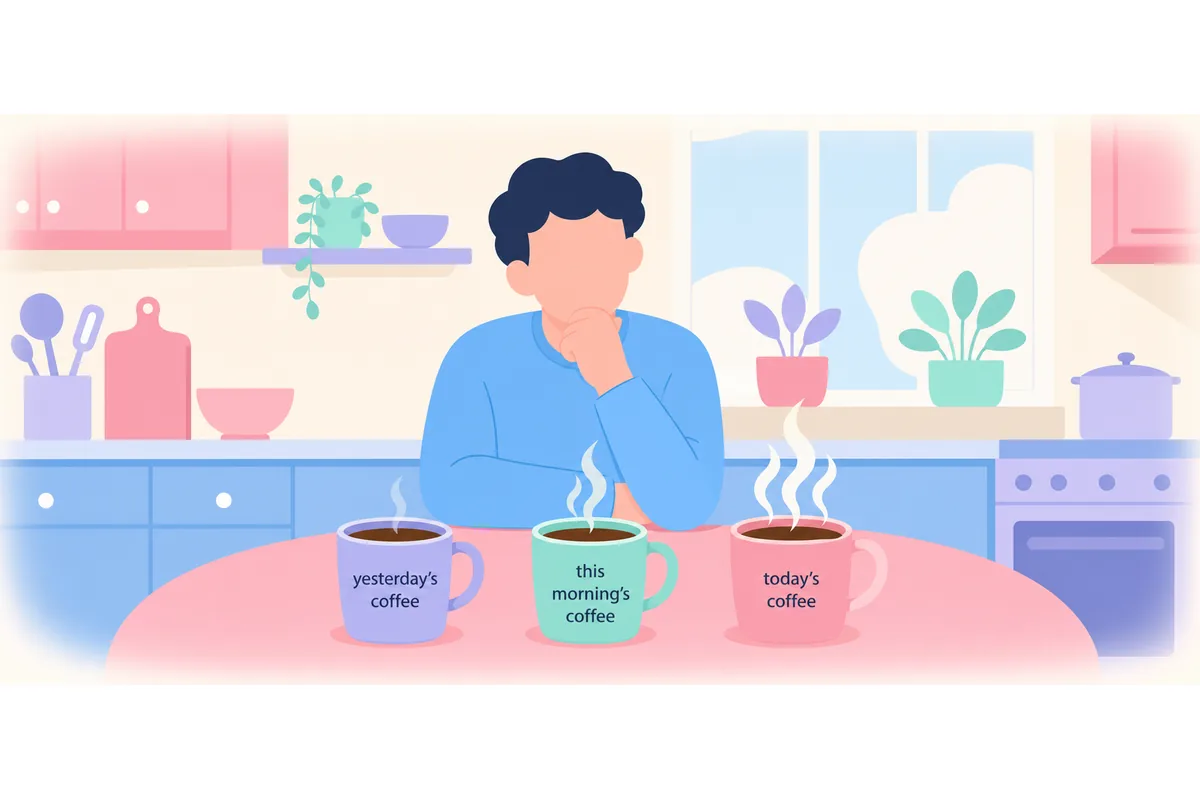
This coffee is hot, yesterday's coffee was hotter, but the coffee from this morning was the hottest.
One-syllable adjective progression

The results are better than expected, but they're still not the best we've achieved.
Irregular adjectives · good/better/best
When to use it
Comparing two people
Use comparative forms when you're describing differences between exactly two people, things, or groups.
"John is taller than Michael." or "Sarah is more creative than her colleague."
Ranking in a group
Use superlatives when you want to show which person or thing is the best, worst, biggest, or smallest in a group of three or more.
"She's the smartest student in the entire class." or "That's the most beautiful painting in the museum."
Describing quantity change
Use comparatives with 'more' or 'less' to show increase or decrease in quality or quantity.
"This method is more efficient than the old one." or "The second version is less complicated."
Signal words
than
the
as...as
much
more
most
less
least
Common Mistakes
✕
Wrong
This restaurant is more good than the other one.
✓
Correct
This restaurant is better than the other one.
Good is irregular. Use 'better' for comparative, not 'more good'.
✕
Wrong
She is the most tall person in the class.
✓
Correct
She is the tallest person in the class.
Tall is one syllable. Use -est ending, not 'most tall'.
✕
Wrong
This is most expensive coffee I've ever bought.
✓
Correct
This is the most expensive coffee I've ever bought.
Superlatives always need 'the' before them.
✕
Wrong
My sister is more intelligent than me.
✓
Correct
My sister is more intelligent than I am. (or: than me.)
Formal English prefers 'than I am' after comparatives, though 'than me' is common in spoken English.
✕
Wrong
This is the more interesting book of the two.
✓
Correct
This is the more interesting book of the two. (or: This is the most interesting book of the two.)
With two items, use the comparative 'more'; with three or more, use the superlative 'most'.
✕
Wrong
He ran fastly than his friend.
✓
Correct
He ran faster than his friend.
Fast becomes 'faster' in the comparative form. Don't add -ly to adjectives that already have comparative forms.
✕
Wrong
That was the worse mistake I could have made.
✓
Correct
That was the worst mistake I could have made.
Bad is irregular. The superlative is 'worst', not 'worse' (which is the comparative form).
KEY TAKEAWAYS
What to Remember
- Use -er/-est for one-syllable adjectives; use more/most for longer adjectives.
- Always use 'the' before superlative adjectives to indicate the highest degree.
- Remember irregular comparatives and superlatives like good/better/best and bad/worse/worst.
- Double the final consonant before adding -er/-est if needed for short adjectives.
- Don't mix patterns: never say "more bigger" or "most fastest."