Comparatives & Superlatives in Real English
Comparatives and superlatives help us compare people, things, and ideas. Comparatives (-er or more) compare two items, while superlatives (-est or most) identify the single best, worst, or most extreme example. These examples show how native speakers use them in daily life, work, and formal situations.
Examples — page 1 of 5
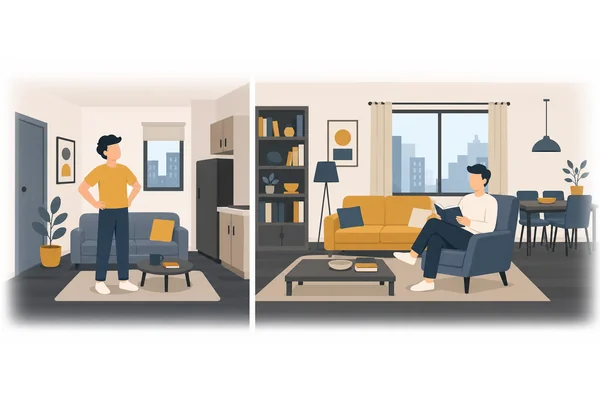
My apartment is smaller than yours, but the rent is higher.
Everyday comparison · Housing

This coffee is much stronger than the one I made yesterday.
Casual observation · Food & drink

Sarah is the most intelligent student in our class.
Formal assessment · School

Electric cars are becoming more environmentally friendly than petrol engines.
General knowledge · Environment

The new smartphone is faster, lighter, and more expensive than last year's model.
Product comparison · Technology

London is bigger than Bristol, but Dublin is the most expensive city in Ireland.
Geography facts · Cities

This restaurant has the best seafood I've ever tasted.
Personal opinion · Food

The project deadline is more urgent than we initially thought.
Professional context · Work

Winter is colder and darker, but summer offers longer days.
Seasonal description · Weather

Her presentation was clearer and more engaging than his, making it the most successful one of the day.
Work evaluation · Presentations
Signal words
than
as...as
much
far
slightly
the most
the least
even
equally
by far
not as
more
less
Common Mistakes
✕
Wrong
This car is more faster than that one.
✓
Correct
This car is faster than that one.
Don't use 'more' with -er form. Choose one: 'faster' OR 'more fast' (not standard).
✕
Wrong
She is the most smartest person I know.
✓
Correct
She is the smartest person I know.
Don't use 'most' with -est form. Use only one superlative marker.
✕
Wrong
This exercise is more difficult as the last one.
✓
Correct
This exercise is more difficult than the last one.
Use 'than' (not 'as') with comparatives.
✕
Wrong
He is the most tall player on the team.
✓
Correct
He is the tallest player on the team.
Use -est superlative form with short adjectives, not 'most'.
KEY TAKEAWAYS
What to Remember
- Use comparatives with -er or more to compare exactly two people, things, or ideas.
- Use superlatives with -est or most to show the single highest or lowest example.
- One-syllable adjectives add -er or -est; longer adjectives use more or most instead.
- Irregular adjectives like good, bad, and far have special comparative and superlative forms.
- Don't mix comparative and superlative forms; use than with comparatives but the with superlatives.