What are Comparatives?
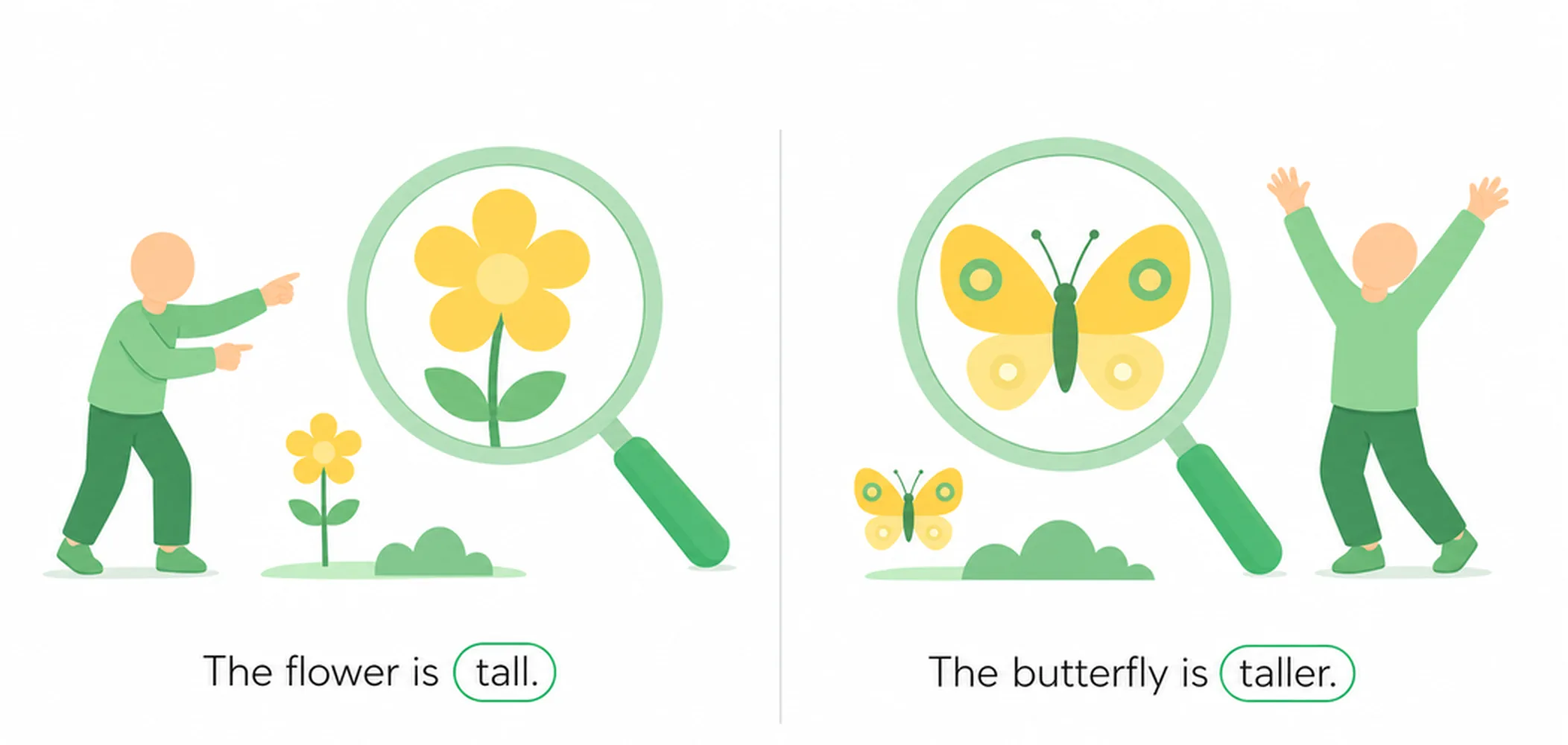
Comparatives are adjectives or adverbs that we use to compare two people, things, or situations. When you want to say that one thing is different from another—bigger, smaller, faster, slower, better, worse—you use a comparative form. For example, 'This car is faster than that one' uses the comparative 'faster' to show the difference between two cars.
How to Form Comparatives
There are two main rules for forming comparatives. For short adjectives (usually one or two syllables), add -er to the end: tall → taller, fast → faster, happy → happier. For longer adjectives (three or more syllables), use 'more' before the adjective: beautiful → more beautiful, expensive → more expensive. After the comparative, you usually add 'than' to introduce the second thing you are comparing.
Special Cases and Irregular Forms
Some adjectives have irregular comparative forms that you need to memorize. The most common are: good → better, bad → worse, far → farther/further, little → less. Also, when a short adjective ends in a single consonant with a vowel before it, double the consonant: big → bigger, hot → hotter, sad → sadder. These exceptions are important to remember for accurate English.
The Comparative Scale
| Category | ⬅ Base Form (Positive) |
⚖ Comparative Form (Midpoint) |
➡ Superlative Form (Extreme) |
|---|---|---|---|
| Form | Adjective used on its own with no modification | Adjective + -er (short words) or more + adjective (long words) | Adjective + -est (short words) or most + adjective (long words) |
| When to use | To describe a quality without any comparison | To compare two people, things, or groups with each other | To identify the highest or lowest degree within a group of three or more |
| Temperature scale | cold | colder | coldest |
| Size scale | tall | taller | tallest |
| Speed scale | fast | faster | fastest |
| Complexity scale | difficult | more difficult | most difficult |
| Beauty scale | beautiful | more beautiful | most beautiful |
| Irregular scale | good / bad / far | better / worse / farther | best / worst / farthest |
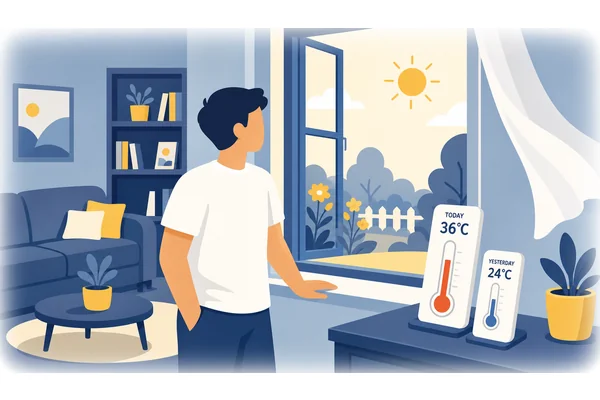
| Positive example | "Today is cold." | "Today is colder than yesterday." | "This is the coldest day of the year." |
| Negative example | "The room is not cold." | "This room is not colder than that one." | "This is not the coldest place I've been." |
| Question example | "Is it cold outside?" | "Is it colder today than yesterday?" | "Which month is the coldest?" |
| Key signal words | very, quite, extremely, rather, so | than, much, a little, far, even, slightly | the (always used before), ever, by far, in the class / world / group |
| 🔑 Key Difference: Adjectives exist on a graduated scale. The base (positive) form simply describes a quality with no comparison ("It is cold"). The comparative form acts as the midpoint on the scale, comparing exactly two things and always paired with the word than ("It is colder than before"). The superlative form marks the extreme end of the scale, identifying the highest or lowest degree among three or more items and always preceded by the ("It is the coldest day"). Short adjectives (one syllable) typically add -er / -est, while longer adjectives (two or more syllables) use more / most. Irregular adjectives (good → better → best) must simply be memorised. | |||
Examples





What to Remember
- Comparatives compare two people, things, or situations using special adjective or adverb forms.
- For short adjectives (one or two syllables), add -er: tall becomes taller.
- For long adjectives (three or more syllables), use more before the adjective.
- Always use than after the comparative form to introduce the second item.
- Some adjectives are irregular and don't follow standard rules: good becomes better, bad becomes worse.