Grammar B1 Order of Adjectives

Order of adjectives — common mistakes

Order of adjectives — common mistakes

Why adjective order matters

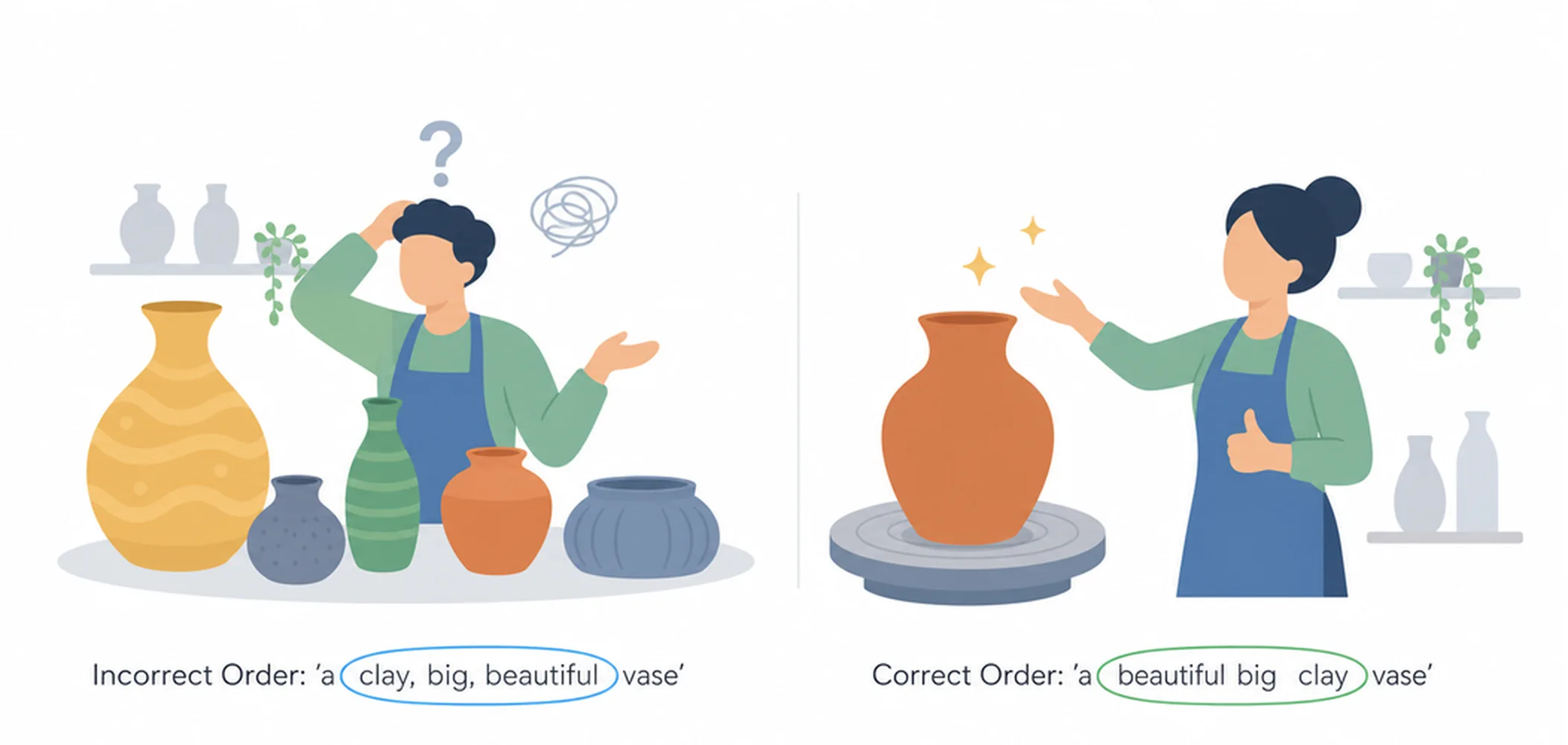
English has strict rules about the order of adjectives, but many learners place them randomly. This happens because your native language might have different rules, or the order seems unclear. When adjectives are in the wrong order, native speakers notice immediately—even if they understand you. Learning the correct sequence will make your English sound more natural and polished.

The adjective order sequence

Adjectives follow this general order: opinion → size → age → shape → colour → origin → material → purpose. For example: a beautiful (opinion) big (size) old (age) wooden (material) table. You usually don't use all categories together, but when you do use multiple adjectives, this order matters. Most common mistakes happen when learners mix up opinion/size with colour, or origin with material.

Common Adjective Order Mistakes at a Glance

Incorrect Correct Rule Violated Note
a metal big box a big metal box Size before Material Material always comes just before the noun.
a round beautiful table a beautiful round table Opinion before Shape Opinion/judgment adjectives come first of all.
an Italian young chef a young Italian chef Age before Origin/Nationality Origin/nationality comes after age, not before it.
a silk long scarf a long silk scarf Size/Length before Material Material always sits closest to the noun.
a red small car a small red car Size before Color Color follows size, never precedes it.
an old lovely cottage a lovely old cottage Opinion before Age Subjective opinions always lead the sequence.
a wooden antique French chair an antique French wooden chair Age → Origin → Material Multiple adjectives must follow the full sequence.
a rectangular big swimming pool a big rectangular swimming pool Size before Shape Size comes before shape in the fixed order.
blue two pens two blue pens Determiner/Number before Color Numbers act as determiners and always come first.
a German old black car an old black German car Origin before Age and Color Age comes first, then color, then origin/nationality at the end.

Examples

She has beautiful long brown eyes.
Opinion → size/length → colour. Natural and fluent.
I want to buy a comfortable modern Italian sofa.
Opinion → age → origin → noun. Standard order in everyday speech.
They served delicious cold white wine at the party.
Opinion → temperature → colour. Common sequence for describing food/drink.
He wore an expensive dark leather jacket.
Opinion → colour → material. Typical fashion description order.
When to use it
Fashion & clothing
Describing clothes uses opinion, colour, material, and purpose adjectives in sequence.
"I love that elegant white silk blouse."
Real estate & homes
When describing houses, use size, age, origin, and material in the correct order.
"They own a spacious old Victorian brick house."
Food & cooking
Food descriptions typically follow opinion, temperature, colour, and origin patterns.
"This delicious hot Thai curry is amazing."
Objects & possessions
When describing cars, furniture, or equipment, combine opinion, size, colour, and origin.
"He drives a beautiful small red French sports car."
Signal words
beautiful red wooden small old French long leather Italian plastic
Common Mistakes
Wrong
She wore a red beautiful dress.
Correct
She wore a beautiful red dress.
Opinion adjectives (beautiful) come before colour (red), not after.
Wrong
I bought a wooden small table.
Correct
I bought a small wooden table.
Size (small) comes before material (wooden) in the correct sequence.
Wrong
She wore a French blue expensive dress to the party.
Correct
She wore an expensive blue French dress to the party.
Adjectives should follow the order: size/quality, color, origin—not origin, color, size.
Wrong
She wore a German blue elegant dress to the party.
Correct
She wore an elegant blue German dress to the party.
Adjectives must follow the correct order: opinion (elegant) comes before colour (blue), which comes before origin (German).
Wrong
I saw a plastic green toy.
Correct
I saw a green plastic toy.
Colour (green) comes before material (plastic), not after.
Wrong
He wore a black long expensive coat to the party.
Correct
He wore an expensive long black coat to the party.
Adjectives should follow the order: opinion (expensive) → size/length (long) → colour (black), not colour first.
Wrong
She wore a small interesting red dress.
Correct
She wore an interesting small red dress.
Opinion adjectives (interesting) must come before size adjectives (small) in English adjective order.
KEY TAKEAWAYS

What to Remember

  • English adjectives follow a strict order: opinion, size, age, shape, colour, origin, material, purpose.
  • Wrong adjective order makes native speakers notice immediately, even if they understand your meaning.
  • Place opinion and size adjectives before age, shape, and colour adjectives.
  • Origin and material adjectives come before purpose adjectives at the end of sequences.
  • Most learners place adjectives randomly because their native language has different ordering rules.
← Previous
Origin adjectives — nationality and material
Next →
What are adverbs of frequency?