What Are Contrast and Concession Markers?
Discourse markers are connecting words and phrases that help organize your ideas and show relationships between sentences. Contrast markers highlight differences between ideas, while concession markers acknowledge something true but then shift to an unexpected or opposite point. Both types help you write and speak more fluently and naturally. For example, 'however' contrasts two ideas, while 'although' introduces a concession—admitting one fact before presenting another.
Contrast vs. Concession: What's the Difference?
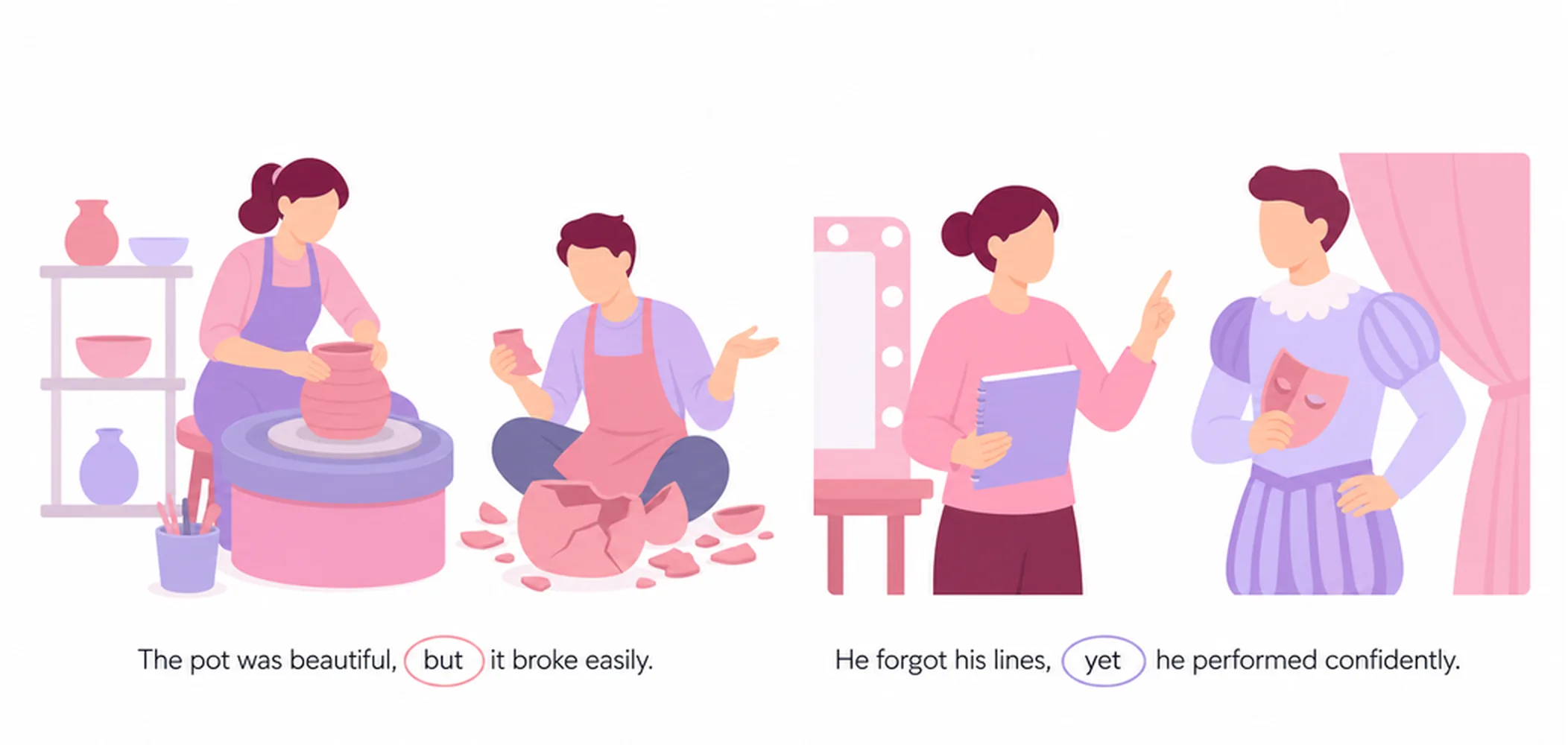
Contrast markers (like 'but', 'yet', 'on the other hand') simply show that two ideas are different or opposite. Concession markers (like 'although', 'despite', 'even though') acknowledge a fact that you might expect to lead one way, but then show it leads another way. Think of it this way: contrast = two different things, concession = admitting something true, then surprising the reader with what follows. Understanding this difference helps you choose the right marker for your message.
Why Use These Markers?
These markers make your writing clearer, more sophisticated, and easier to follow. They prevent choppy sentences and help readers understand how your ideas connect. Using a variety of these markers shows advanced language control and prevents repetition of simple connectors like 'but'. They are essential in essays, presentations, and professional communication at the C1 level.
Contrast and Concession Markers: Complete Reference Table
| Marker | Type | Grammatical Category | Typical Position | Example | Note |
|---|---|---|---|---|---|
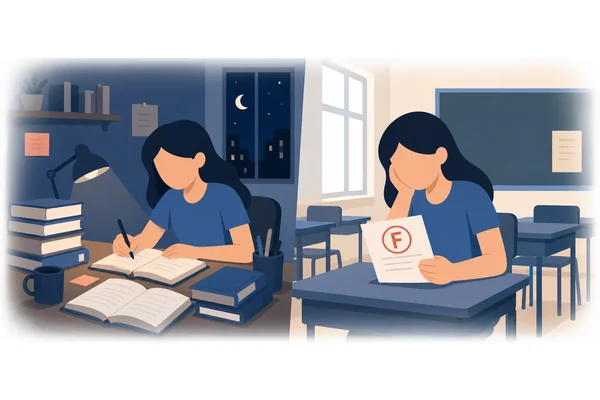
| however | Contrast | Adverb (conjunctive) | Sentence-initial or mid-sentence; followed by comma | He studied hard. However, he failed the exam. | Formal; links two independent clauses |
| on the other hand | Contrast | Adverbial phrase | Sentence-initial; followed by comma | City life is exciting. On the other hand, it can be stressful. | Signals a contrasting viewpoint or option; often paired with on the one hand |
| yet | Contrast | Coordinating conjunction / Adverb | Between clauses (conjunction) or sentence-initial (adverb) | She was tired, yet she kept working. | Slightly formal; implies surprise at the contrast |
| in contrast | Contrast | Adverbial phrase | Sentence-initial; followed by comma | Summer is hot here. In contrast, winter is very mild. | Highlights a direct, clear difference between two things |
| while / whilst | Contrast | Subordinating conjunction | Start of subordinate clause (initial or mid-sentence) | While he prefers tea, she drinks coffee. | Whilst is more British/formal; introduces a dependent clause |
| whereas | Contrast | Subordinating conjunction | Start of subordinate clause (initial or mid-sentence) | He is outgoing, whereas his brother is shy. | Emphasises a stark or surprising difference; more formal than while |
| nevertheless | Concession | Adverb (conjunctive) | Sentence-initial or mid-sentence; followed by comma | The task was difficult. Nevertheless, they completed it. | Formal; acknowledges a point but overrides it |
| nonetheless | Concession | Adverb (conjunctive) | Sentence-initial or mid-sentence; followed by comma | There were risks. Nonetheless, they proceeded. | Near-synonym of nevertheless; slightly less formal |
| although | Concession | Subordinating conjunction | Start of subordinate clause (initial or mid-sentence) | Although it was raining, we went for a walk. | Introduces a concessive clause; comma used when clause is sentence-initial |
| even though | Concession | Subordinating conjunction (phrase) | Start of subordinate clause (initial or mid-sentence) | Even though she knew the answer, she stayed silent. | Stronger emphasis than although; stresses a real, not hypothetical, fact |
| even if | Concession | Subordinating conjunction (phrase) | Start of subordinate clause (initial or mid-sentence) | Even if it rains, we will go. | Refers to a hypothetical or uncertain condition; cf. even though (factual) |
| despite | Concession | Preposition | Before a noun phrase; can be sentence-initial | Despite the rain, we went for a walk. | Takes a noun phrase (not a clause); more concise than despite the fact that |
Examples





What to Remember
- Contrast markers like 'however' and 'but' show differences between two ideas or statements.
- Concession markers like 'although' and 'despite' acknowledge one fact before presenting an opposite point.
- Place contrast markers at the sentence start or before the contrasting idea for clarity.
- Concession markers introduce subordinate clauses; use them before the acknowledged fact, not after.
- Both marker types improve fluency and cohesion by explicitly showing relationships between your ideas.