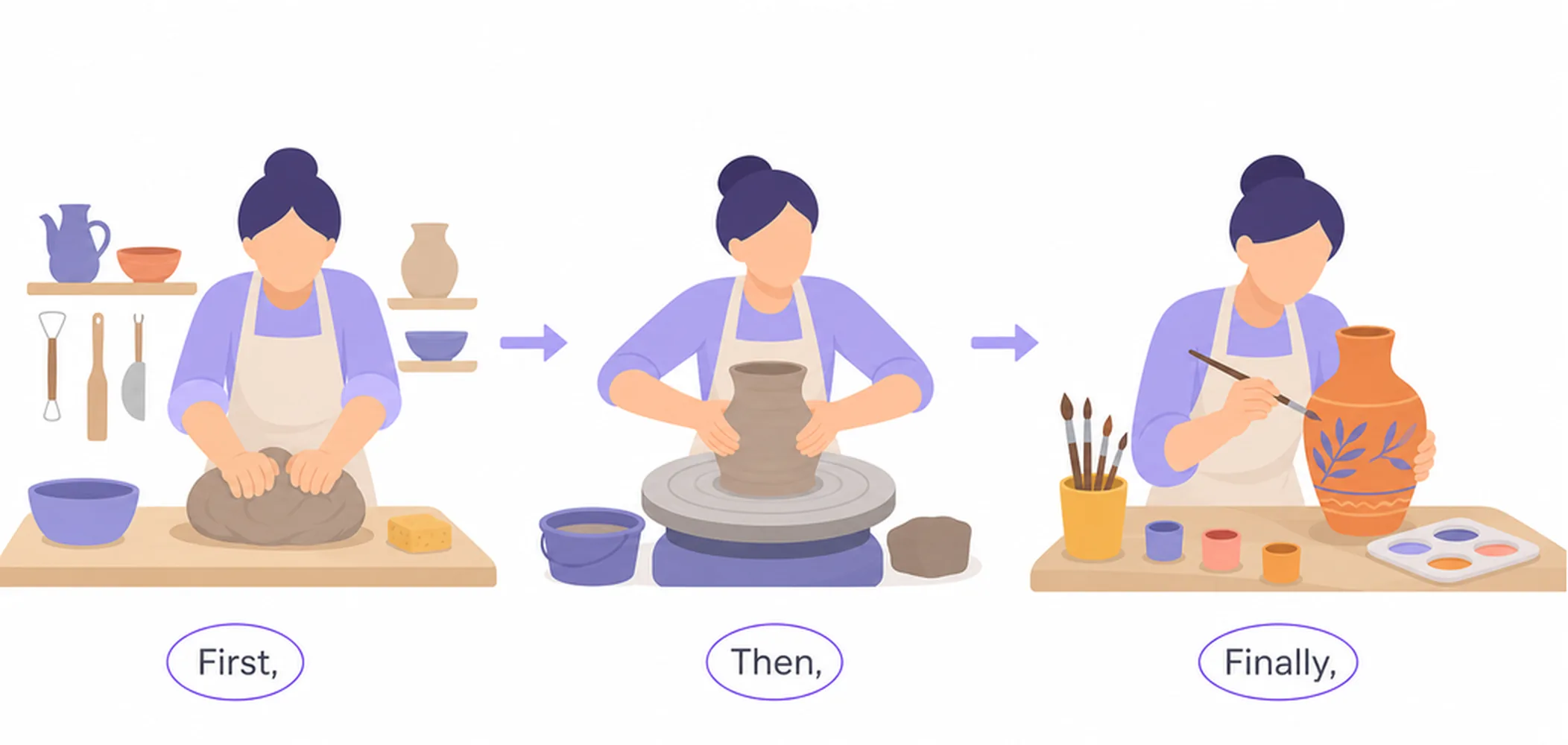
What Are Discourse Markers for Sequencing?
Discourse markers for sequencing are words and phrases that help you organize ideas in a logical order. They show the relationship between sentences and paragraphs by indicating what comes first, second, next, or finally. These markers make your writing and speech clearer and easier to follow. Common sequencing markers include: first, second, then, next, after that, finally, and in conclusion. Using them well is a sign of advanced English communication.
Why Sequencing Markers Matter
Without sequencing markers, your ideas can feel disconnected and hard to follow. These markers act like signposts that guide your reader or listener through your argument or story. They are especially important in academic writing, presentations, and formal explanations. For example, they help you move from an introduction to the main points and finally to a conclusion. Learning to use them naturally shows that you can structure complex information effectively.
Common Sequencing Markers by Position
```html
| Position in Text | Common Markers |
|---|---|
| At the beginning | First, Second, To start with, Initially |
| In the middle | Then, Next, After that, Subsequently, Meanwhile, Furthermore |
| At the end | Finally, Lastly, In conclusion, To conclude, In summary |
You can also use numbered markers like firstly, secondly, and thirdly for very clear organization. The key is to choose markers that fit your style and context naturally.
```
Sequencing Markers at a Glance
| Discourse Marker | Position in Sequence | Register | Example | Usage Note |
|---|---|---|---|---|
| First / Firstly | Beginning | Formal | Firstly, preheat the oven to 180°C. | Use to introduce the first step or point; firstly is more common in British English. |
| First of all | Beginning | Neutral | First of all, log in to your account. | Slightly more emphatic than first; works in both spoken and written contexts. |
| To begin with | Beginning | Neutral | To begin with, gather all the ingredients. | Common in instructions and narratives; interchangeable with first of all. |
| To start with | Beginning | Informal | To start with, just click the button. | More conversational feel; avoid in formal academic writing. |
| Second / Secondly | Middle (2nd step) | Formal | Secondly, add the flour and mix well. | Best used when listing multiple numbered points; keep consistent (e.g., don't mix firstly with second). |
| Then | Middle | Informal / Neutral | Then, stir the mixture for two minutes. | Very common in spoken and instructional English; signals the next action in time order. |
| Next | Middle | Neutral | Next, pour the batter into the tin. | Indicates the immediately following step; widely used in recipes, guides, and narratives. |
| After that | Middle | Neutral | After that, leave the dough to rest. | Emphasises a clear time gap between steps; more explicit than then or next. |
| Subsequently | Middle | Formal | Subsequently, the data were analysed. | Preferred in academic and professional writing; avoid in casual speech. |
| Following this | Middle | Formal | Following this, the report was submitted. | Links events clearly in formal reports and academic writing. |
| Meanwhile | Middle (parallel) | Neutral | Meanwhile, heat the oil in a pan. | Shows two actions happening at the same time; useful in recipes and narratives. |
| At the same time | Middle (parallel) | Neutral | At the same time, whisk the eggs. | Signals simultaneous actions; slightly more explicit than meanwhile. |
| Once / As soon as | Middle (conditional time) | Neutral | Once the water boils, add the pasta. | Introduces a step that depends on the completion of a previous one; used as conjunctions, not adverbs. |
| Third / Thirdly | Middle (3rd step) | Formal | Thirdly, bake the cake for 25 minutes. | Extends a numbered list beyond two items; maintains consistency with firstly and secondly. |
| Finally / At last | End | Neutral / Formal | Finally, remove from heat and cool. | Marks the conclusion or last step; finally is formal, at last adds emphasis or relief. |
| Lastly | End | Formal | Lastly, don't forget to clean up. | Slightly more formal than finally; appropriate for structured lists and conclusions. |
| In conclusion | End | Formal | In conclusion, follow these steps carefully. | Used in academic and formal writing; signals the closing of a sequence or argument. |
| To sum up | End | Neutral | To sum up, practice makes perfect. | Less formal than in conclusion; works in both spoken and written English. |
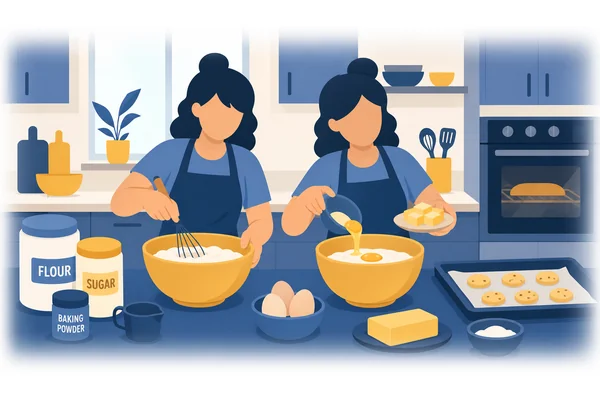
Examples





What to Remember
- Use sequencing markers like first, then, next, and finally to organize ideas logically in writing.
- Place sequencing markers at the beginning of sentences or clauses to show clear relationships between ideas.
- Different markers serve different purposes: first/second for ordering, then/next for progression, and finally for conclusions.
- Avoid overusing the same marker repeatedly; vary your choices to keep writing natural and engaging.
- Sequencing markers improve cohesion and readability, making your arguments easier for readers to follow and understand.