Why Do Learners Struggle with First Conditionals?
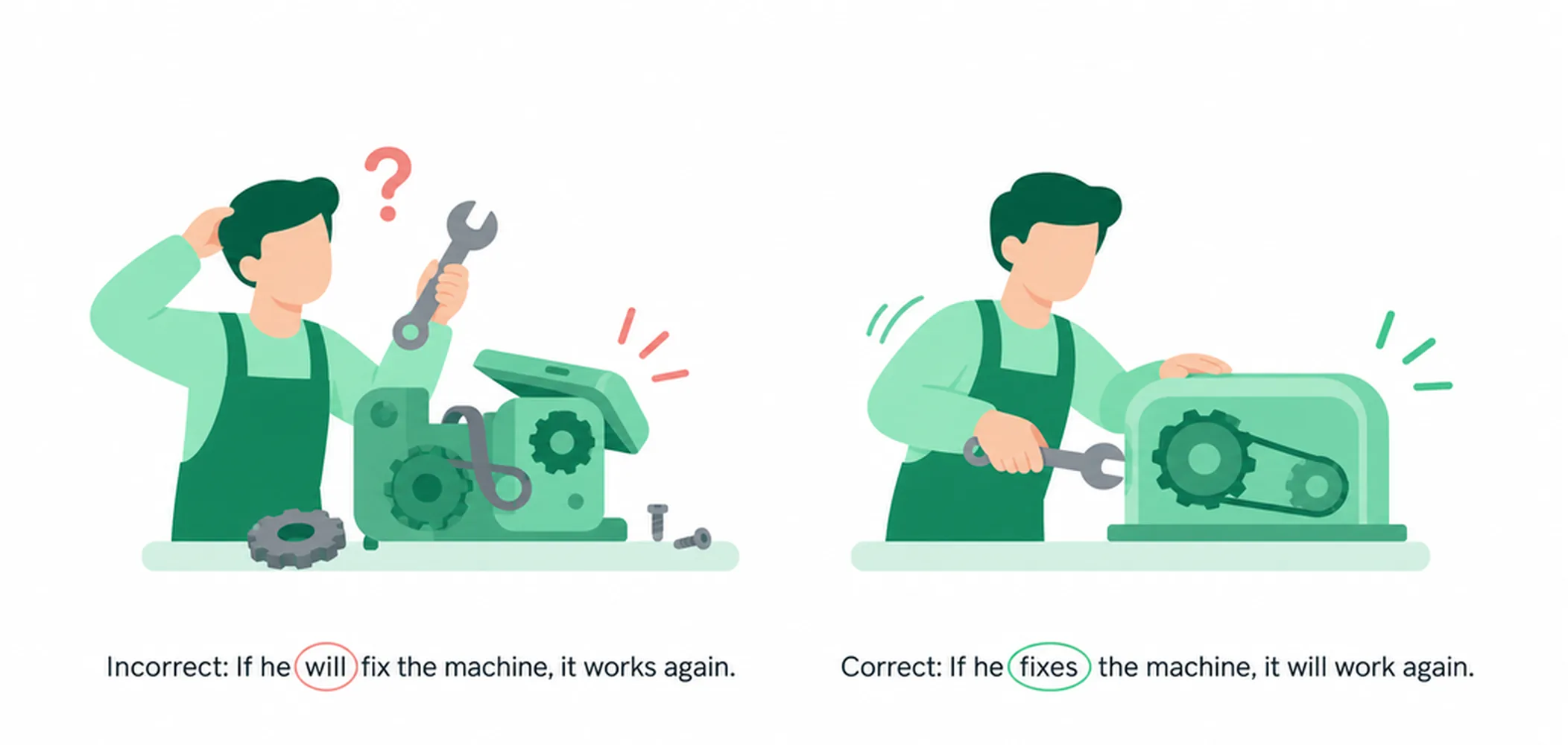
The first conditional is tricky because it mixes two different verb tenses in one sentence. B1 learners often confuse which tense goes in each part, forget the 'if' clause rules, or mix up the first conditional with other conditional types. Understanding these common mistakes will help you use conditionals correctly in real conversations and writing.
7 Mistakes to Avoid
Here are the mistakes B1 learners make most often with first conditionals. Study each pair carefully and notice the correction.
First Conditional Formula
The first conditional follows a consistent pattern: use the present simple tense in the if clause and will + base verb in the main clause. This structure is used for real or likely situations in the future.
| Form | Affirmative | Negative | Question |
|---|---|---|---|
| If clause | If + subject + present simple verb | If + subject + do/does + not + base verb | Not typically questioned |
| Main clause | Subject + will + base verb | Subject + will + not + base verb | Will + subject + base verb |
Affirmative example: If it rains tomorrow, I will stay at home.
Negative example: If it doesn't rain tomorrow, I will not stay at home.
Question example: If you come to the party, will you bring your friend?
Examples




What to Remember
- The 'if' clause uses present tense; the main clause uses 'will' plus base verb.
- Never use 'will' in the 'if' clause, even though it talks about the future.
- The 'if' clause can come first or second in the sentence without changing meaning.
- Use first conditional for real, possible situations; use second conditional for imaginary situations.
- Remember the comma between clauses when 'if' comes first, but omit it when 'if' comes second.