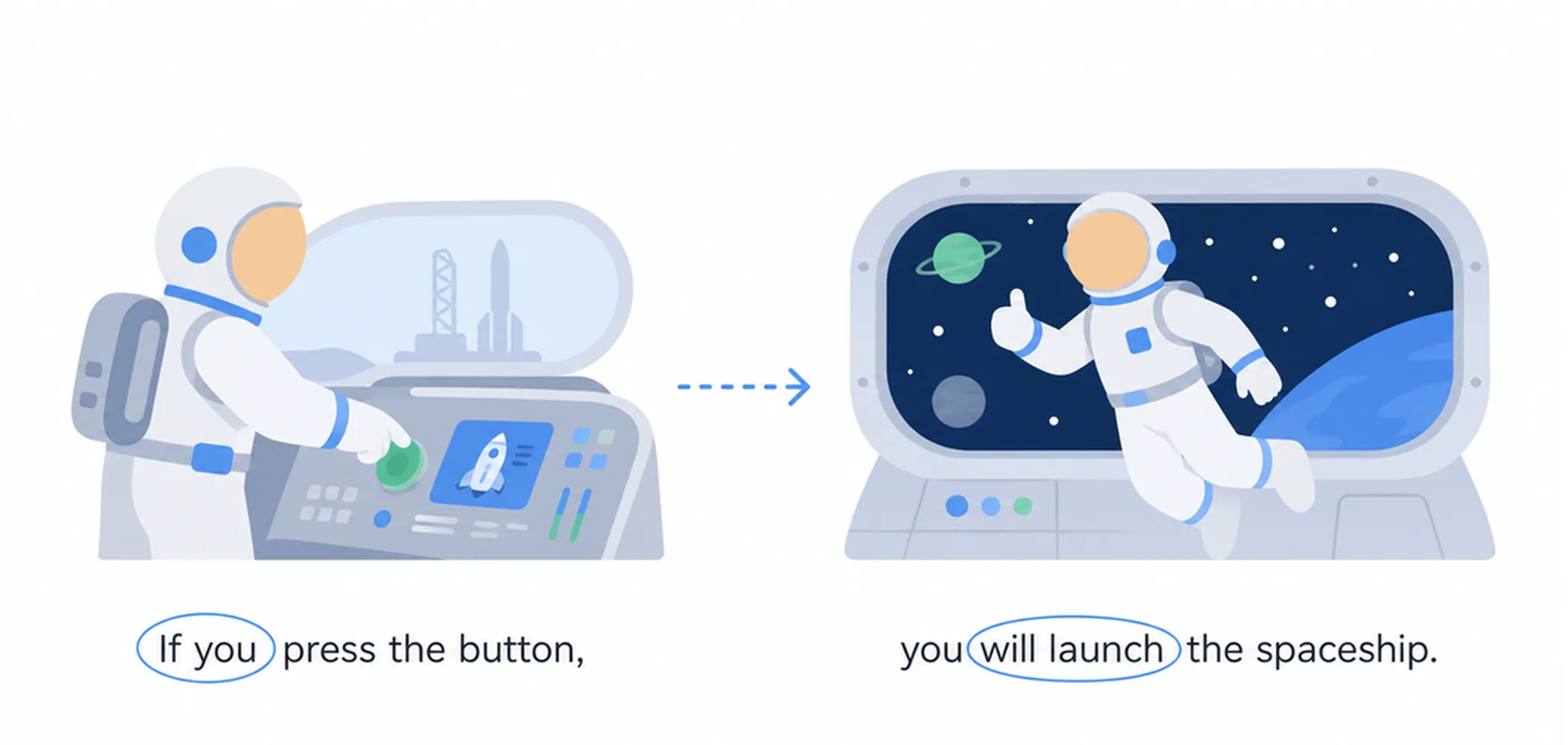
What is the First Conditional?
The first conditional is a grammar structure used to talk about real, possible situations in the future. It shows the relationship between a condition (something that might happen) and its result (what will happen if the condition is true). We use the first conditional when we believe there is a real possibility that the condition will occur. It is the most common conditional form in English and is used for situations that are likely to happen.
The Basic Structure
The first conditional has two parts: the if-clause and the main clause. In the if-clause, we use the present simple tense. In the main clause, we use 'will' + base verb (the infinitive without 'to'). The structure is: If + present simple, + will + infinitive. You can also reverse the order: Will + infinitive + if + present simple. Both patterns are correct, but the if-clause usually comes first.
First Conditional vs Other Conditionals
| Aspect | Zero Conditional | First Conditional | Second Conditional |
|---|---|---|---|
| Form | If + present simple, present simple | If + present simple, will + base verb | If + past simple, would + base verb |
| When to use | Facts, general truths, and situations that are always true | Real and likely future situations; genuine possibility | Unreal, unlikely, or hypothetical present/future situations |
| Likelihood | Certain / always true | Possible / probable | Unlikely / imaginary |
| Positive example | If you heat water to 100°C, it boils. | If it rains tomorrow, I will take an umbrella. | If I won the lottery, I would buy a house. |
| Negative example | If you don't water plants, they die. | If she doesn't study, she won't pass the exam. | If he didn't work so hard, he wouldn't be so tired. |
| Question example | What happens if you mix bleach and ammonia? | Will you call me if you arrive late? | Would you travel more if you had more money? |
| Key signal words | always, generally, every time, never | tomorrow, soon, next week, tonight, probably | would, could, might, imagine, wish |
| Key Difference: The zero conditional describes universal truths that always happen; the first conditional focuses on real, plausible future possibilities where the outcome depends on a specific condition being met; and the second conditional deals with imaginary or highly unlikely scenarios. The clearest marker of the first conditional is the combination of present simple in the if-clause and will in the result clause, signalling that the speaker genuinely believes the situation could occur. | |||
Examples






What to Remember
- Use the first conditional to discuss real, possible future situations with likely outcomes.
- The if-clause uses simple present tense; the main clause uses will + base verb.
- Both clauses can switch positions without changing meaning or grammar structure.
- The first conditional shows a real cause-and-effect relationship between condition and result.
- Don't use will in the if-clause; always use simple present tense there.