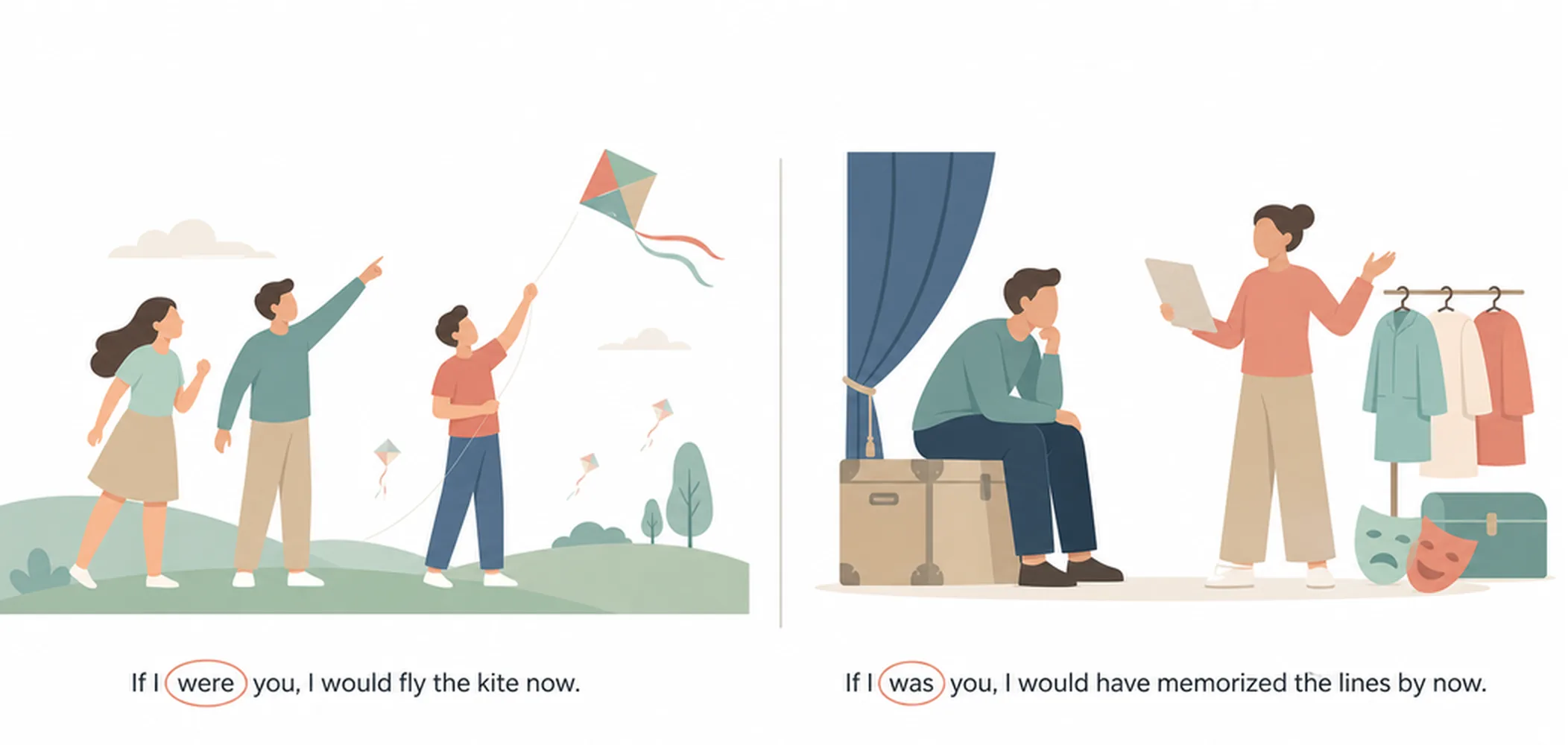
Were vs Was in Second Conditional
In second conditional sentences, we use the past tense to talk about unreal or imaginary situations in the present. However, there is an important grammar rule: in formal English, we use 'were' with all subjects, even 'I', 'he', 'she', and 'it'. The form 'was' is grammatically incorrect in second conditional, although many native speakers use it in casual speech. For B1 learners, you should always use 'were' in written English and formal situations.
The Key Difference
Second conditional uses 'were' (not 'was') to create distance from reality. This is called the subjunctive form. It shows that the situation is hypothetical or impossible. Using 'was' is considered informal or incorrect, especially in writing. Remember: If I were... (correct) vs If I was... (informal/incorrect).
Structure: If + Were (All Subjects)
The pattern is always: If + subject + were (+ not) + adjective/noun, subject + would + verb.
Were vs Was: Side-by-Side Comparison
| Category | Were (Subjunctive) | Was (Indicative) |
|---|---|---|
| Form | Subjunctive mood form of "to be"; used with all subjects (I, he, she, it, we, you, they) | Simple past indicative form of "to be"; typically used with singular subjects (I, he, she, it) |
| Formality Level | Formal and grammatically traditional; preferred in academic, professional, and written English | Informal and colloquial; common in everyday spoken English and casual writing |
| Grammatical Correctness | Universally accepted as correct by all grammar authorities; considered the standard form in the second conditional | Widely accepted in informal contexts but traditionally considered grammatically incorrect in strict prescriptive grammar |
| Usage Context | Essays, reports, formal letters, literature, exams, and any situation requiring correct grammar | Casual conversation, text messages, informal emails, and everyday speech with friends or family |
| Subject Agreement | Used uniformly with ALL subjects: I were, he were, she were, it were, we were, you were, they were | Follows standard past tense agreement: I was, he was, she was, it was (singular); were retained for we, you, they |
| Positive Example | "If I were a doctor, I would help more people." "If she were taller, she would apply for the role." |
"If I was a doctor, I would help more people." "If she was taller, she would apply for the role." |
| Negative Example | "If he were not so stubborn, things would be easier." | "If he was not so stubborn, things would be easier." |
| Question Example | "What would you do if it were up to you?" | "What would you do if it was up to you?" |
| Key Signal Words / Phrases | "If I were you…", "Were I to…", "As it were", "If only I were…" | "If I was…", "If he/she was…", more natural-sounding casual phrases in everyday speech |
| Key Difference: In second conditional sentences, "were" is the grammatically traditional and formally correct choice for all subjects because it uses the subjunctive mood to express hypothetical or unreal situations. "Was" is widely used in informal, everyday speech with singular subjects (I, he, she, it) and is generally accepted in casual contexts, but may be marked as incorrect in formal writing or examinations. The safest and most universally accepted choice — especially in writing — is always "were". | ||
Examples





What to Remember
- Use 'were' with all subjects in second conditional, including I, he, she, and it.
- Second conditional uses past tense to describe unreal or imaginary situations in the present.
- The form 'was' is grammatically incorrect in second conditional, even in casual speech.
- Always use 'were' in written English and formal situations for second conditional sentences.
- Second conditional structure: If + past tense + would + base verb in main clause.