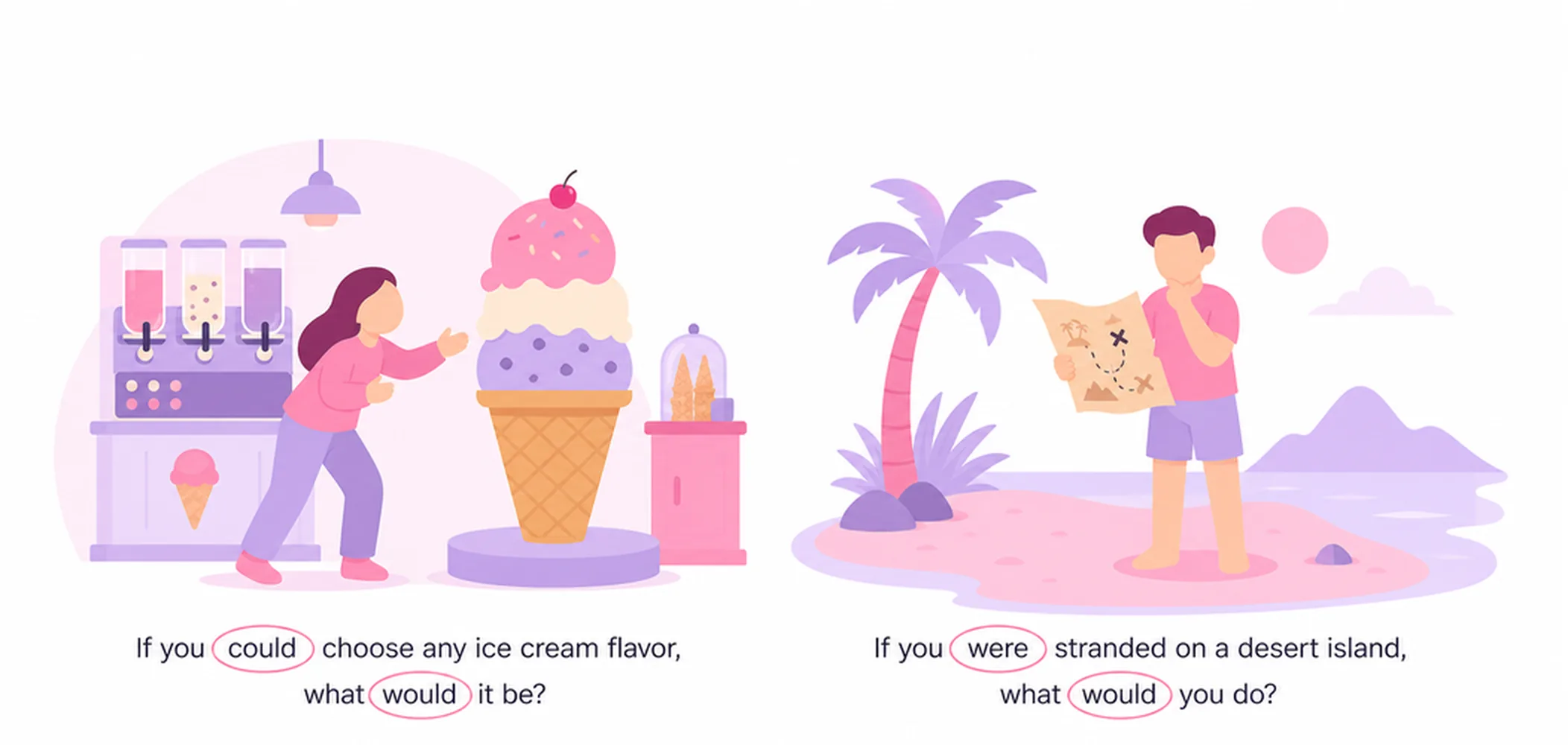
Second Conditional Questions
The second conditional is used to talk about imaginary or unlikely situations in the present or future. When we want to ask questions about these hypothetical situations, we follow a specific word order. This structure helps us ask what someone would do if something unlikely happened.
Second Conditional Question Form
The basic pattern for second conditional questions inverts the subject and auxiliary verb. Start with the question word (if you use one), followed by 'would', then the subject, and finally the main verb in base form.
Second Conditional Question Word Order
Second conditional questions follow two main patterns: yes/no questions and wh- questions. The word order differs slightly between them.
Yes/No Questions
| Structure | Example | Response |
|---|---|---|
| Would + subject + base verb + if-clause? | Would you move if you got the job? | Yes, I would. / No, I wouldn't. |
| Would + subject + base verb + if-clause? | Would she call if she had more time? | Imaginary or unlikely situation |
Wh- Questions (Question Word First)
| Question Word | Full Example | Use |
|---|---|---|
| What | What would you do if you won the lottery? | Ask about an action or thing |
| Where | Where would you live if you could live anywhere? | Ask about a place |
| Who | Who would you invite if you had a party? | Ask about a person |
| How | How would they react if they heard the news? | Ask about manner or way |
| Why | Why would he leave if things were going well? | Ask about reason or cause |
If-Clause First (Inverted Order)
If you saw him, what would you say?
When the if-clause comes first, use a comma to separate the two clauses. The word order within each clause remains the same.
Key Rules for Second Conditional Questions
- Use the past simple in the if-clause — never use "would" in the if-clause.
- Use "were" for all subjects with "to be" in the if-clause (e.g., if I were you, if she were here).
- The main clause must contain "would" + base verb to express the hypothetical result.
Formula
? Question
Would
+
subject
+
verb
+
if + subject + past tense verb
Would you travel abroad if you had more money?
Examples

Would you change your job if you could work anywhere?
Hypothetical job change · Present situation

What would you study if you had to start university again?
Education choice · Imaginary past decision
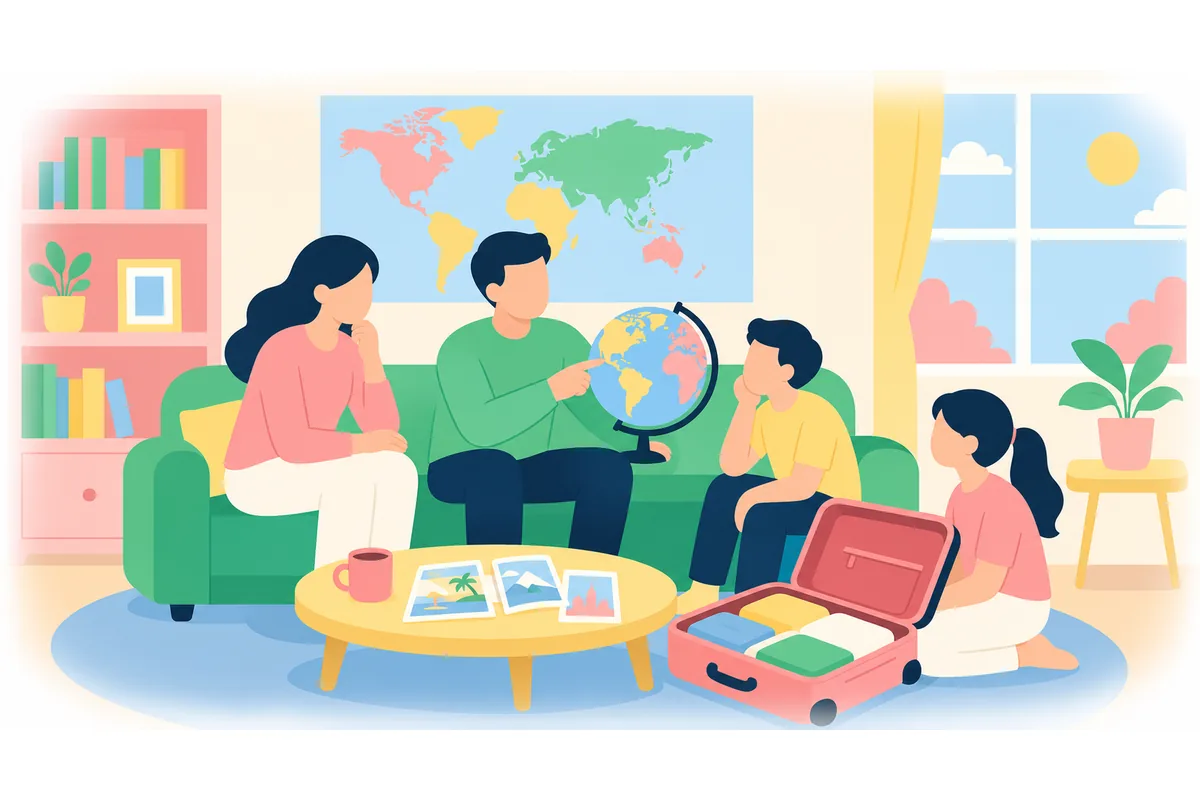
Would your family be happy if you moved to another country?
Family reaction · Unlikely future scenario

Where would you like to live if money wasn't a problem?
Housing preference · Imaginary financial situation

Would you feel nervous if you had to give a speech in front of 1,000 people?
Personal reaction · Unlikely situation
When to use it
Giving advice
Ask hypothetical questions to understand someone's priorities and offer relevant suggestions.
"What would you do if your best friend was moving away?"
Classroom discussions
Use second conditional questions to explore imaginary scenarios and encourage creative thinking.
"Would you travel to space if it were safe and affordable?"
Job interviews
Employers ask hypothetical questions to see how candidates would handle difficult situations.
"How would you handle this situation if a customer complained?"
Getting to know people
Use these questions to learn about someone's values, dreams, and preferences in casual conversations.
"Would you quit your job if you inherited a fortune?"
Signal words
Would
What
Where
Who
When
Why
How
if
were
had
could
Common Mistakes
✕
Wrong
Would you travel if you will have more time?
✓
Correct
Would you travel if you had more time?
Use past tense (had) in the if-clause, not future (will have), even though meaning is hypothetical.
✕
Wrong
What you would do if you were rich?
✓
Correct
What would you do if you were rich?
Invert subject and 'would' in questions. Word order: question word + would + subject + verb.
KEY TAKEAWAYS
What to Remember
- Use "would" + base verb in the main clause for hypothetical situations.
- Start questions with "Would" followed by the subject, then the condition with "if."
- The "if" clause uses the simple past tense, even for future hypothetical situations.
- Don't use "would" in the "if" clause; use simple past instead.
- Invert the subject and auxiliary verb in the question part, not the "if" clause.