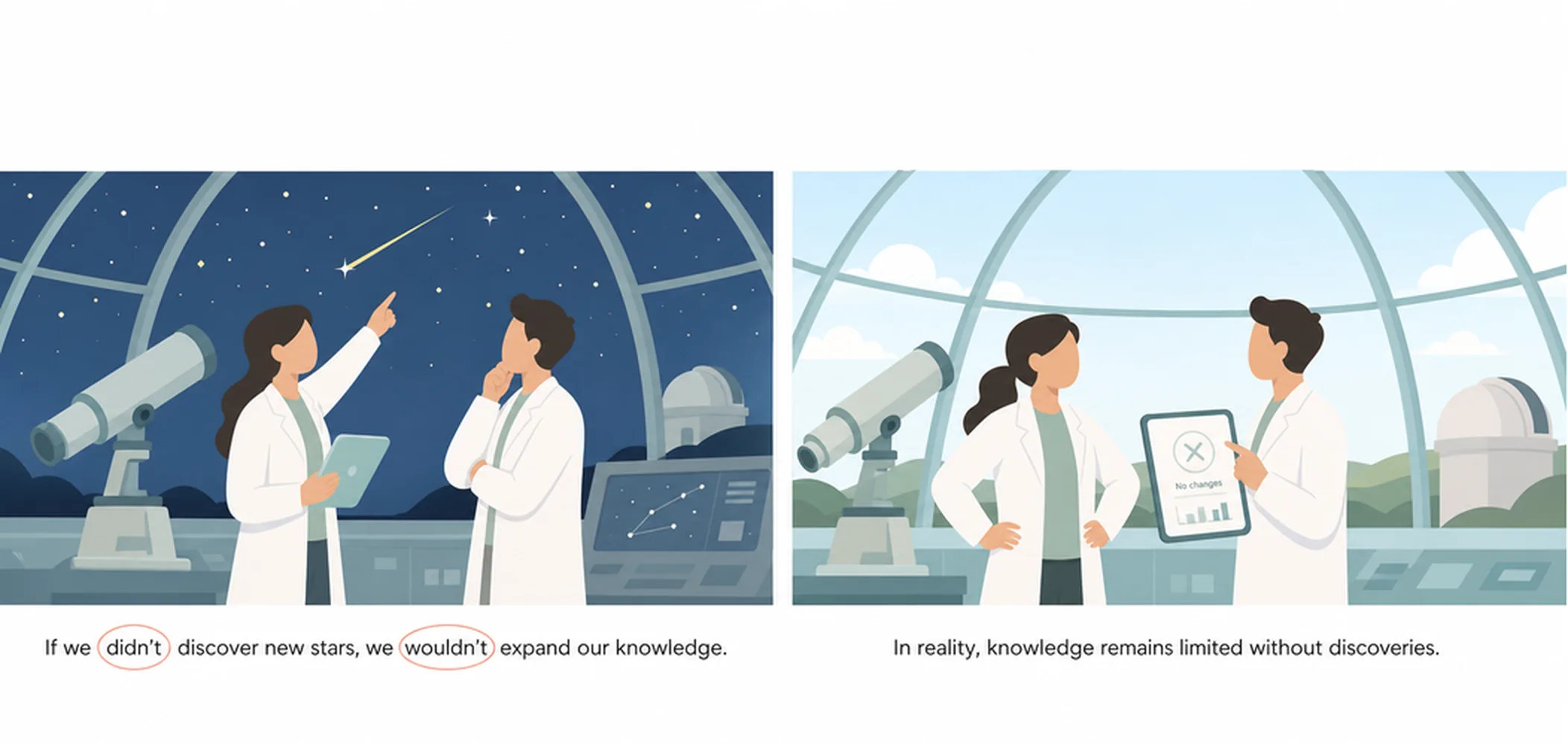
What is the Negative Second Conditional?
The negative second conditional is used to talk about imaginary or unlikely situations in the present or future, and their imaginary results. It expresses what would NOT happen if a condition were different. The structure is similar to the positive second conditional, but we add 'not' to both the if-clause and the main clause.
Negative Second Conditional Structure
The negative second conditional is used to express what would not happen if a condition were not true. The structure uses did not (didn't) in the if-clause and would not (wouldn't) in the main clause.
| If-Clause (Condition) | Main Clause (Result) |
|---|---|
| if + subject + didn't + base verb + object | subject + wouldn't + base verb + object |
If he didn't work so hard, he would have more free time.
If they didn't live far away, they would visit us every weekend.
If she didn't speak French, she wouldn't understand the film.
If I didn't have an umbrella, I would get wet in the rain.
Examples






What to Remember
- Use the second conditional to describe imaginary or unlikely situations in the present or future.
- Add 'not' to both the if-clause and main clause to make negative second conditional sentences.
- The if-clause uses 'if + subject + did not' and the main clause uses 'would not + verb'.
- Remember that the second conditional expresses what would NOT happen if circumstances were different.
- Don't forget the past simple tense in the if-clause even though you're talking about the present.