The Key Difference
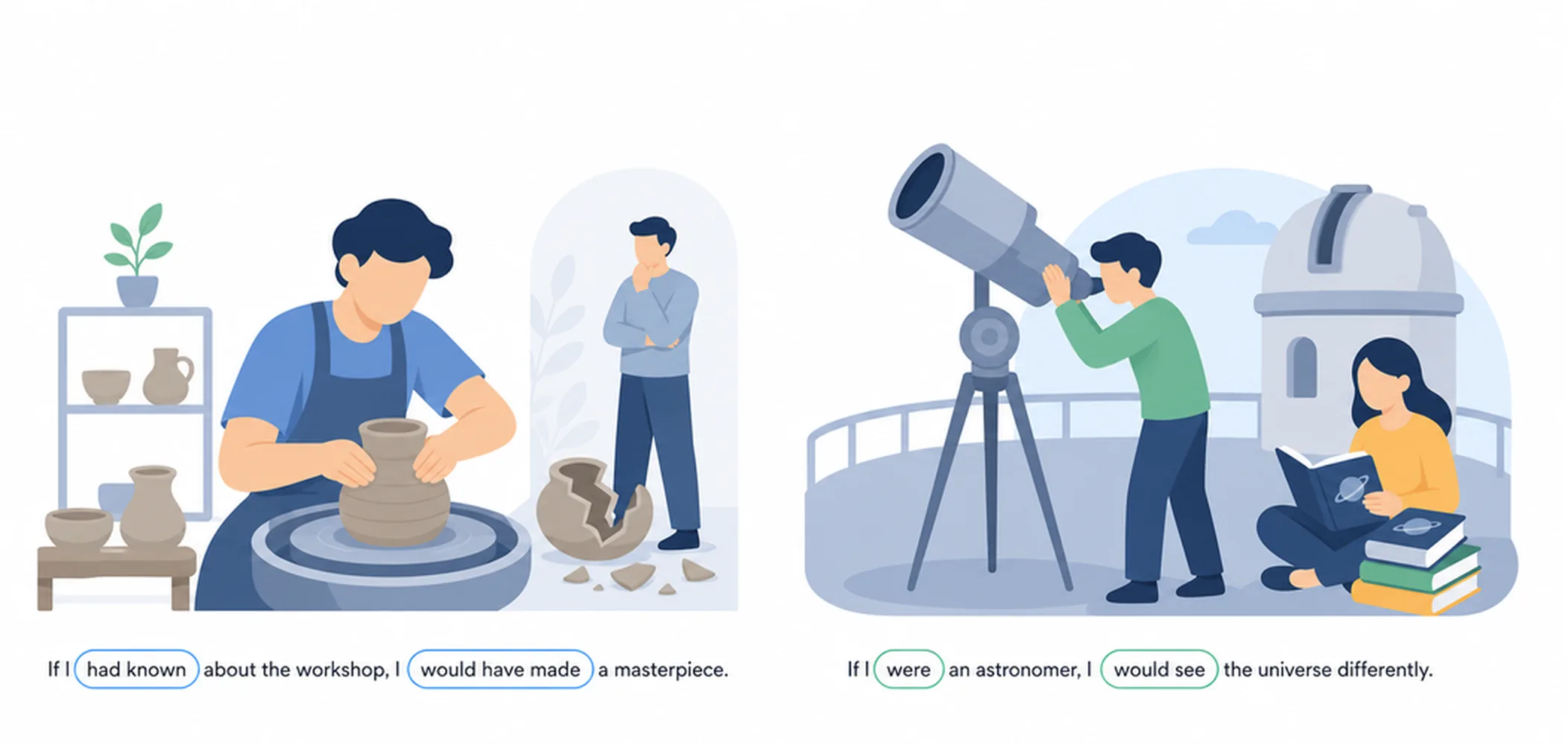
The second and third conditionals are both used to talk about hypothetical situations, but they differ in time and likelihood. The second conditional describes imaginary situations in the present or future—things that are unlikely or impossible now. The third conditional talks about imaginary situations in the past—things that didn't happen but could have. Understanding which one to use depends on whether you're imagining 'now/tomorrow' or 'back then'.
Second Conditional vs Third Conditional
Second conditional: If + past simple, would + infinitive. Use it for present/future unreal situations. Example: If I won the lottery, I would travel the world. Third conditional: If + past perfect, would have + past participle. Use it for past unreal situations. Example: If I had won the lottery, I would have travelled the world. Both use 'would' but the verb tense in the 'if' clause is what changes.
Second Conditional vs Third Conditional: Side-by-Side Comparison
| Dimension | Second Conditional | Third Conditional |
|---|---|---|
| Form | If + past simple → would / could / might + base verb | If + past perfect → would / could / might + have + past participle |
| Time Frame | Present or future — an imaginary or unlikely situation now or in the future | Past — an imaginary situation that did not happen and cannot be changed |
| If-Clause Structure | If + subject + past simple e.g. If I had more time… |
If + subject + had + past participle e.g. If I had had more time… |
| Main Clause Structure | Subject + would / could / might + base verb e.g. …I would travel more. |
Subject + would / could / might + have + past participle e.g. …I would have travelled more. |
| When to Use | To talk about hypothetical, unlikely, or impossible situations in the present or future; also for giving advice with If I were you… | To talk about hypothetical situations in the past that did not occur; often used to express regret, criticism, or speculation about past events |
| Positive Example | If I won the lottery, I would buy a house. (I haven't won; imagining a future possibility) |
If I had won the lottery, I would have bought a house. (I didn't win; imagining a different past) |
| Negative Example | If she didn't work so hard, she wouldn't earn so much. (She does work hard — present reality) |
If she hadn't worked so hard, she wouldn't have earned so much. (She did work hard — past reality) |
| Question Example | What would you do if you lost your job? (Imagining a possible future scenario) |
What would you have done if you had lost your job? (Reflecting on a past scenario that didn't happen) |
| Key Signal Words | if I were…, if I had…, if it happened…, imagine, suppose, what if (with present/future meaning) | if I had known…, if they had told me…, if only, I wish (past perfect), looking back, in hindsight |
| ⚠ Key Difference: The core distinction is time. The second conditional imagines an unreal or unlikely situation now or in the future using the past simple in the if-clause and would + base verb in the result clause. The third conditional imagines how things could have been different in the past — a situation that is now finished and impossible to change — using the past perfect in the if-clause and would + have + past participle in the result clause. In short: second conditional = unreal present/future; third conditional = unreal past. | ||
Examples





What to Remember
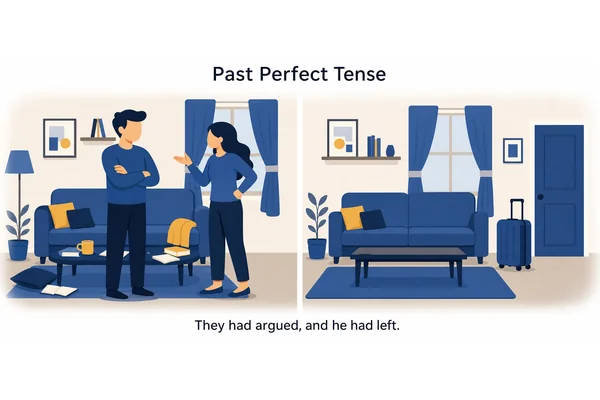
- The third conditional describes past situations that didn't happen but could have occurred.
- Use "if + past perfect" in the condition clause of third conditionals.
- The main clause needs "would have + past participle" in third conditionals.
- Third conditionals focus on imaginary past events; second conditionals imagine present or future.
- Don't mix third conditional structure with present time—it only refers to the past.