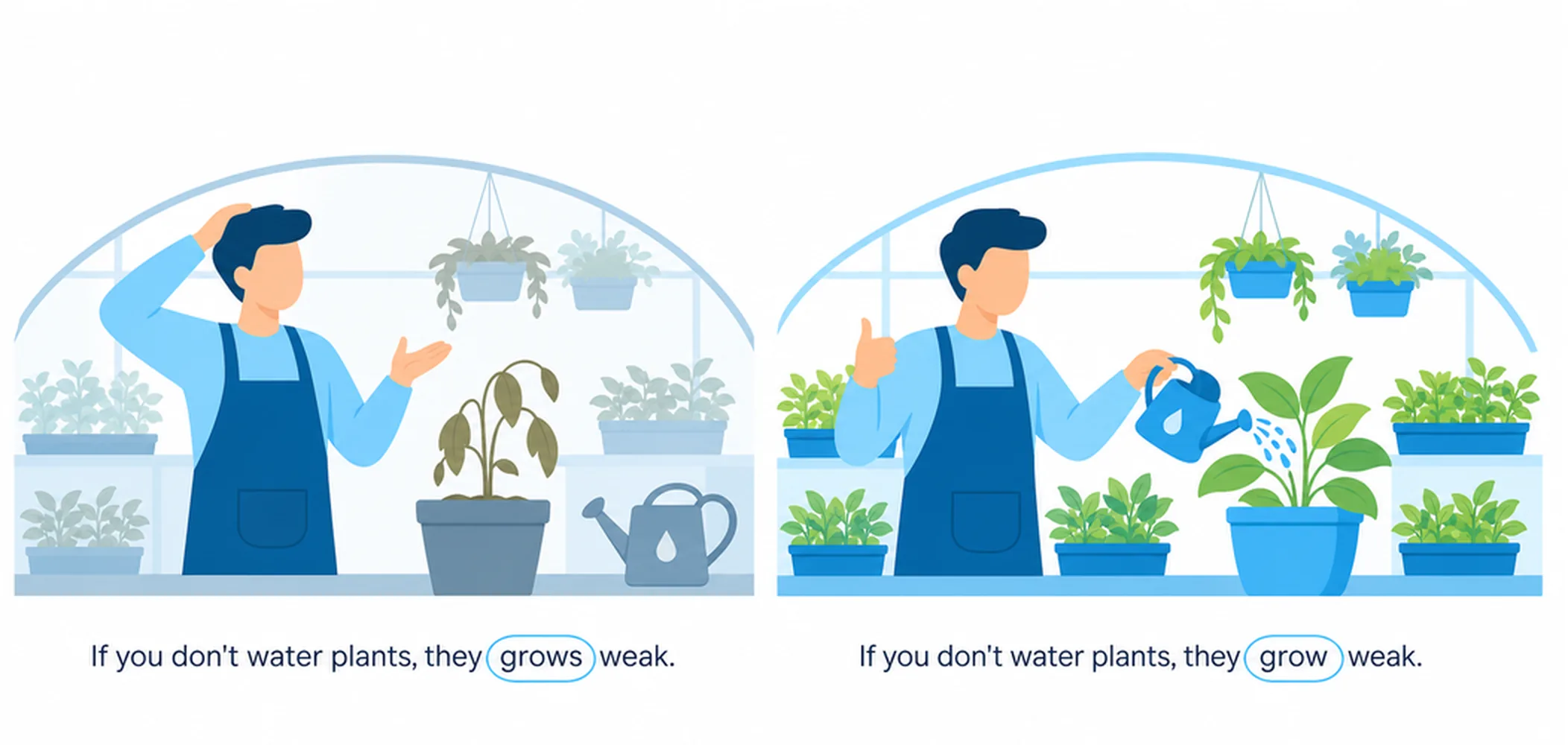
Why B1 Learners Struggle with Zero Conditionals
The zero conditional describes facts and habits that are always true. Learners often make mistakes because they confuse it with other conditionals, forget the simple present tense rule, or add unnecessary words. Understanding these common errors will help you use zero conditionals correctly and naturally.
Zero Conditional Formula
The zero conditional formula is used to express facts, scientific truths, and situations that always happen. This structure applies to general statements about cause and effect that are universally true.
| Form | Structure | Example |
|---|---|---|
| Positive Form | if + subject + simple present + object, subject + simple present + object | If you heat water to 100°C, it boils. |
| Negative Form | if + subject + don't/doesn't + base verb + object, subject + don't/doesn't + base verb + object | If plants don't get sunlight, they don't grow. |
Positive example: If you heat water to 100°C, it boils.
Negative example: If plants don't get sunlight, they don't grow.
Examples
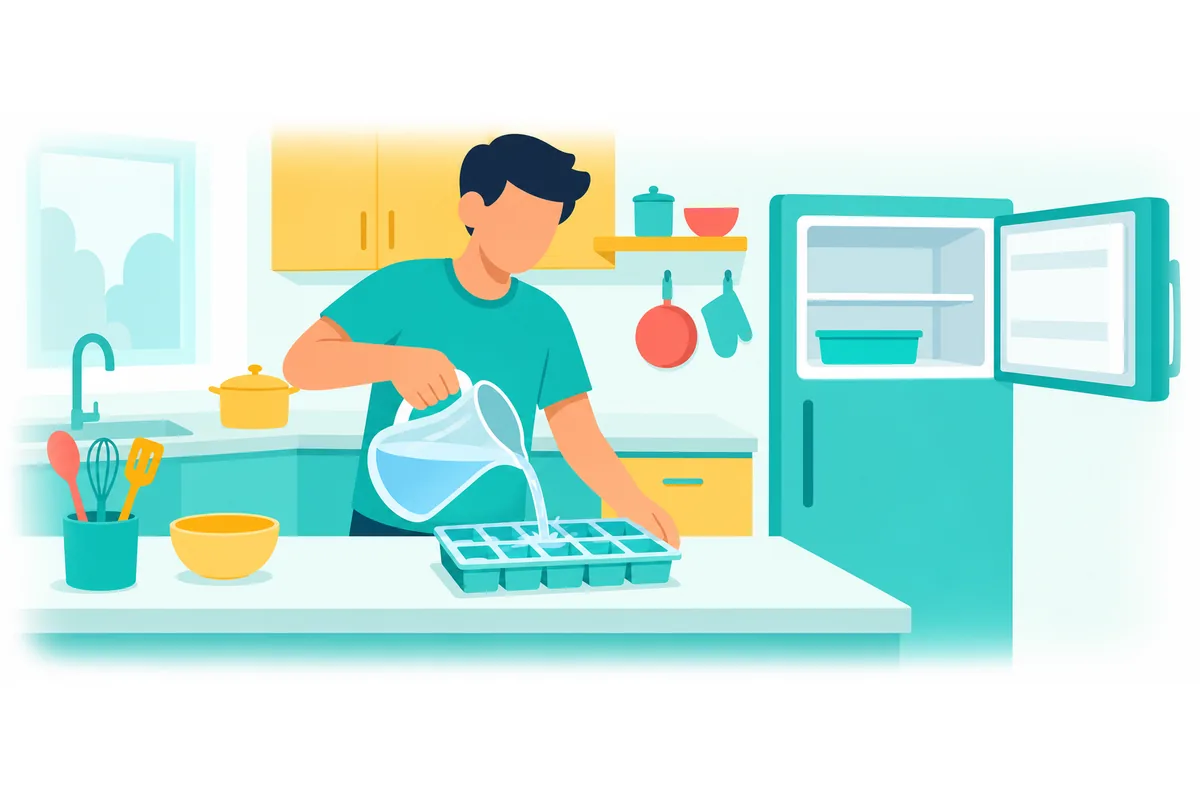
If you freeze water, it turns into ice.
Scientific fact · Both verbs in simple present
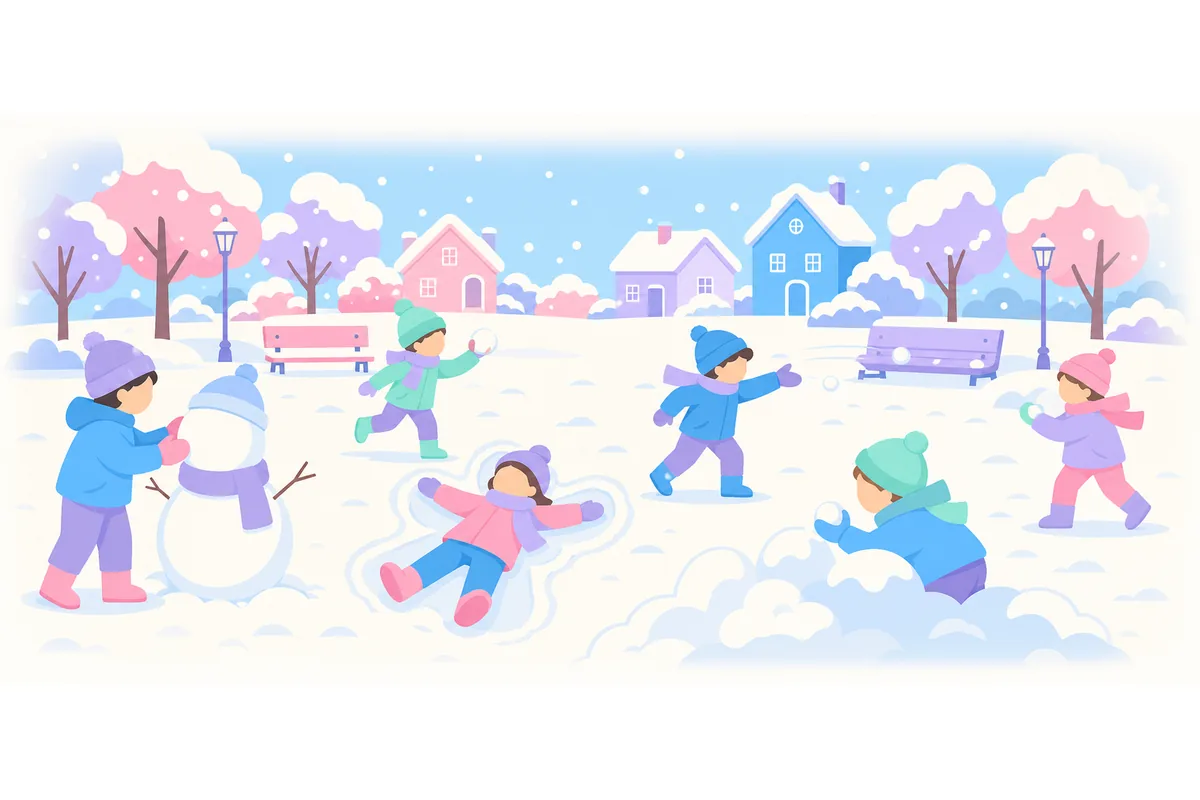
If it snows in winter, children play outside.
General truth · Repeated situation

If you heat ice, it melts.
Factual result · No will needed

If people don't exercise, they become less healthy.
Negative zero conditional · Both simple present
When to use it
Scientific Facts
Use zero conditional to describe rules of nature, chemistry, or physics that are always true.
If hydrogen and oxygen combine, they form water.
Repeated Habits
Describe what happens every time a situation occurs in everyday life.
If my phone rings, I usually answer it.
Instructions & Processes
Explain how to do something or how a system works.
If you turn the key, the engine starts.
General Rules
State universal truths or rules that have no exceptions.
If it gets dark, the stars appear in the sky.
Signal words
always
every time
whenever
if
as long as
as soon as
even if
in case
Common Mistakes
✕
Wrong
If you heat water, it will boil.
✓
Correct
If you heat water, it boils.
Zero conditional uses simple present in both clauses, not will + verb. Use will only in first and second conditionals.
✕
Wrong
If it rains, the grass will get wet.
✓
Correct
If it rains, the grass gets wet.
Zero conditional requires simple present tense in both clauses, not future tense in the result clause.
✕
Wrong
If you will eat too much sugar, you will get sick.
✓
Correct
If you eat too much sugar, you get sick.
Never use will in the if-clause of zero conditionals. Reserve will for second conditional (unlikely situations).
✕
Wrong
If people are exercising regularly, they feel better.
✓
Correct
If people exercise regularly, they feel better.
Use simple present (exercise), not present continuous (are exercising), for repeated facts and habits.
✕
Wrong
If you heat ice, then it melts into water.
✓
Correct
If you heat ice, it melts into water.
The zero conditional does not require 'then' in the result clause; using it is unnecessary and considered awkward style.
✕
Wrong
If the temperature drops below zero, water will freeze.
✓
Correct
If the temperature drops below zero, water freezes.
Again, no will in zero conditional. Both clauses need simple present because this is a scientific fact.
✕
Wrong
If you don't sleep enough, you will be tired.
✓
Correct
If you don't sleep enough, you are tired.
Even with negation, use simple present in both clauses for zero conditionals, not will + verb.
KEY TAKEAWAYS
What to Remember
- Use simple present tense in both the if-clause and the main clause.
- Zero conditional expresses universal truths and habits, not imaginary or unlikely situations.
- Don't add would, could, or other modals in the if-clause or result.
- The zero conditional means the result always happens when the condition is true.
- Remember: if + simple present, simple present—not if + simple present, will + verb.