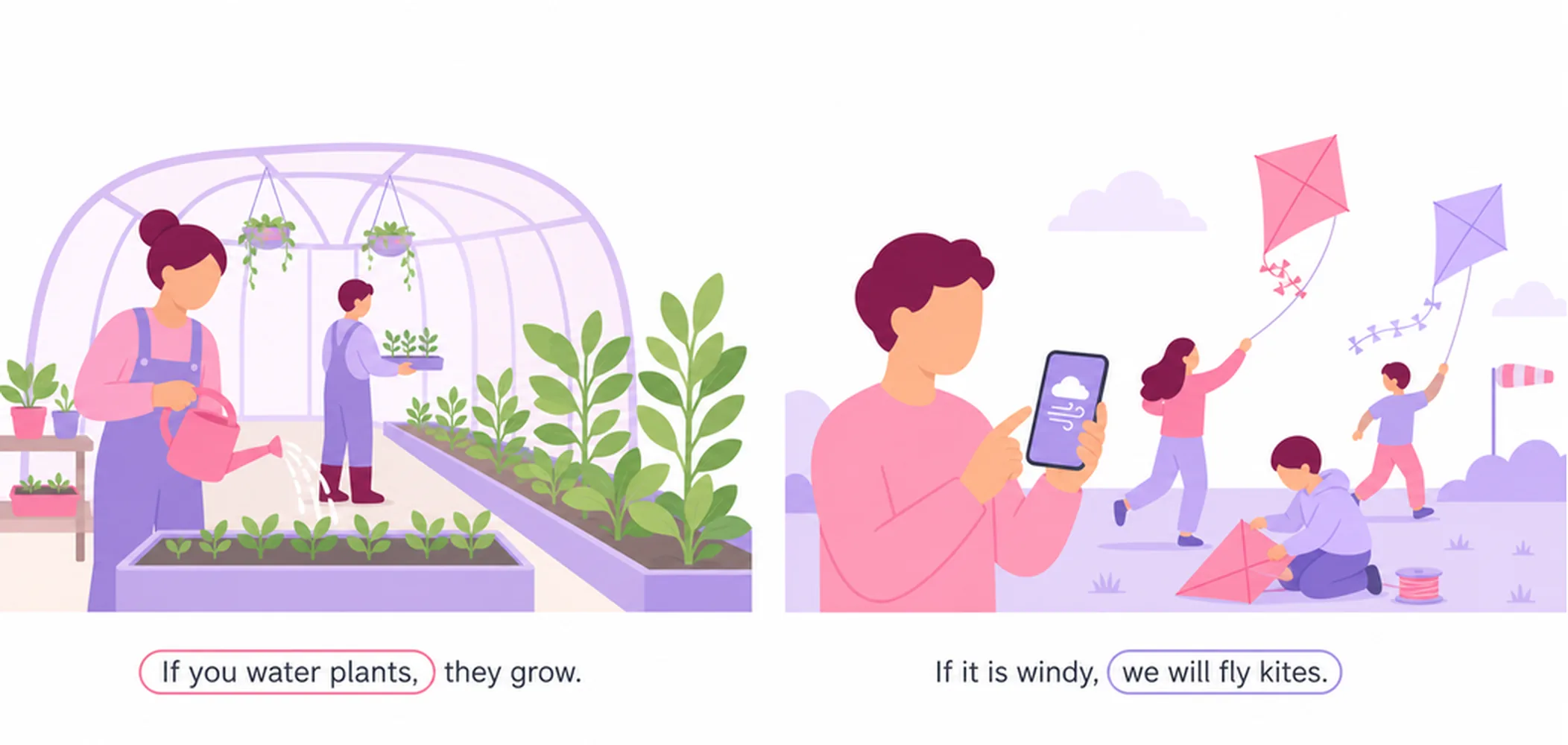
Zero Conditional vs First Conditional: The Key Difference
Both zero and first conditionals use 'if', but they describe different situations. The zero conditional talks about facts, general truths, and habits that are always true. The first conditional talks about real possibilities in the future that depend on a condition. Understanding which one to use helps you express your meaning clearly and correctly.
Quick Comparison Table
Zero conditional: Present + Present (If X happens, Y happens). Used for facts, science, rules, habits. First conditional: If Present + Will (If X happens, Y will happen). Used for real future possibilities. Both are likely or certain, but zero conditional is always true, while first conditional depends on whether the condition happens.
Quick Memory Trick
Think 'ZERO = always happens' and 'FIRST = might happen'. If the result is something that will definitely occur every time (facts, science, habits), use zero conditional with two present simple verbs. If the result is something that will happen in the future only if a condition is met, use first conditional with 'will' in the main clause.
Zero Conditional vs First Conditional: Side-by-Side Comparison
| Category | Zero Conditional | First Conditional |
|---|---|---|
| Form | If + present simple, present simple (If water reaches 100°C, it boils.) |
If + present simple, will + base verb (If it rains, I will stay home.) |
| Time Reference | General truths; timeless or habitual situations (past, present, and future) | Future situations; refers to a specific real or likely event in the future |
| When to Use | To express scientific facts, natural laws, habits, or things that are always true when a condition is met | To talk about a real and possible future situation and its likely result or consequence |
| Certainty Level | 100% certain — the result always happens whenever the condition is met; no exceptions | Likely but not guaranteed — the result is probable or expected if the condition is fulfilled |
| Positive Example | If you heat ice, it melts. | If she studies hard, she will pass the exam. |
| Negative Example | If you don't water plants, they don't survive. | If it doesn't stop raining, we won't go to the park. |
| Question Example | What happens if you mix bleach and ammonia? | What will you do if you miss the train? |
| Key Signal Words | always, never, generally, every time, usually | will, won't, can, may, might, probably, tomorrow, soon |
| Main Verb Tense in Result Clause | Present simple (…it boils / …they die) | Will + base verb (…she will pass / …I will call) |
| Can "If" Be Replaced? | Yes — "if" can often be replaced by when without changing the meaning: When you heat ice, it melts. | Sometimes, but replacing "if" with when changes the meaning to make the event seem certain: When she studies, she will pass. |
| ⓘ Key Difference: The zero conditional describes universal truths and facts that are always true (both clauses use the present simple), while the first conditional describes a specific, realistic future possibility and uses "will" in the result clause. If the outcome is guaranteed every time the condition occurs, use the zero conditional. If the outcome is a probable but not certain future consequence, use the first conditional. | ||
What to Remember
- Use zero conditional for facts, general truths, and habits that are always true.
- Zero conditional structure: if + present simple, present simple (e.g., If you heat water, it boils).
- Use first conditional for real future possibilities that depend on a specific condition.
- First conditional structure: if + present simple, will + base verb (e.g., If it rains, I will stay home).
- Don't confuse them: zero conditional = always true; first conditional = possible but uncertain future.