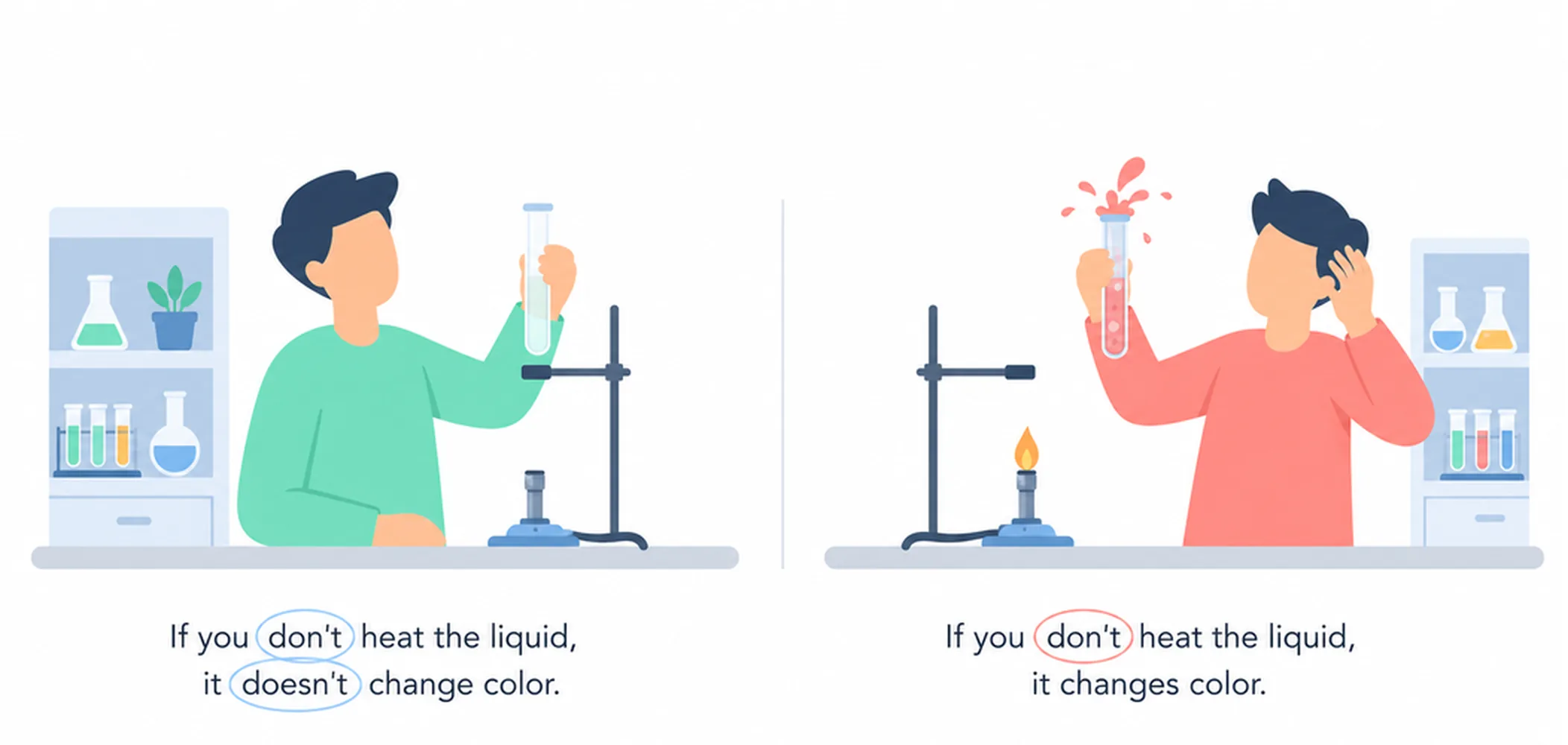
Zero Conditional Negatives: What You Need to Know
The zero conditional describes facts and general truths that always happen under the same conditions. When you make a negative zero conditional sentence, you use 'don't/doesn't' in the if-clause or the main clause to show what does NOT happen. The structure is simple: If + present simple (negative) + present simple (negative). Both parts follow normal present tense negation rules.
Negative in the If-Clause vs. Negative in the Main Clause
| Feature | Negative in the If-Clause If + subject + don't/doesn't + verb, subject + present simple |
Negative in the Main Clause If + subject + present simple, subject + don't/doesn't + verb |
|---|---|---|
| Form | If + subject + do/does not + base verb, subject + present simple verb Example: If it doesn't rain, the ground stays dry. |
If + subject + present simple verb, subject + do/does not + base verb Example: If it rains, the ground doesn't stay dry. |
| When to use | Use when the absence of a condition reliably produces a result. The condition itself is negative — something does not happen or is not the case. | Use when a positive condition reliably leads to a negative result. The condition occurs, but the outcome is the non-occurrence of something. |
| Positive example | If you don't water plants, they die.The lack of watering causes death. | If you water plants, they don't die.Watering prevents death. |
| Additional example | If she doesn't sleep enough, she feels tired.No sleep = fatigue (a universal truth). | If she sleeps enough, she doesn't feel tired.Sufficient sleep = no fatigue. |
| Scientific / factual example | If you don't apply heat to water, it doesn't boil.Both clauses negative — both the condition and result are absent. | If you apply heat to water, it doesn't freeze.Positive condition prevents a negative state. |
| Question example | What happens if you don't eat breakfast?Asks about the result of a missing condition. | If you eat breakfast, do you not feel hungry later?Asks whether a positive condition prevents something. |
| Meaning focus | Focuses on what goes wrong or what fails to happen when a necessary action or condition is absent. Often implies a warning or general rule about neglect. | Focuses on a positive action preventing a negative outcome. Often implies advice, a benefit, or a preventative universal truth. |
| Logical relationship | Absence of X → Result YThe negative condition is the trigger. Without X, Y always follows. | Presence of X → Absence of YThe positive condition prevents Y. X occurs, so Y does not. |
| Key signal words | don't, doesn't, never, without, unlessNote: "Unless" can replace "if … not" in the if-clause. Unless you water plants, they die. | don't, doesn't, never, prevents, stops, avoidsThe main clause often contains words describing prevention or absence of effect. |
| Clause order flexibility | The if-clause can come first or second. No comma is needed when the main clause comes first.Plants die if you don't water them. |
Same flexibility applies.Plants don't die if you water them. |
Key Difference: The core distinction is where the negation is placed and what it logically negates. When the negative is in the if-clause (if + don't/doesn't), the sentence describes what happens as a result of the absence or omission of something — a missing action or condition causes a predictable outcome ("If you don't study, you fail."). When the negative is in the main clause, the sentence describes how a present, positive condition reliably prevents or eliminates a particular result ("If you study, you don't fail."). Although both sentences are logically related, they carry different emphases and communicative purposes: the first warns about neglect or absence; the second highlights the protective or preventative power of an action. Both remain zero conditionals expressing universal, timeless, or habitual truths using the present simple tense in both clauses.
Formula
✖ Negative
If
+
subject
+
don't/doesn't + base verb
+
object
+
subject
+
don't/doesn't + base verb
If you don't water plants, they don't grow well.
? Question
Does/Do
+
subject
+
base verb
+
if
+
subject
+
base verb
Do babies cry if they don't feel comfortable?
Examples

If you don't study regularly, you don't remember the information.
General truth about learning habits

People don't get tired if they don't exercise hard.
Cause and effect relationship

If metal doesn't conduct electricity, it's not useful for wires.
Scientific fact

Does your phone charge properly if you don't use the correct cable?
Question form with negation

If you don't heat ice, it doesn't turn into water.
Physical fact
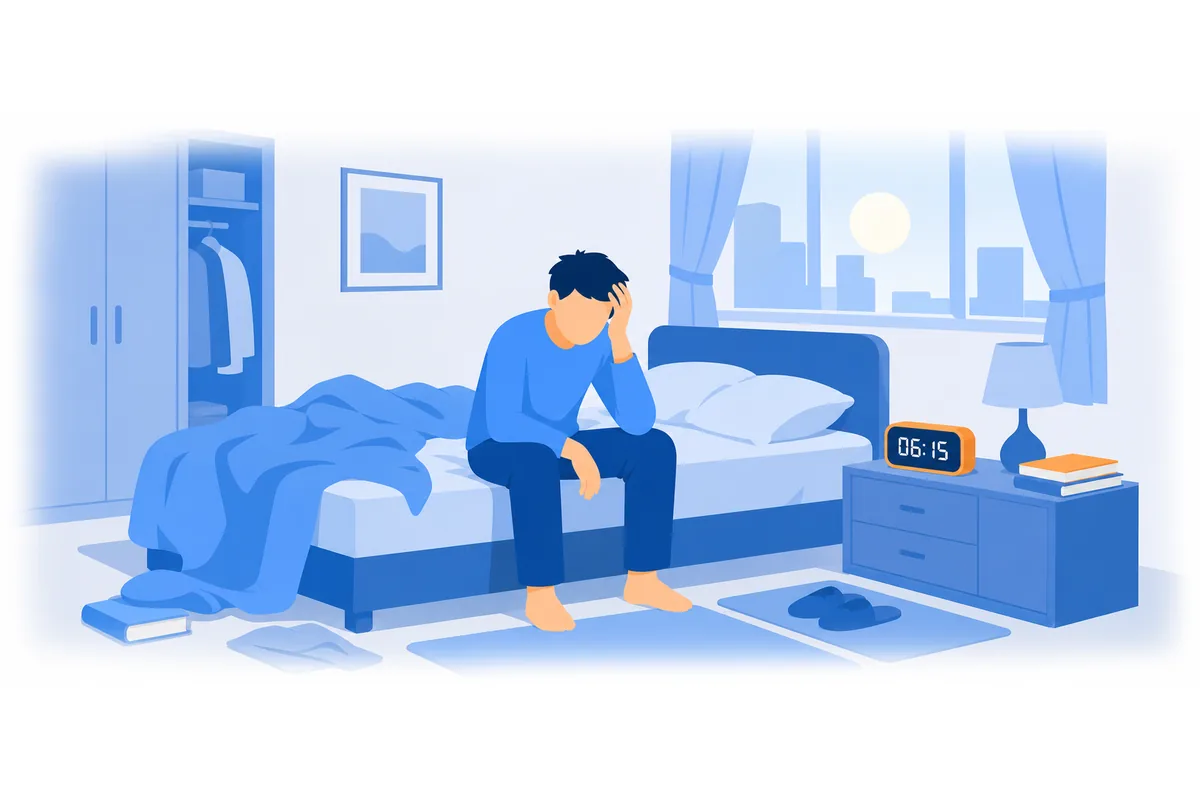
Don't you feel stressed if you don't sleep enough?
Question form with negative auxiliary
When to use it
Scientific Facts
Describe what doesn't happen in natural or scientific processes under certain conditions. These are unchanging rules of nature.
If you don't apply heat to ice, it doesn't melt.
General Habits & Routines
Explain what people don't do in regular situations or what doesn't result from certain actions in daily life.
If you don't practice English daily, you don't improve quickly.
How Things Work
Show cause and effect in how machines, devices, or systems function or fail to function.
If you don't charge the battery, the device doesn't turn on.
Signal words
never
always
when
whenever
unless
if not
generally
typically
Common Mistakes
✕
Wrong
If you don't study, you will not remember.
✓
Correct
If you don't study, you don't remember.
Zero conditional uses present simple in both clauses, not 'will'. Future tense changes the meaning.
✕
Wrong
If you doesn't heat the pan, the food doesn't cook.
✓
Correct
If you don't heat the pan, the food doesn't cook.
'You' is second person plural/singular, so use 'don't', not 'doesn't'. Use 'doesn't' only with he/she/it.
KEY TAKEAWAYS
What to Remember
- Use don't or doesn't in the if-clause or main clause to form negative zero conditional sentences.
- Zero conditional expresses facts and general truths that always happen under the same conditions.
- Both the if-clause and main clause use present simple tense, following normal negation rules.
- You can place the negative in either the if-clause or the main clause, not necessarily both.
- Remember that zero conditional describes what does NOT happen, using standard present tense negation patterns.