What is the Zero Conditional?
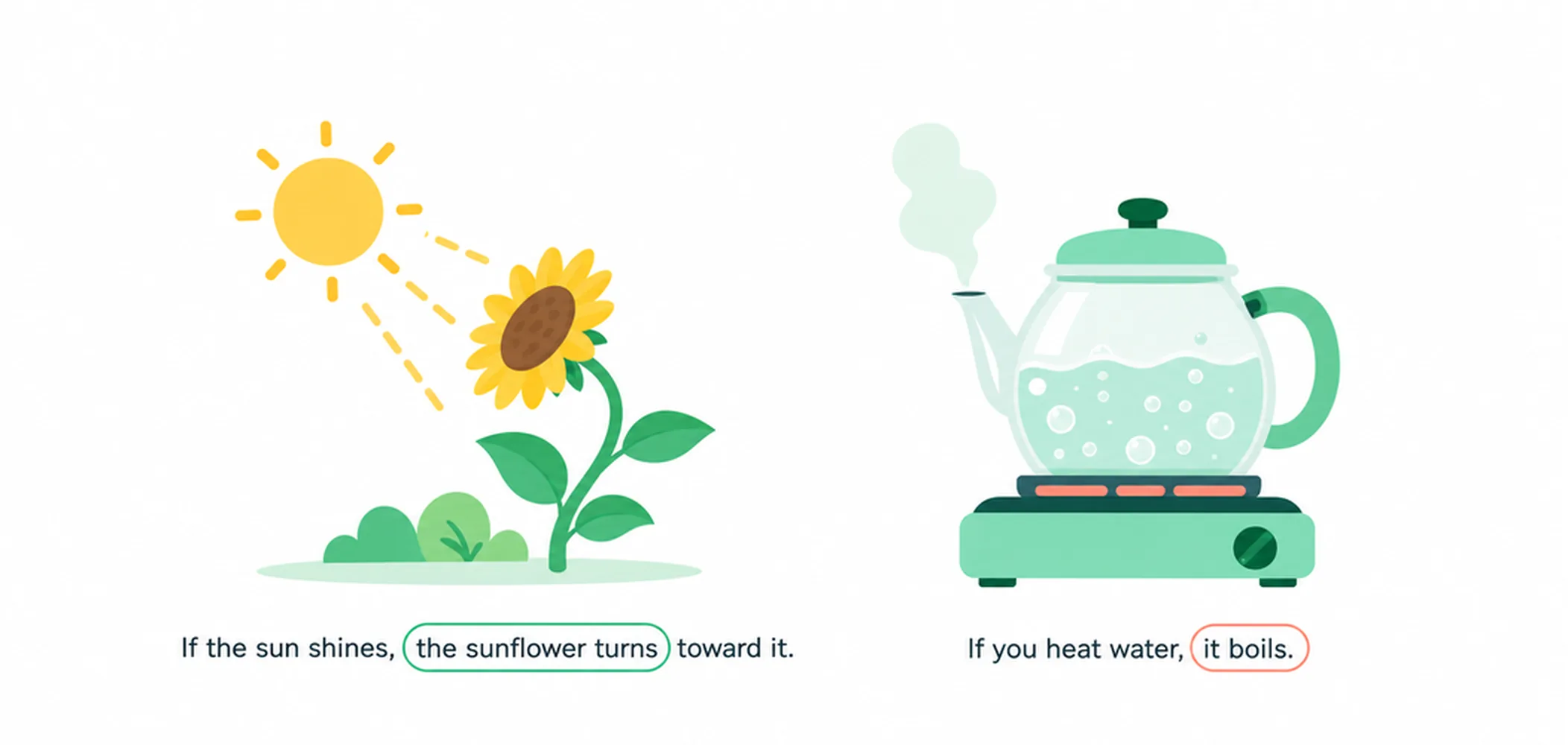
The zero conditional is used to talk about facts, general truths, and situations that are always true. It describes what happens when something is a certain way—the result is certain and automatic. We use this structure for scientific facts, habits, and situations where cause and effect are always connected. The zero conditional is sometimes called the 'real conditional' because it expresses real, factual relationships.
Form and Structure
The zero conditional uses present simple in both the 'if' clause and the main clause. The pattern is: If + present simple, present simple. You can also reverse the order: Present simple + if + present simple. Both sentences mean the same thing. The 'if' in zero conditional means 'whenever' or 'always when' — it shows that something happens every time under certain conditions.
When to Use Zero Conditional
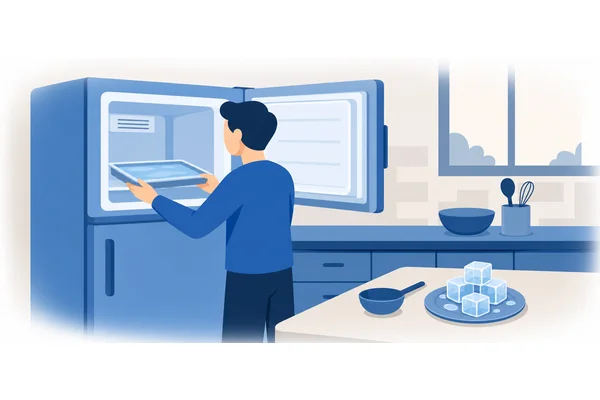
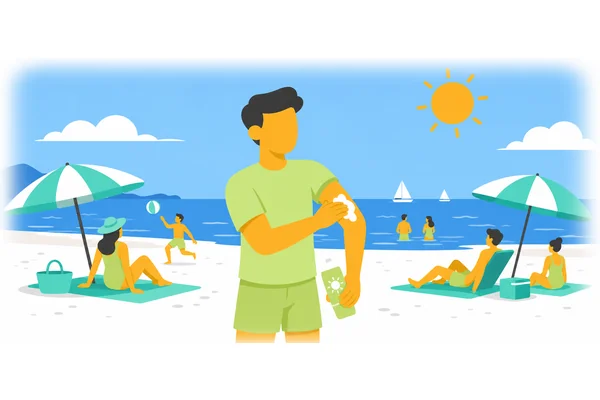
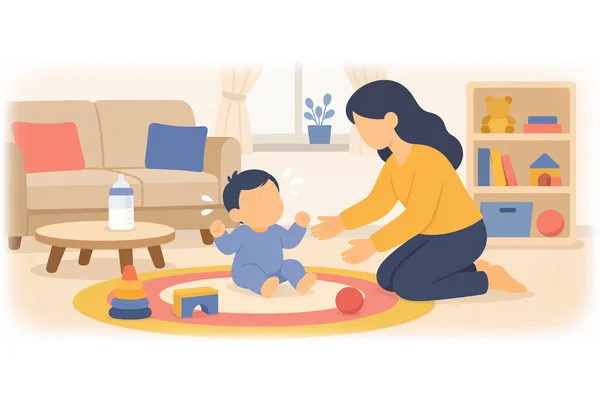
Use the zero conditional for three main situations: (1) Scientific and natural facts—'If you heat water to 100°C, it boils.' (2) General rules and habits—'If I wake up late, I skip breakfast.' (3) Instructions and procedures—'If you press this button, the door opens.' These statements are true in general; they don't depend on imagination or possibility. They're facts about how the world works.
Zero Conditional vs Other Conditionals
| Feature | Zero Conditional | First Conditional | Second Conditional |
|---|---|---|---|
| Form | If + present simple, present simple | If + present simple, will + infinitive | If + past simple, would + infinitive |
| When to use | To express facts, scientific truths, and situations that are always true. The result is 100% certain whenever the condition is met. | To talk about real and possible future situations. The result is likely but not guaranteed. | To talk about unreal, imaginary, or unlikely present/future situations. The result is hypothetical. |
| Positive example | If you heat water to 100°C, it boils. | If it rains tomorrow, I will take an umbrella. | If I had more time, I would learn Spanish. |
| Negative example | If plants don't get sunlight, they don't grow. | If she doesn't study, she won't pass the exam. | If I didn't live so far away, I wouldn't need a car. |
| Question example | What happens if you mix bleach and ammonia? | What will you do if you miss the bus? | What would you do if you won the lottery? |
| Certainty level | 100% certain — always true | Likely — possible and realistic | Unlikely or imaginary — not expected to happen |
| Key signal words | always, generally, every time, never, usually | tomorrow, next week, soon, probably, perhaps | wish, imagine, would, could, dream, in a perfect world |
| Time reference | Timeless — applies past, present, and future | Future — refers to a specific future possibility | Present or future — but unreal or contrary to fact |
| Typical topics | Science, nature, habits, universal rules, instructions | Plans, warnings, promises, predictions, advice | Wishes, daydreams, advice, polite requests, regrets about the present |
| 🔑 Key Difference: The zero conditional is the only conditional used for facts and general truths that are always true, regardless of time — both the condition and the result use the present simple to signal this timeless certainty. The first conditional shifts to will to indicate a real but uncertain future outcome, while the second conditional uses past tense forms and would to signal that the situation is imaginary, unlikely, or contrary to current reality. Choosing between them depends entirely on whether you are stating an unchanging truth, a realistic possibility, or a hypothetical scenario. | |||
Examples
What to Remember
- Use present simple in both the if-clause and main clause.
- Zero conditional expresses facts and general truths where the result is always certain.
- Use it for scientific facts, habits, and situations with automatic cause-and-effect relationships.
- The zero conditional is called 'real conditional' because it describes factual, real situations.
- If the condition is true, the result always happens—there is no uncertainty.