Grammar A2 Articles — A, An, The

Articles — the most common mistakes

Articles — the most common mistakes

Why Articles Are Tricky

Articles (a, an, the) are small words, but learners make big mistakes with them. This happens because your language might not have articles, or uses them differently. Let's look at the most common mistakes and learn the correct rules.

How to Choose the Right Article — Decision Flowchart

Note: This section contains a decision flowchart for choosing English verb tenses (past, present, future), not articles (a, an, the). To learn about article selection, please refer to the dedicated articles section.

Q1: Was the action in progress at a specific past moment?
YES
Q2: Did another action interrupt it?
YES
Past Continuous
Example

I was reading when the phone rang.

NO
Past Continuous
Example

At 8 pm yesterday, she was studying alone.

NO
Q3: Did it happen before another past event?
YES
Q4: Was it ongoing up to that earlier event?
YES
Past Perfect Continuous
Example

She had been waiting for two hours before the bus arrived.

NO
Past Perfect
Example

He had left before she arrived.

NO
Past Simple
Example

They visited Rome last summer.

Q1: Is the action happening right now or temporarily?
YES
Present Continuous
Example

She is writing an email right now.

NO
Q2: Does it connect past experience or result to now?
YES
Q3: Has it been ongoing until now?
YES
Present Perfect Continuous
Example

I have been learning Spanish for three years.

NO
Present Perfect
Example

She has just finished the report.

NO
Present Simple
Example

Water boils at 100 degrees Celsius.

Q1: Is it a pre-arranged plan or fixed appointment?
YES
Going to (or Present Continuous for schedules)
Example

We are going to meet the client on Friday. / The train leaves at 9 am.

NO
Q2: Is it a spontaneous decision or prediction?
YES
Q3: Will it be in progress at a future moment?
YES
Future Continuous
Example

This time tomorrow, I will be flying to Paris.

NO
Future Simple (will)
Example

I'll answer the door — it must be the delivery.

NO
Q4: Will it be completed before a specific future point?
YES
Future Perfect
Example

By midnight, they will have finished the project.

NO
Future Simple (will)
Example

She will probably call you later.

Formula
Formula
a/an + + singular countable noun (new or general)
I need a pen.

Examples

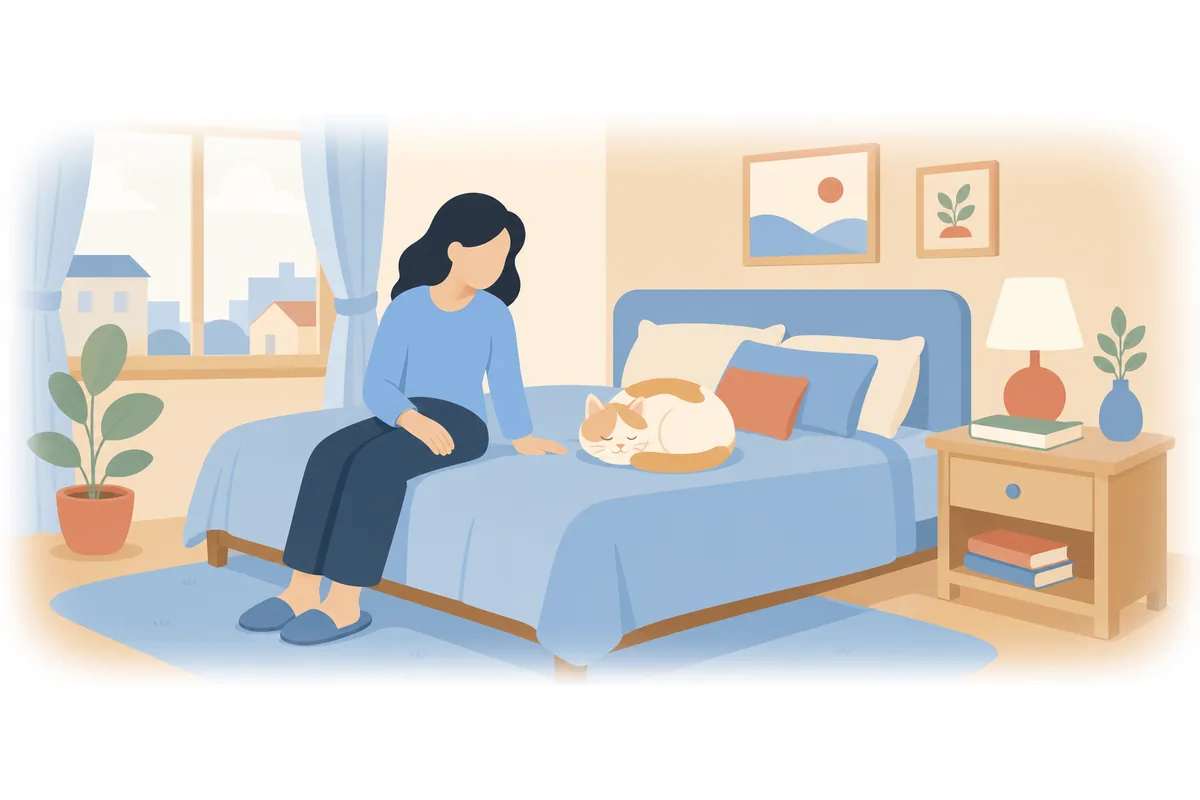
I have a cat. The cat is sleeping on my bed.
First mention uses 'a' (new); second mention uses 'the' (known)
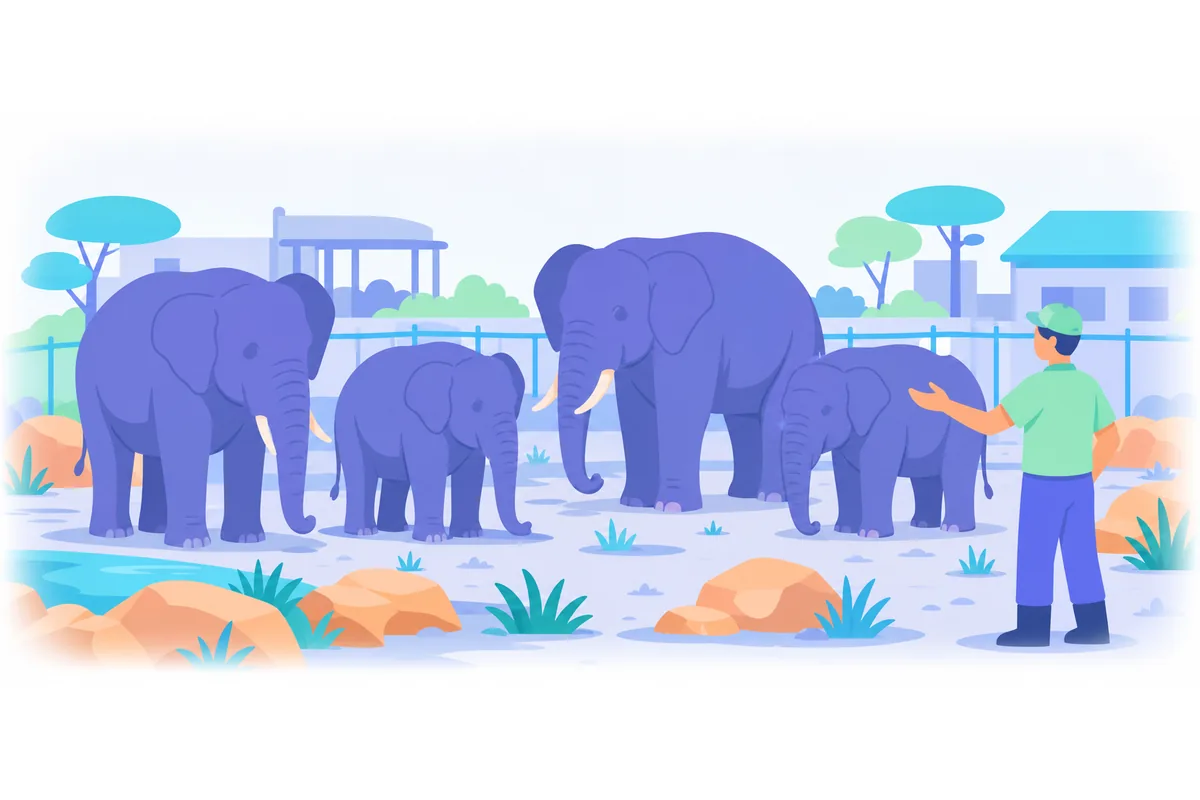
Elephants are big animals. The elephants in the zoo are very old.
General fact vs. specific elephants
She is a teacher. The teacher at my school is very kind.
Job + article; specific person + the
I love ice cream. The ice cream in this shop is delicious.
General vs. specific ice cream
When to use it
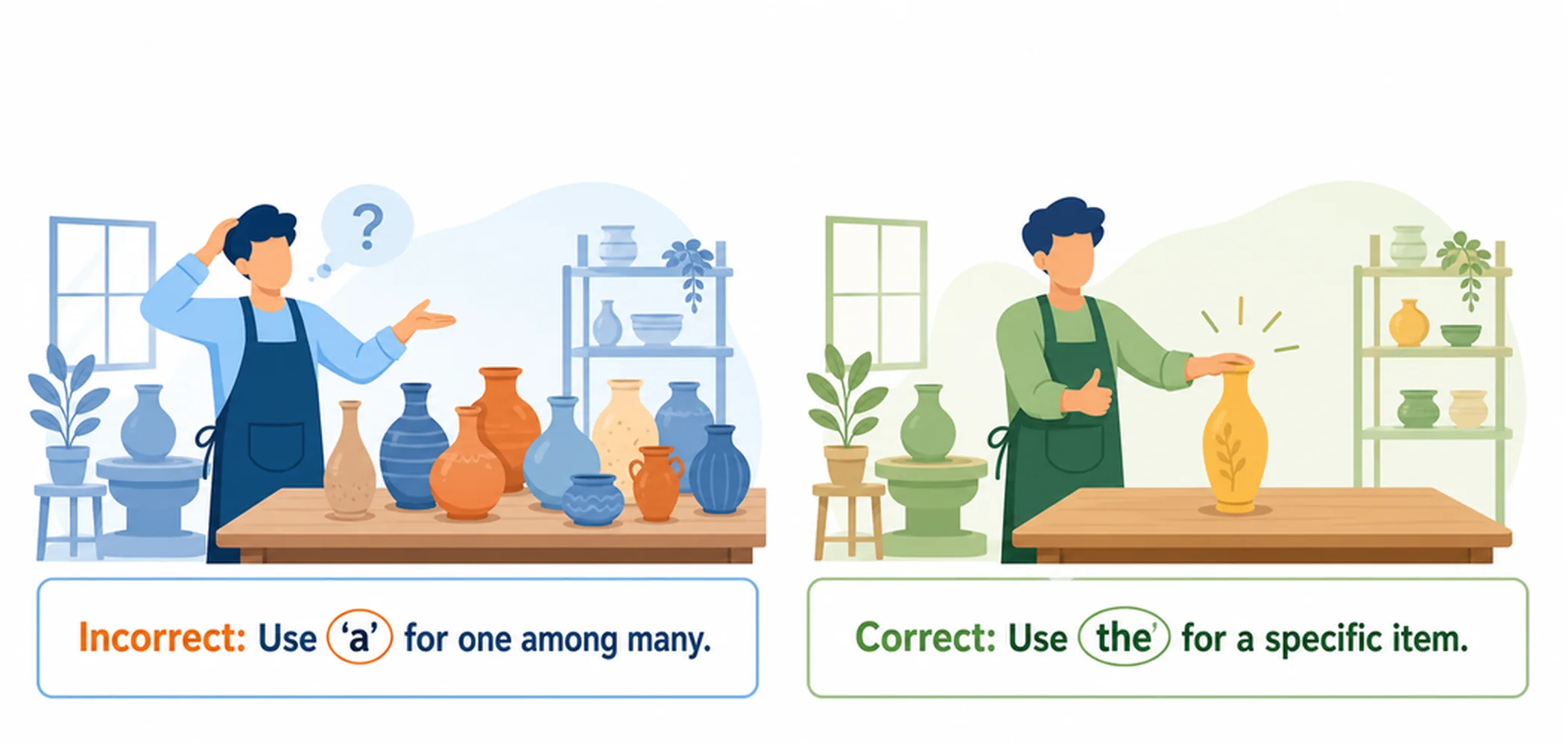
First mention
When you introduce something new, use 'a' or 'an'.
I saw a dog in the park.
Second mention
When you talk about it again (now known), use 'the'.
The dog was brown and friendly.
General facts
Use no article for plural or uncountable nouns about general things.
Cats are independent animals.
Specific things
Use 'the' when you and the listener know which thing you mean.
Close the window, please. (the window in this room)
Signal words
specific known new general first time again the only one already mentioned
Common Mistakes
Wrong
I have a dog. A dog is friendly animal.
Correct
I have a dog. A dog is a friendly animal.
Singular countable nouns need an article (a/an/the). 'Animal' is singular, so it needs 'a'.
Wrong
I like the pizza very much.
Correct
I like pizza very much.
Use 'the' only for specific things. When you talk about pizza in general, do not use 'the'.
Wrong
I go to school every day. I like the school.
Correct
I go to school every day. I like the school because my friends are there.
'School' is specific only when you add more information. Without context, 'I like the school' is unclear.
Wrong
An apple is green fruit.
Correct
An apple is a green fruit.
Every singular countable noun needs an article. 'Fruit' is singular, so it needs 'a'.
Wrong
I want to visit a Paris next year.
Correct
I want to visit Paris next year.
Proper nouns (city names) do not use 'a' or 'an'. Use 'the' only for specific places like 'the USA'.
Wrong
The doctor is important job.
Correct
A doctor is an important job. OR Being a doctor is an important job.
Singular countable nouns after 'is' need an article. 'Job' is singular, so it needs 'a'.
Wrong
I like the books and the music.
Correct
I like books and music.
Plural nouns about general things do not need 'the'. Use 'the' only when they are specific.
KEY TAKEAWAYS

What to Remember

  • Use "a" before consonant sounds and "an" before vowel sounds, regardless of spelling.
  • Use "the" when both you and your listener know which specific person or thing you mean.
  • Use "a" or "an" the first time you mention something; use "the" when mentioning it again.
  • Don't use articles before uncountable nouns like water, information, or advice when speaking generally.
  • Don't use articles before plural nouns when speaking about things in general, like "cats are animals."
← Previous
Articles in common expressions and phrases
Next →
Regular plural nouns — adding -s and -es