What Are Compound Nouns with Verb + Noun?
A compound noun is two or more words that together make one noun. One common type combines a verb and a noun. The verb comes first, and the noun comes second. For example, in the word 'toothbrush', the verb 'brush' comes first, and the noun 'tooth' comes second. These compound nouns are written as one word, and they describe an object or action that combines the meaning of both parts.
How Do Verb + Noun Compounds Work?
In these compounds, the verb usually describes what the object does or what you do with it. The noun tells you what the object is or what is affected. For example, 'haircut' = cut (verb) + hair (noun). A haircut is when you cut hair. 'Toothpaste' = paste (noun) + tooth (noun), but it functions the same way. Think about what the verb means and what the noun is, and you can understand the compound noun easily. Many of these words are very common in everyday English.
Common Verb + Noun Compounds
Some verb + noun compounds are very popular and useful. Words like 'toothbrush', 'haircut', 'eggplant', and 'playground' follow this pattern. You will see these words often in speaking and writing. Learning these compounds helps you understand new words more easily because you already know the verb and the noun separately.
Common Verb + Noun Compound Nouns List
| Verb | Noun | Compound Word | Meaning | Example Sentence |
|---|---|---|---|---|
| break | through | breakthrough | A significant discovery or achievement | Scientists made a breakthrough in cancer research. |
| break | down | breakdown | A failure or collapse; a summary of details | The car had a breakdown on the highway. |
| break | out | breakout | An escape; a sudden occurrence | There was a breakout at the prison last night. |
| drive | way | driveway | A private road leading to a house or garage | He parked his car in the driveway. |
| pick | pickpocket | A thief who steals from people's pockets | A pickpocket stole her wallet on the subway. | |
| cut | back | cutback | A reduction in spending or services | The company announced major cutbacks this year. |
| run | way | runway | A strip for aircraft takeoff and landing; a fashion catwalk | The plane landed on the runway safely. |
| run | off | runoff | Water that flows off land; a deciding election | Heavy rain caused runoff into the river. |
| run | down | rundown | A summary; a dilapidated state | Give me a quick rundown of the meeting. |
| turn | over | turnover | Total revenue; rate of staff replacement | The company's annual turnover exceeded $1 million. |
| turn | out | turnout | The number of people attending an event | Voter turnout was higher than expected. |
| set | back | setback | A reversal or obstacle to progress | Losing the contract was a major setback. |
| set | up | setup | An arrangement or preparation; a trick | The setup for the presentation took an hour. |
| sit | down | sit-down | A formal meal or meeting taken while seated | We had a sit-down dinner for the whole family. |
| hold | up | holdup | A delay; an armed robbery | There was a holdup at the bank on Main Street yesterday. |
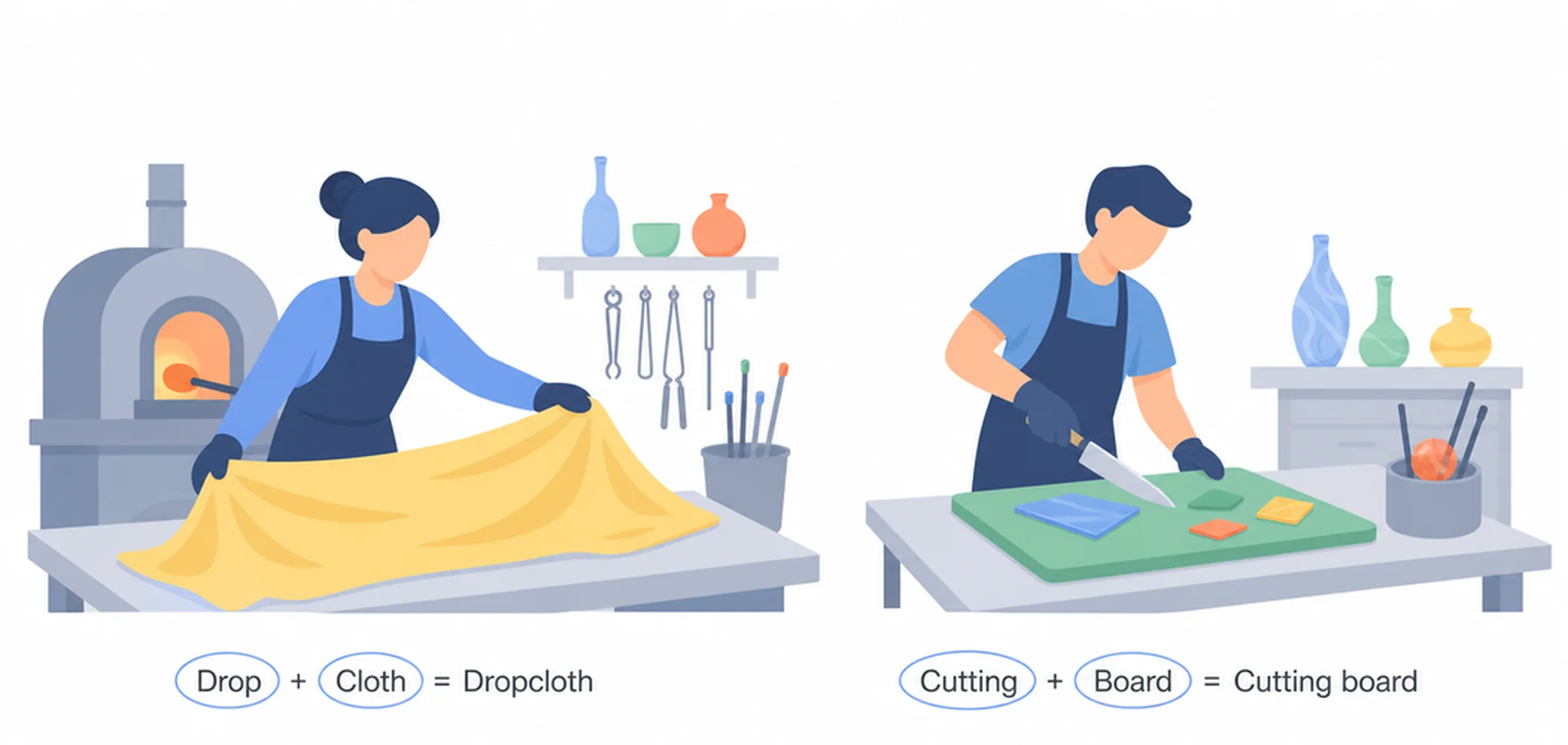
Examples






What to Remember
- A compound noun is two or more words that function as one noun with a single meaning.
- In verb + noun compounds, the verb always comes first and the noun comes second.
- These compounds are typically written as one single word, not as separate words.
- The verb describes what the object does or what you do with it.
- The noun part tells you what thing or object is involved in the action.