Countable vs Uncountable Nouns
Countable nouns are things you can count: one apple, two apples, three apples. Uncountable nouns are things you cannot count separately: water, music, information. The big difference? Countable nouns can be singular or plural and use 'a/an'. Uncountable nouns stay the same and use 'some' instead of 'a/an'.
How to Identify Uncountable Nouns
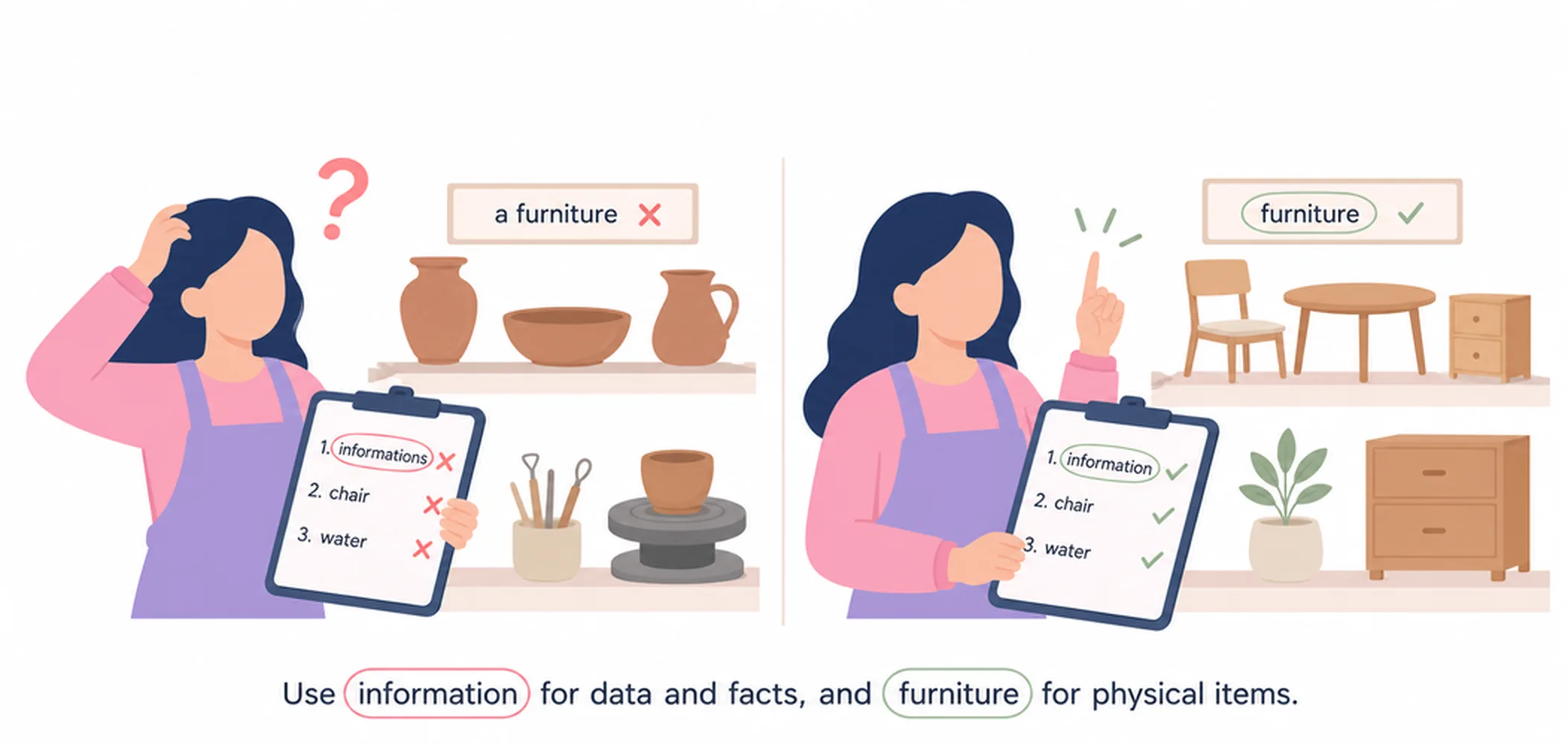
Uncountable nouns are usually liquids (water, milk), gases (oxygen, air), abstract ideas (love, happiness), materials (wood, plastic), or groups (furniture, luggage). If you cannot put a number in front of the noun, it is probably uncountable.
Quick Comparison Table
| Feature | Countable Nouns | Uncountable Nouns |
|---|---|---|
| Form | Can be used in both singular and plural forms (e.g., apple / apples, chair / chairs) | Used only in singular form; has no plural form (e.g., water, information, advice) |
| Pluralisation | Can be pluralised by adding -s, -es, or using irregular forms (e.g., dogs, boxes, children) | Cannot be pluralised. Saying informations or advices is incorrect. Use expressions like pieces of advice instead. |
| Use of a / an | Can use a or an with singular countable nouns (e.g., a dog, an apple, a chair) | Cannot use a or an. Saying a water or an advice is incorrect. No article or use some instead. |
| Use of some / any | Used with plural countable nouns: some books, any cats, some friends | Used with singular uncountable nouns: some water, any milk, some furniture |
| Use of much / many | Use many with plural countable nouns: many cars, many people, many questions | Use much with uncountable nouns: much water, much time, much luggage |
| Use of few / little | Use few or a few with countable nouns: few friends, a few apples | Use little or a little with uncountable nouns: little money, a little sugar |
| Positive Example | She has a cat. There are three books on the table. |
She has some money. There is some furniture in the room. |
| Negative Example | I don't have any friends here. There aren't many chairs left. |
I don't have any luggage. There isn't much time left. |
| Question Example | Do you have any brothers or sisters? How many apples do you want? |
Do you need any help? How much water do you drink a day? |
| Example Words | apple, dog, chair, book, idea, friend, car, question, egg, person | water, money, advice, information, furniture, luggage, rice, time, knowledge, music |
| Key Signal Words | a / an, many, few, a few, each, every, both, number of, several, one / two / three | much, little, a little, a bit of, a great deal of, amount of, some (no article), no plural -s |
| Common Mistakes | Using much instead of many: "much books" Omitting the article: "I have dog" |
Adding a plural -s: "informations", "advices" Using a / an: "an advice", "a furniture" |
| Key Difference: Countable nouns refer to individual items that can be counted (one apple, two apples) and therefore have both singular and plural forms, accepting a/an, many, and few. Uncountable nouns refer to substances, concepts, or masses that cannot be counted as separate units — they have no plural form, cannot take a/an, and are used with much and little instead. When in doubt, ask yourself: "Can I say one ___ or two ___s?" — if yes, it's countable; if not, it's uncountable. | ||
Examples
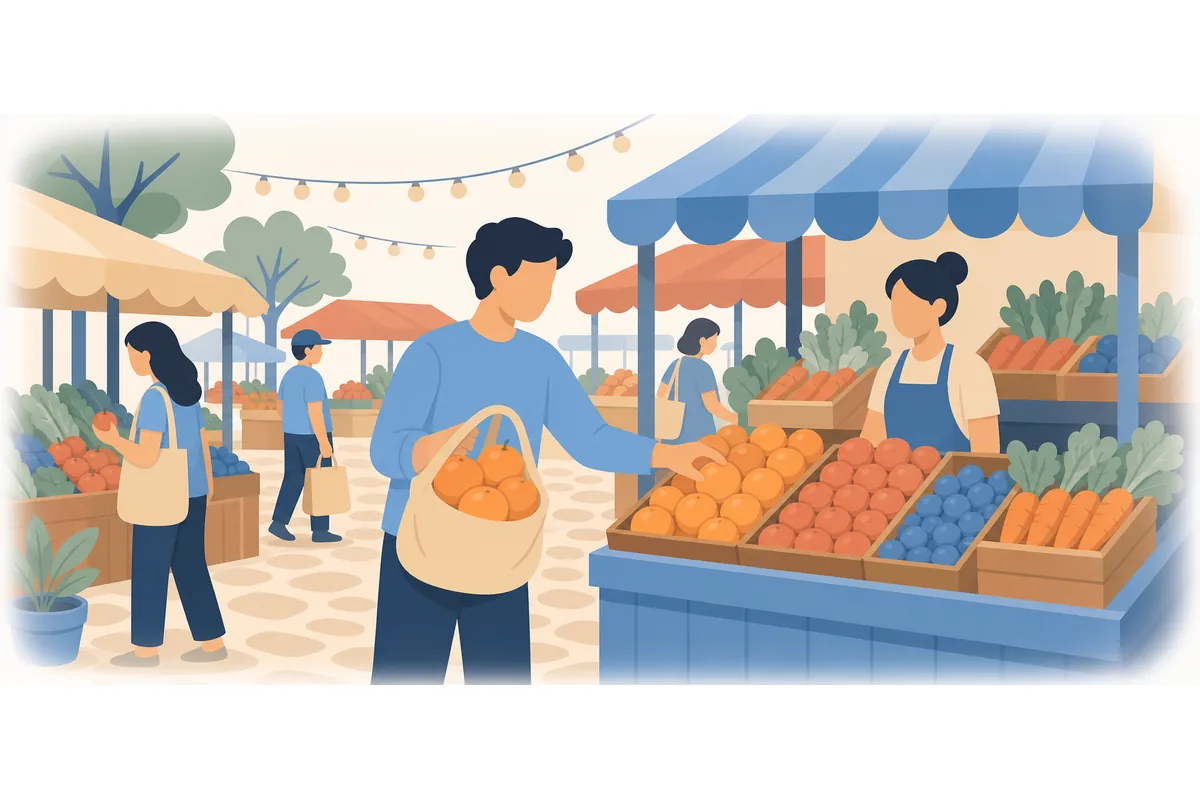
I bought five oranges at the market yesterday.
Countable · Plural form with number

She wants a cat, not a dog.
Countable · Singular with 'a'
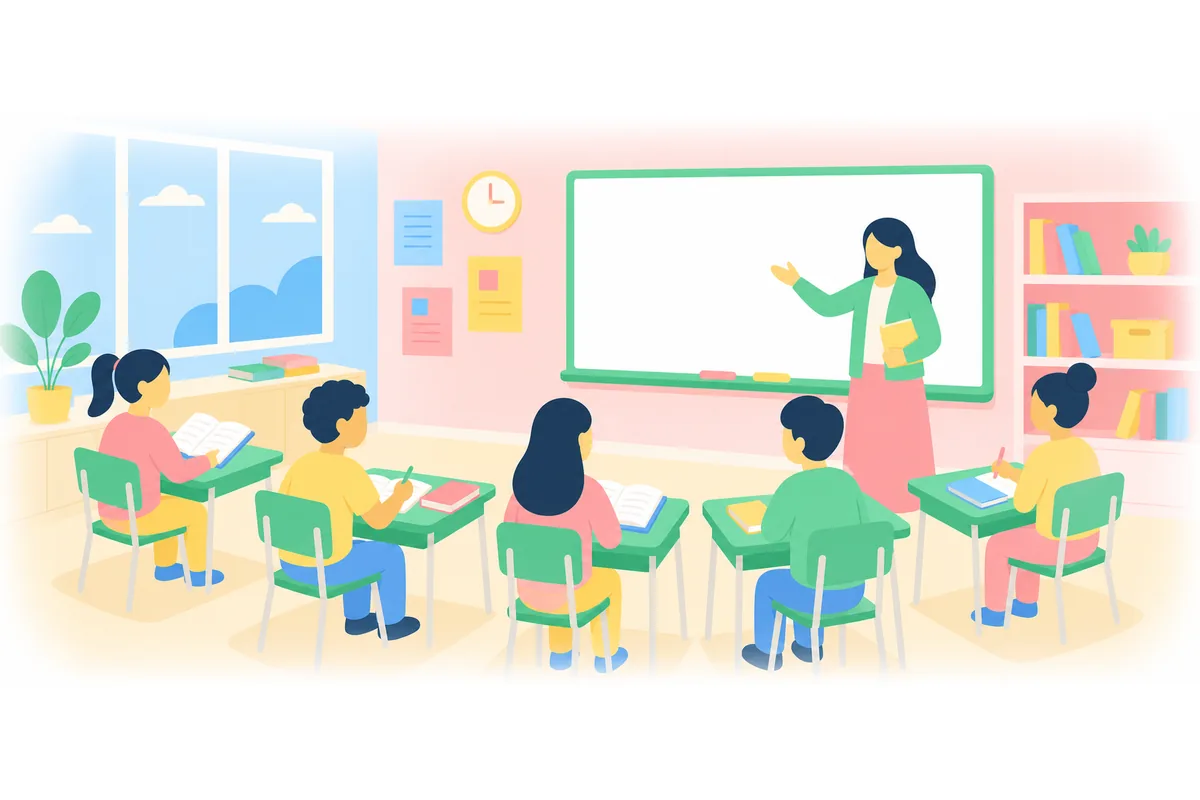
There are five students in the classroom.
Countable · Plural with number
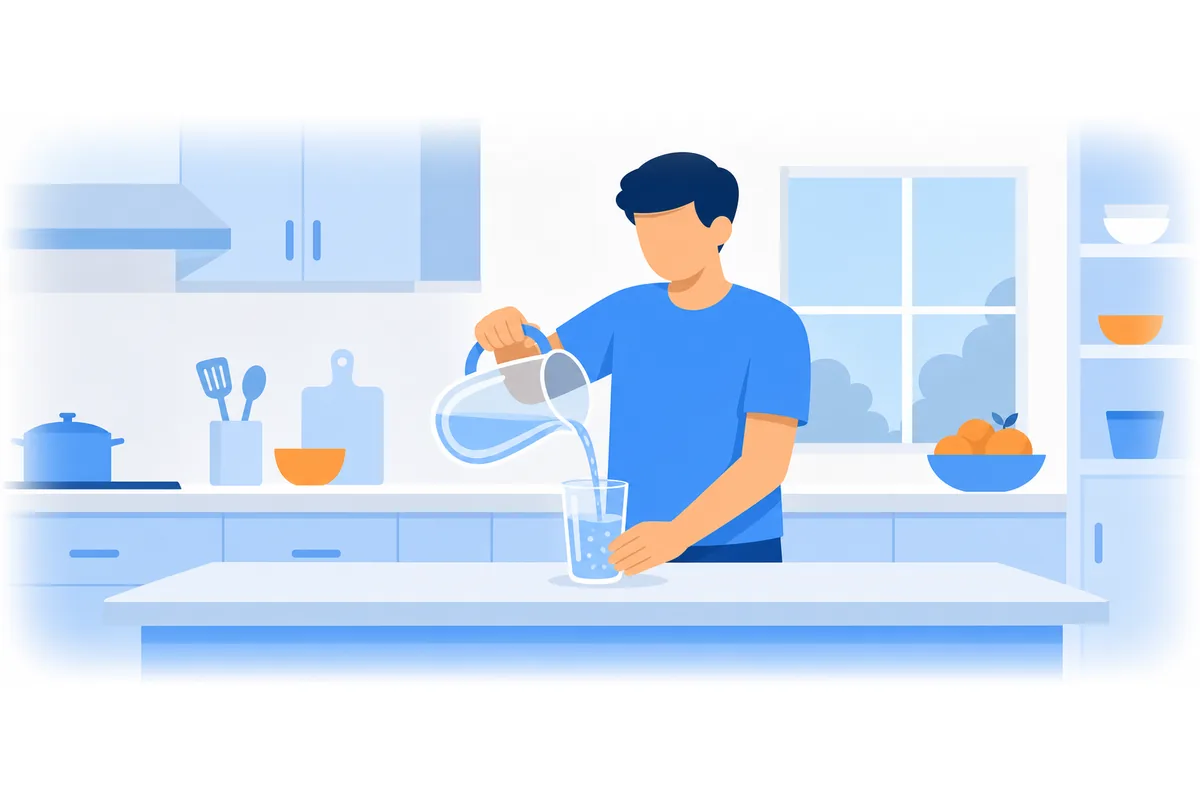
Could you pour some water into this glass?
Uncountable · No plural, uses 'some'

I love listening to music in the evening.
Uncountable · No article 'a/an', no plural

We need some information about the project.
Uncountable · Stays singular, uses 'some'
Signal words
countable: one, two, a/an, many, several, few
uncountable: some, much, a lot of, little, a piece of
never use: 'a/an' with uncountable, 's' with uncountable in general statements
Common Mistakes
✕
Wrong
I drank three milks this morning.
✓
Correct
I drank three glasses of milk this morning.
Milk is uncountable. Use 'glasses of milk' to count portions instead.
✕
Wrong
Can you give me an advice about my job?
✓
Correct
Can you give me some advice about my job?
Advice is uncountable. Use 'some' instead of 'a/an'. Never add 's' to make 'advices'.
✕
Wrong
I saw many furnitures in the store.
✓
Correct
I saw a lot of furniture in the store.
Furniture is uncountable. Use 'a lot of' instead of 'many'. Never add 's' to uncountable nouns.
KEY TAKEAWAYS
What to Remember
- Countable nouns can be counted individually and have both singular and plural forms.
- Use 'a/an' with singular countable nouns, never with uncountable nouns.
- Uncountable nouns cannot be counted separately and always stay in singular form.
- Use 'some' with both countable and uncountable nouns in plural or general contexts.
- Common mistake: don't use 'a/an' with uncountable nouns like water, music, or information.