What Are Uncountable Nouns?
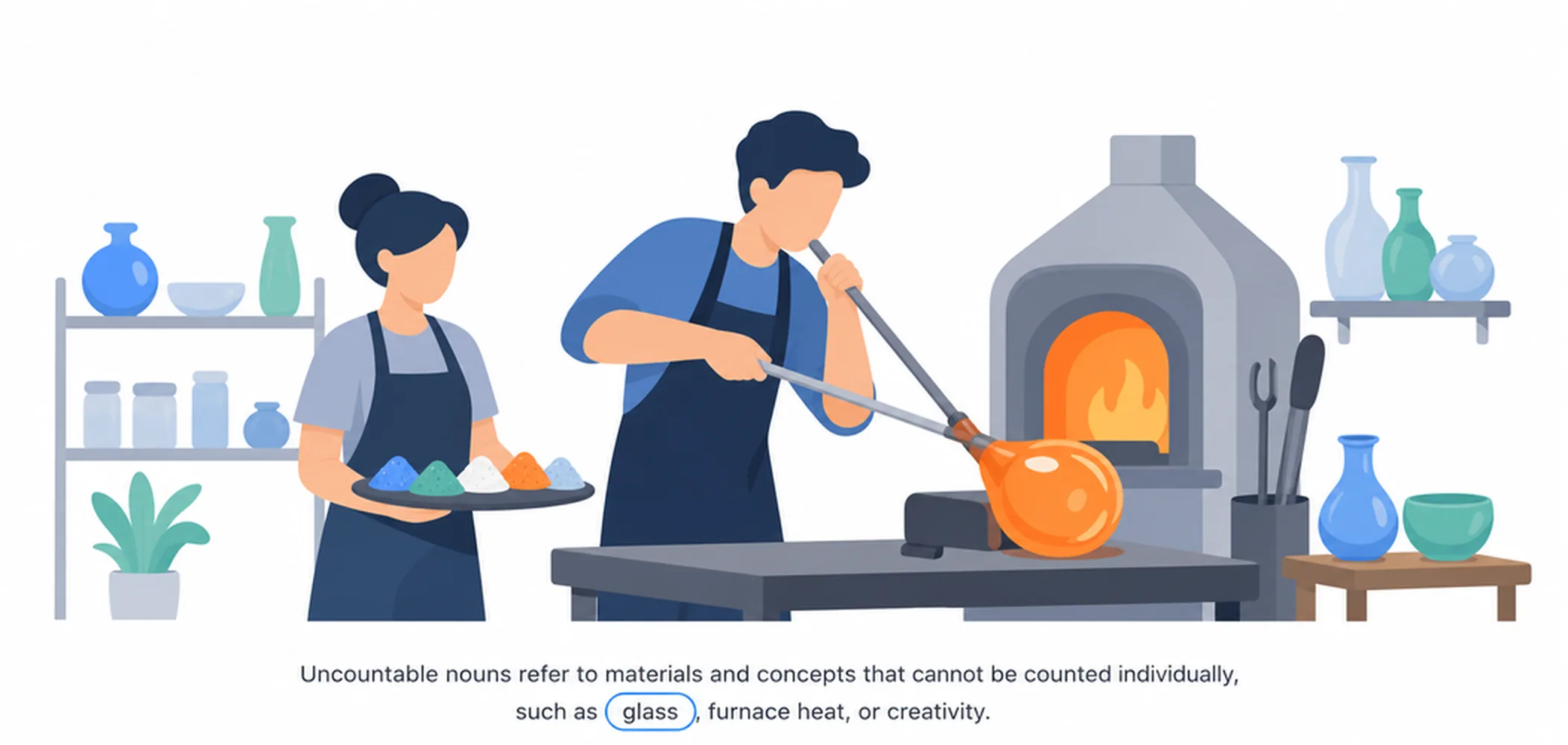
Uncountable nouns are words that we cannot count as separate items. We cannot say "one water" or "two waters" in normal usage. Uncountable nouns refer to things that are continuous, abstract, or measured in amounts. They are also called mass nouns or non-count nouns. In English, uncountable nouns always use singular verbs, even though they may seem plural.
Common Types of Uncountable Nouns
Uncountable nouns include liquids (water, milk, juice), gases (air, oxygen), materials (wood, plastic, gold), abstract ideas (love, information, advice), and activities (homework, research, travel). Some food items like rice, bread, and sugar are also uncountable. When you want to count these things, you need to use a measure word like "a glass of water," "a piece of advice," or "a cup of rice."
How to Use Uncountable Nouns
Always use the singular form of the verb with uncountable nouns. Say "The information is useful," not "The information are useful." Use "some" or "much" with uncountable nouns, not "many." For example: "I need some help" and "There is much water," but never "many waters" or "many helps" in standard English. To count uncountable nouns, add a measure word: "three cups of coffee" or "five pieces of furniture."
Countable vs Uncountable: Side-by-Side Examples
| Countable Noun | Uncountable Equivalent |
|---|---|
| coin / note | money |
| suitcase / bag | luggage / baggage |
| fact / detail | information |
| job / position | work |
| loaf / slice | bread |
| drop / glass | water |
| suggestion / tip | advice |
| journey / trip | travel |
| paper / article | research |
| piece / item | furniture / equipment |
Examples






What to Remember
- Uncountable nouns cannot be counted as separate items and cannot be pluralized with numbers.
- Uncountable nouns always take singular verbs, even when they refer to multiple things or seem plural.
- Common uncountable nouns include liquids, gases, materials, abstract ideas, and substances that are measured by amount.
- We cannot say "one water" or "two waters" in normal usage because water is uncountable.
- Uncountable nouns are also called mass nouns or non-count nouns and represent continuous or abstract concepts.