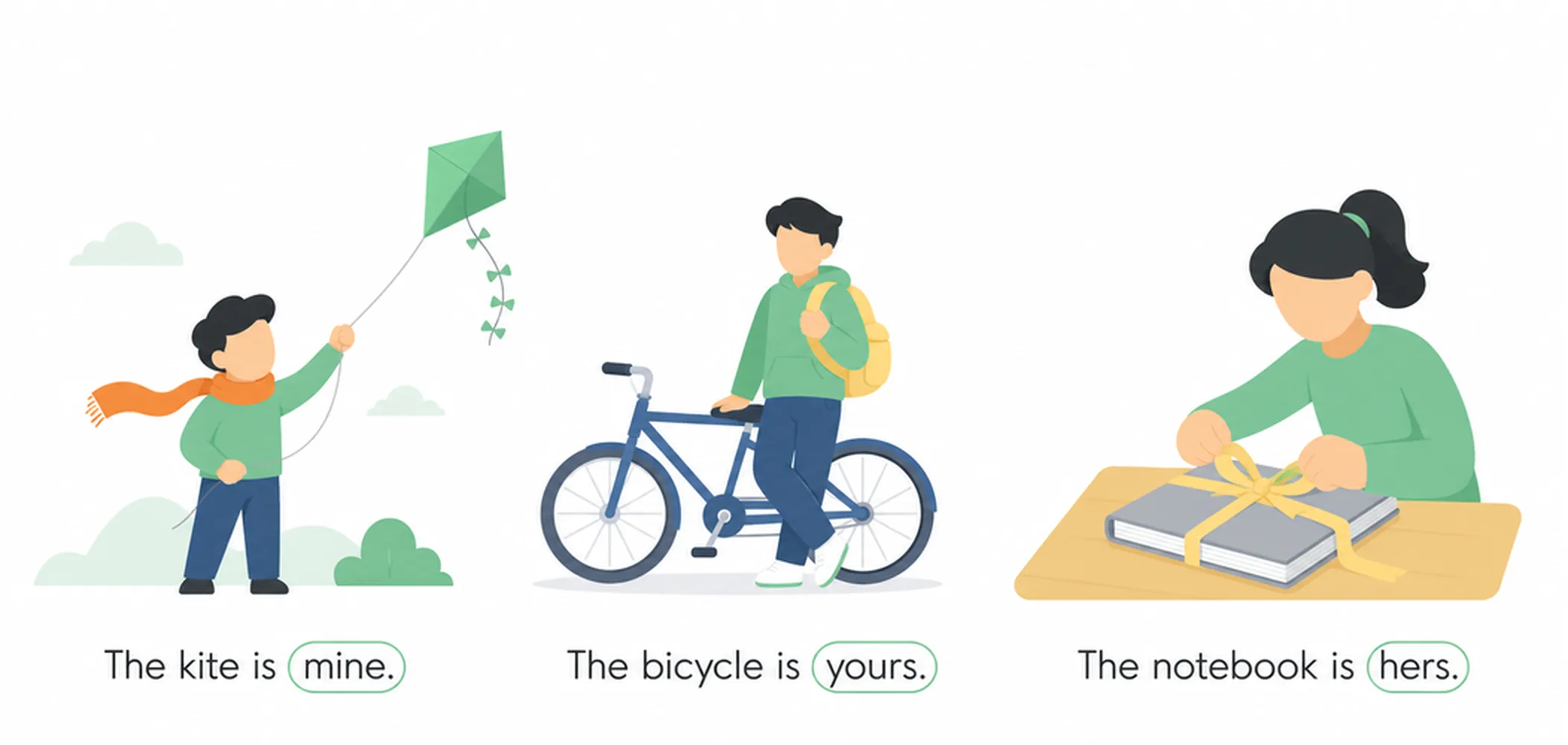
What are possessive pronouns?
Possessive pronouns show who owns or has something. They replace a noun and a possessive adjective together. For example, instead of saying 'This is my book', you can say 'This book is mine.' Possessive pronouns are: mine, yours, his, hers, its, ours, and theirs. They never need an apostrophe.
How to use possessive pronouns
Possessive pronouns replace nouns to show ownership or belonging. They must match the person you are talking about. Use the correct pronoun form based on the subject:
| Subject Pronoun | Possessive Pronoun | Example |
|---|---|---|
| I / me | mine | This book is mine. |
| you | yours | Is this pen yours? |
| he / him | his | The blue car is his. |
| she / her | hers | These keys are hers. |
| we / us | ours | The house is ours. |
| they / them | theirs | The laptops are theirs. |
After the verb 'be' (is, are, was, were)
At the end of a sentence (after other verbs)
As the subject at the beginning of a sentence
Special note: The pronoun 'its' is rarely used alone because it refers to things or animals, not people. For example: "The dog wagged its tail" uses the possessive adjective 'its', not the possessive pronoun. When you need a possessive pronoun for things, rephrase the sentence: "This phone belongs to the company — it is theirs."
Possessive pronouns vs. possessive adjectives
Do not confuse possessive pronouns with possessive adjectives (my, your, his, her, its, our, their). Possessive adjectives come before a noun: 'my car', 'your phone', 'his dog'. Possessive pronouns replace the noun: 'The car is mine', 'The phone is yours', 'The dog is his.' This is an important difference to remember.
Possessive Pronouns at a Glance
| Subject Pronoun | Possessive Adjective | Possessive Pronoun | Example (Adjective) | Example (Pronoun) | Note |
|---|---|---|---|---|---|
| I | my | mine | That is my bag. | That bag is mine. | Used for first person singular |
| you | your | yours | Is this your coat? | Is this coat yours? | Singular and plural you share the same forms |
| he | his | his | I like his car. | That car is his. | Adjective and pronoun are identical |
| she | her | hers | That is her book. | That book is hers. | Her is also an object pronoun; context clarifies |
| it | its | its | The dog wagged its tail. | The company made its decision. | No apostrophe — it's = it is. Rarely used as a true pronoun |
| we | our | ours | We love our home. | That home is ours. | First person plural |
| they | their | theirs | I like their idea. | That idea is theirs. | Also used as singular gender-neutral (they/their/theirs) |
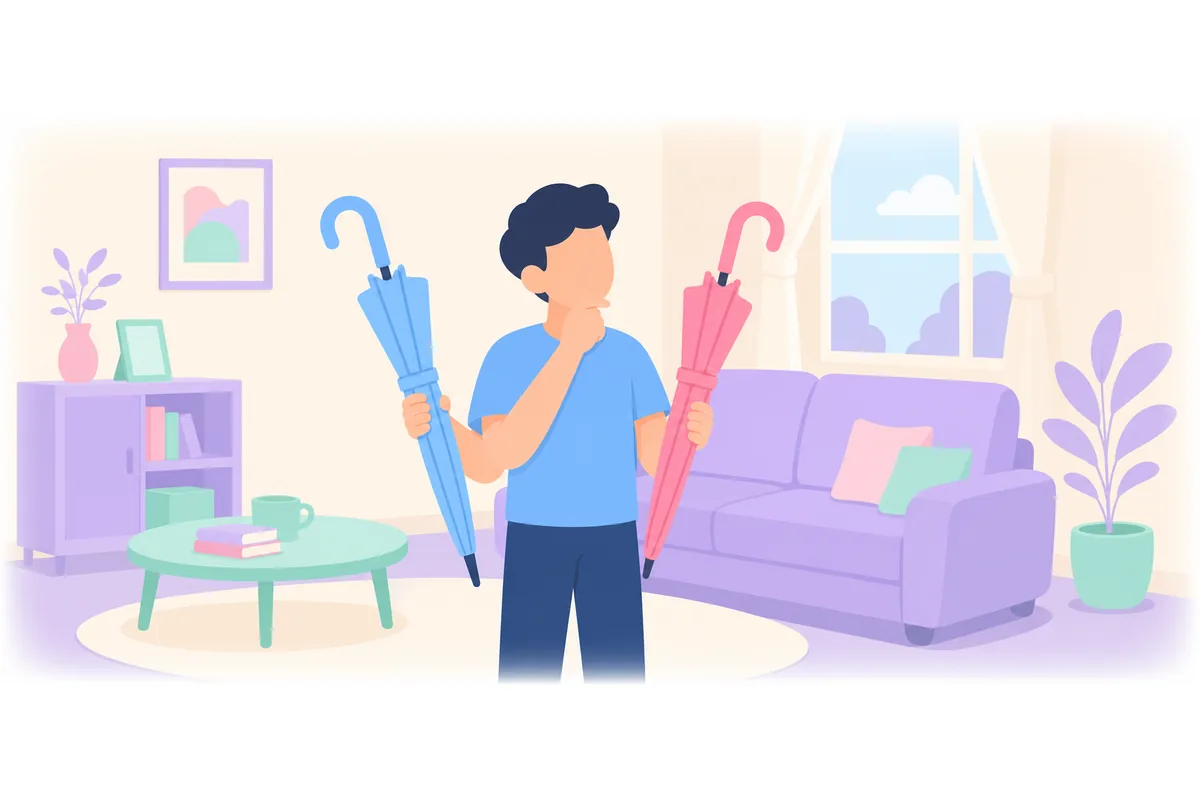
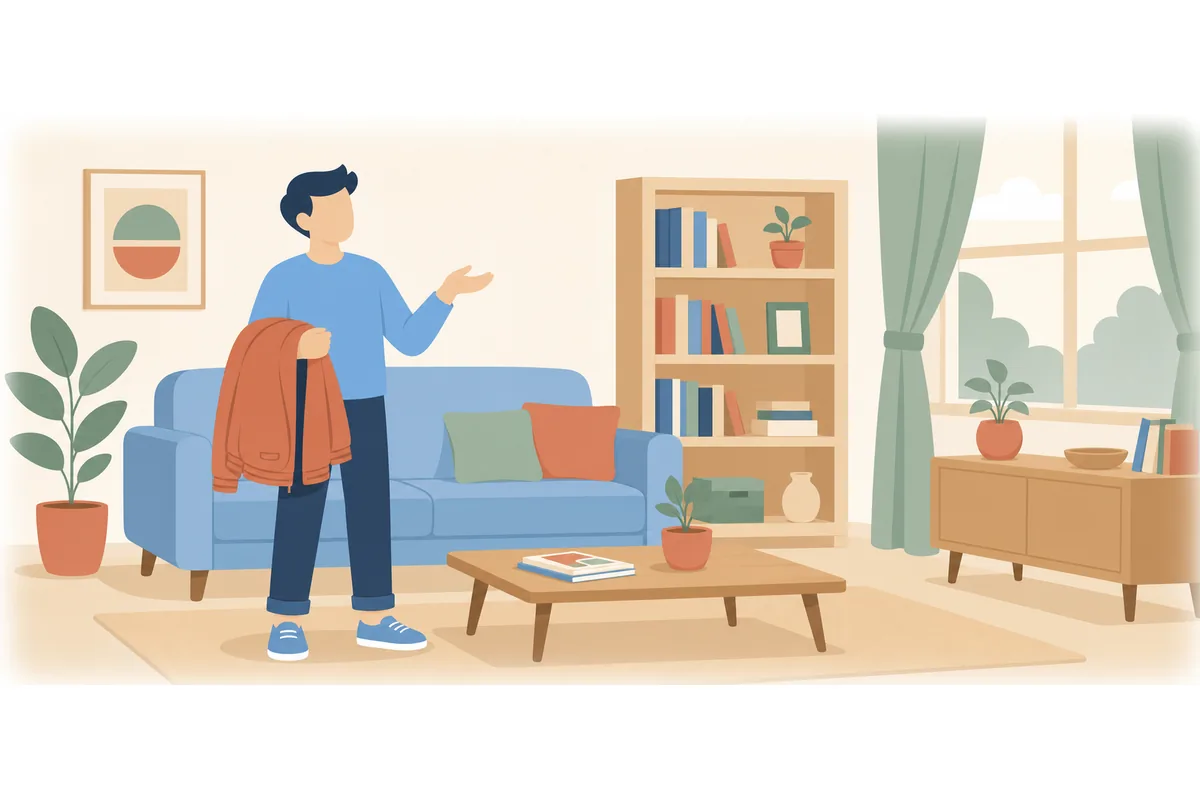
Examples




What to Remember
- Possessive pronouns (mine, yours, his, hers, its, ours, theirs) show who owns something without using a noun.
- Never use an apostrophe with possessive pronouns—'its' not 'it's'.
- Possessive pronouns come after the verb 'be' or at the end of a sentence.
- Each possessive pronoun matches a specific person: use 'mine' for I, 'yours' for you, 'his' for he.
- Possessive pronouns replace both a possessive adjective and a noun together.