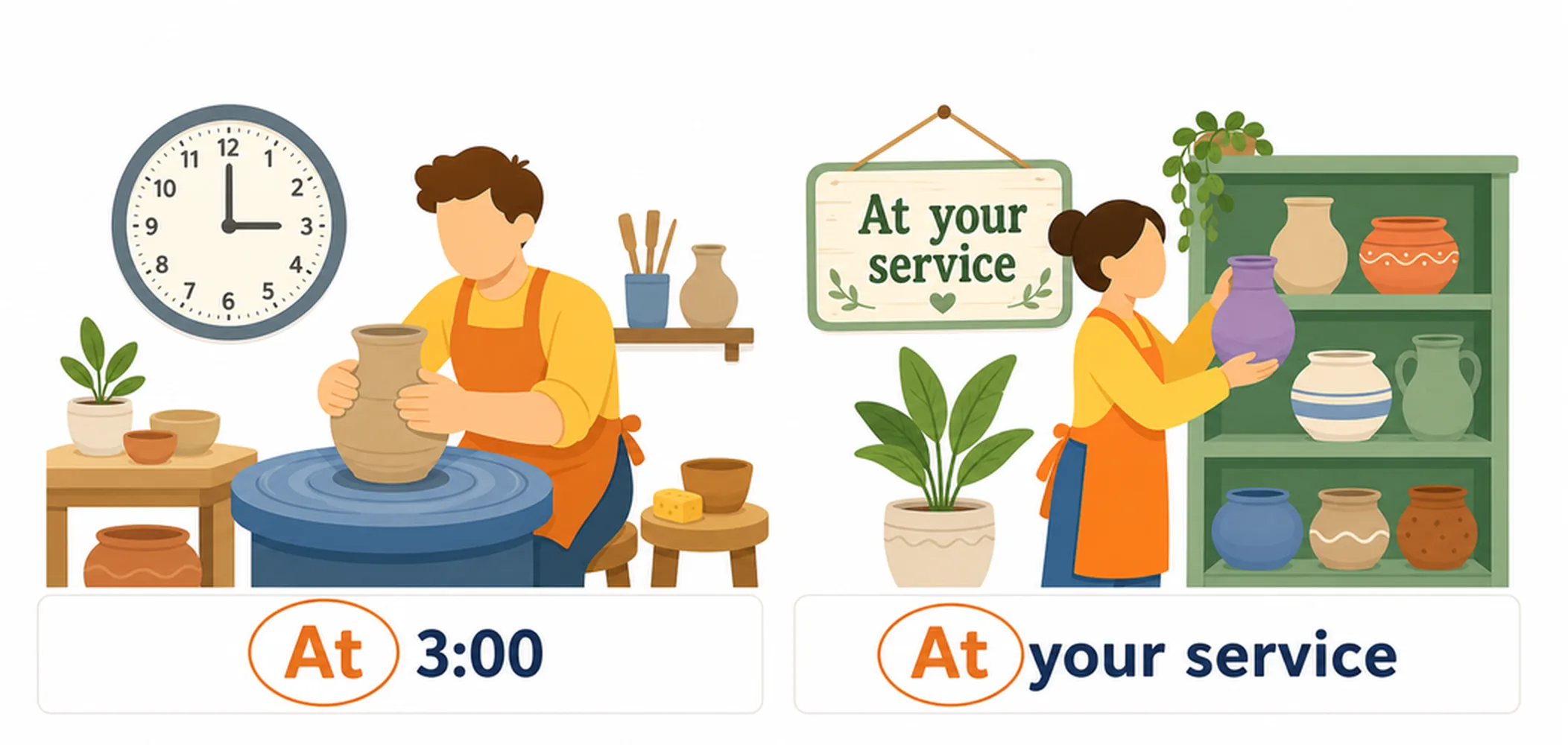
What is the preposition 'at'?
The preposition 'at' is used to show a specific point in time. It is very common in English, especially when we talk about clock times and fixed time expressions. 'At' tells us exactly when something happens. It is a small word, but it is very important for talking about time correctly.
Using 'at' with clock times
We use 'at' before all clock times. This includes hours, minutes, and seconds. For example: 'at 3 o'clock', 'at 9:30', 'at midnight', 'at noon'. We always use 'at' with these times, never 'on' or 'in'. Clock times are specific moments, so 'at' is the correct preposition.
Using 'at' with fixed expressions
We also use 'at' with fixed time expressions. These are common phrases that describe specific moments or occasions. Some common fixed expressions are: 'at night', 'at the weekend', 'at Christmas', 'at Easter', 'at lunch time', 'at breakfast time', and 'at the moment'. These expressions are special, and we always use 'at' with them, not 'on' or 'in'.
At — Clock Times and Fixed Expressions: Quick Reference Table
| Category | Expression | Example | Note |
|---|---|---|---|
| Clock Times | at 3 o'clock | The meeting starts at 3 o'clock. | Use at with exact clock times |
| at 9:30 / at half past nine | The train leaves at 9:30. | Works with both digital and spoken time formats | |
| at noon | We meet at noon for lunch. | 12:00 pm; also at midday | |
| at midnight | The party ends at midnight. | 12:00 am | |
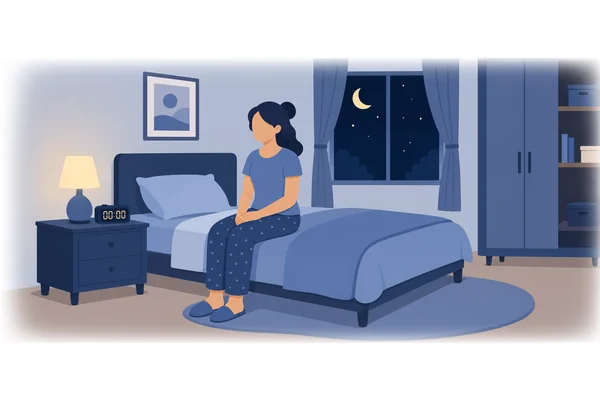
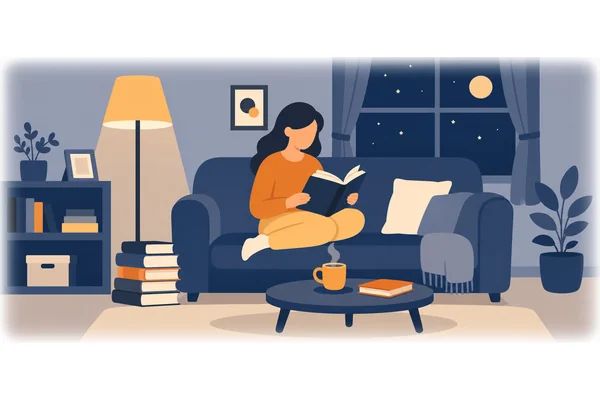
| Parts of the Day | at night | It gets very cold at night. | Note: in the morning/afternoon/evening but at night |
| at dawn / at dusk | We set off at dawn. | Specific transitional times of day | |
| at lunchtime | I'll call you at lunchtime. | Also: at breakfast time, at dinnertime | |
| at bedtime | She reads at bedtime. | A routine moment rather than a fixed clock time | |
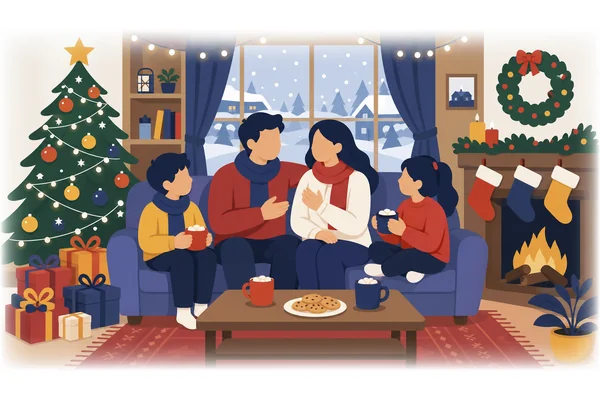
| Holidays & Festivals | at Christmas | We visit family at Christmas. | Refers to the holiday period, not a single day |
| at Easter | Schools close at Easter. | Same pattern as at Christmas | |
| at Thanksgiving / at Diwali | They travel home at Thanksgiving. | Use at with most named holiday periods | |
| Weekends & Breaks | at the weekend (BrE) | I go hiking at the weekend. | British English; American English uses on the weekend |
| at weekends (BrE) | She works at weekends. | Plural for habitual meaning | |
| at half-term | We went to Paris at half-term. | Mainly British school holiday periods | |
| Fixed & Common Expressions | at the moment | I'm busy at the moment. | Means "right now / currently" |
| at present | At present, no decision has been made. | More formal than at the moment | |
| at the same time | Don't all speak at the same time! | Means simultaneously | |
| at times | At times, the work is very hard. | Means "sometimes / occasionally" | |
| Age & Life Stages | at the age of … | She retired at the age of 65. | Standard formula for giving someone's age |
| at 16 / at 30 (informal) | He left school at 16. | Shortened form; common in everyday speech | |
| at birth | The twins were separated at birth. | Refers to the moment of birth; used in formal contexts |
Examples


What to Remember
- Use 'at' before all clock times like 'at 3 o'clock' and 'at 9:30'.
- Use 'at' with fixed time expressions like 'at midnight', 'at noon', and 'at dawn'.
- Never use 'on' or 'in' before clock times; always use 'at' instead.
- 'At' shows a specific point in time, not a period or duration.
- 'At' is essential for talking about when something happens exactly and correctly.