Grammar A2 Question Tags

What are question tags?

What are question tags?

What are Question Tags?

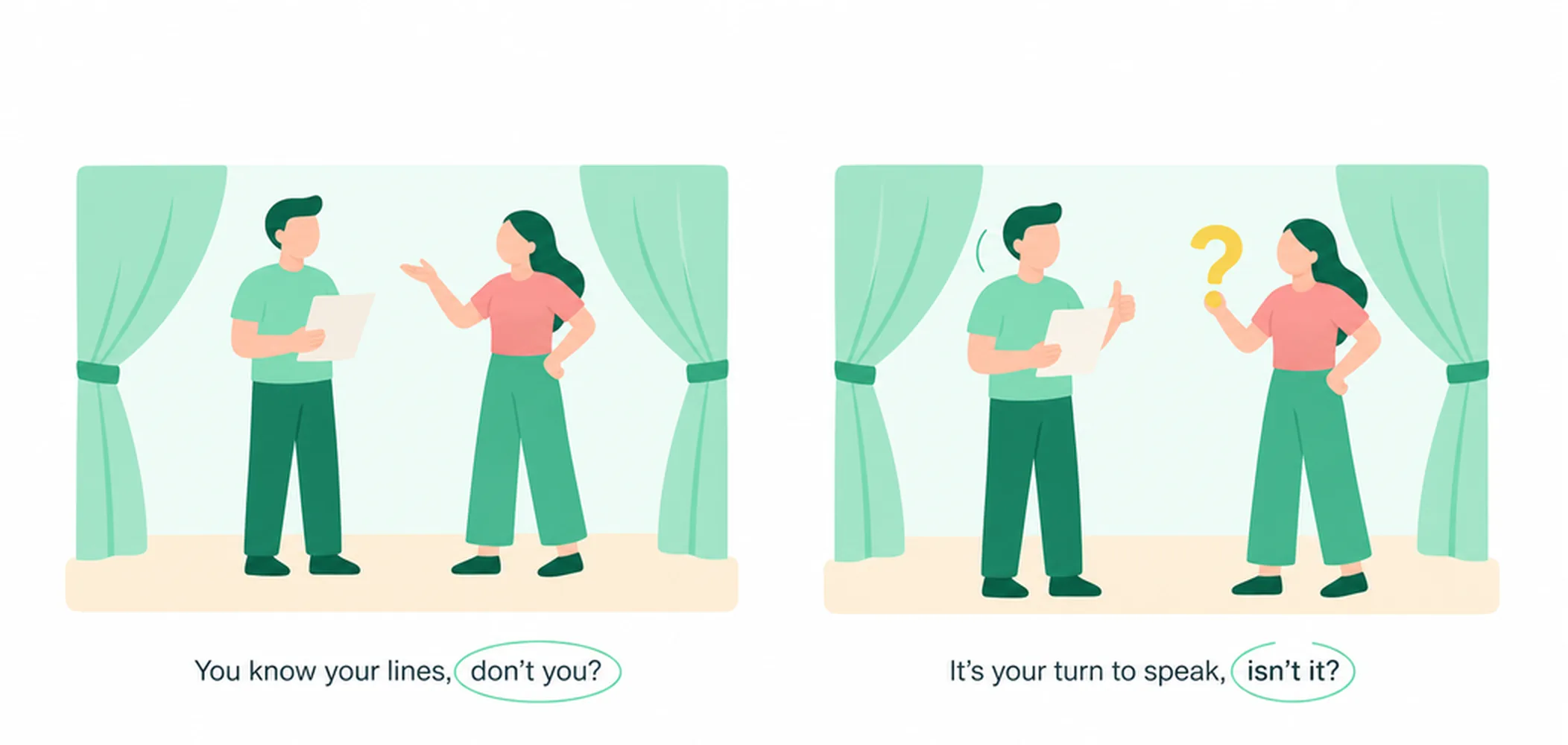
A question tag is a short question we add to the end of a statement. We use question tags to ask for confirmation or agreement. For example: "You like coffee, don't you?" The main statement is "You like coffee" and the question tag is "don't you?". Question tags are very common in spoken English and informal writing.

The basic rule is simple: if the main verb is positive, the question tag is negative. If the main verb is negative, the question tag is positive. You repeat the auxiliary verb (like do, does, did, is, are, can, will) in the question tag. For example: "She works here, doesn't she?" (positive statement → negative tag) and "You don't like pizza, do you?" (negative statement → positive tag).

When to Use Question Tags

Use question tags when you want to confirm something you already believe is true. You are not asking a real question—you expect the other person to agree with you. For example, if you see your friend wearing a new jacket, you might say: "That's a new jacket, isn't it?" You already know it is new. The tag asks the person to confirm what you think. Question tags are friendly and polite in conversation.

Important Grammar Rules

Remember: the pronoun in the question tag must match the subject of the main statement. If the statement is "Tom is happy," the tag is "isn't he?" (not "isn't it?"). Also, if there is no auxiliary verb in the statement, use "do," "does," or "did." For example: "You like pizza, don't you?" The verb "like" has no auxiliary, so we add "do" in the tag.

How to Choose the Right Question Tag

Q1: Was the action in progress at a specific past moment?
Yes
Q2: Did another action interrupt it?
Yes
Past Continuous
Example

She was reading when the phone rang, wasn't she?

No
Past Continuous
Example

They were still talking at midnight, weren't they?

No
Q3: Did it happen before another past event?
Yes
Q4: Was it ongoing up to that earlier event?
Yes
Past Perfect Continuous
Example

He had been working for hours before he stopped, hadn't he?

No
Past Perfect
Example

They had left before she arrived, hadn't they?

No
Past Simple
Example

You visited Paris last year, didn't you?

Q1: Is the action happening right now or temporarily?
Yes
Present Continuous
Example

She is studying right now, isn't she?

No
Q2: Does it connect past experience or result to now?
Yes
Q3: Has it been ongoing until now?
Yes
Present Perfect Continuous
Example

You have been waiting for a long time, haven't you?

No
Present Perfect
Example

They have finished the project, haven't they?

No
Present Simple
Example

He works every day, doesn't he?

Q1: Is it a pre-arranged plan or fixed appointment?
Yes
going to (or Present Continuous for schedules)
Example

You are going to meet her tomorrow, aren't you?

No
Q2: Is it a spontaneous decision or prediction?
Yes
Q3: Will it be in progress at a future moment?
Yes
Future Continuous
Example

She will be sleeping at 10 pm, won't she?

No
Future Simple (will)
Example

It will rain tomorrow, won't it?

No
Q4: Will it be completed before a specific future point?
Yes
Future Perfect
Example

They will have finished by noon, won't they?

No
Future Simple (will)
Example

He will call you later, won't he?

Formula
✔ Positive
Subject + positive verb + , + auxiliary/modal + not + pronoun + ?
You live here, don't you?
✖ Negative
Subject + negative verb + , + auxiliary/modal + pronoun + ?
They don't like coffee, do they?

Examples

You speak English, don't you?
Positive statement + negative tag · Confirmation
She doesn't live here, does she?
Negative statement + positive tag · Seeking agreement
They are coming tomorrow, aren't they?
Positive statement with 'be' verb · Everyday conversation
He can swim, can't he?
Modal verb 'can' · Expressing knowledge
We didn't forget the bags, did we?
Negative past statement + positive tag · Checking facts
Your mother is a teacher, isn't she?
Positive statement with 'be' verb · Polite confirmation
When to use it
Confirming Information
Use question tags to check information you think is true and want the other person to confirm.
"You're from Spain, aren't you?"
Polite Conversation
Question tags make statements sound more polite and friendly in everyday conversation.
"That's a lovely dress, isn't it?"
Seeking Agreement
Use them when you want someone to agree with your opinion or observation.
"The weather is nice today, isn't it?"
Reminding Someone
Question tags can politely remind someone of something they already know.
"You promised to call me, didn't you?"
Signal words
don't doesn't didn't isn't aren't wasn't weren't can't won't haven't hasn't haven't you isn't it aren't they
Common Mistakes
Wrong
You like pizza, do you?
Correct
You like pizza, don't you?
Positive statement needs negative tag. Use 'don't' not 'do'.
Wrong
She doesn't work here, doesn't she?
Correct
She doesn't work here, does she?
Negative statement needs positive tag. Use 'does' not 'doesn't'.
Wrong
He can speak French, can he?
Correct
He can speak French, can't he?
Positive statement with 'can' needs negative tag 'can't'.
Wrong
They are happy, are they?
Correct
They are happy, aren't they?
Positive 'are' needs negative tag. Use 'aren't' not 'are'.
Wrong
You came yesterday, do you?
Correct
You came yesterday, didn't you?
Past statement needs 'did' not 'do'. Use 'didn't' for negative tag.
KEY TAKEAWAYS

What to Remember

  • A question tag is a short question added to the end of a statement for confirmation.
  • If the main verb is positive, make the question tag negative, and vice versa.
  • Repeat the auxiliary verb from the main statement in the question tag.
  • Question tags are common in spoken English and informal writing for asking agreement.
  • The intonation of a question tag matters: rising tone asks a real question, falling tone seeks confirmation.
← Previous
Questions — common mistakes
Next →
Positive statement + negative tag