What are Embedded Questions?
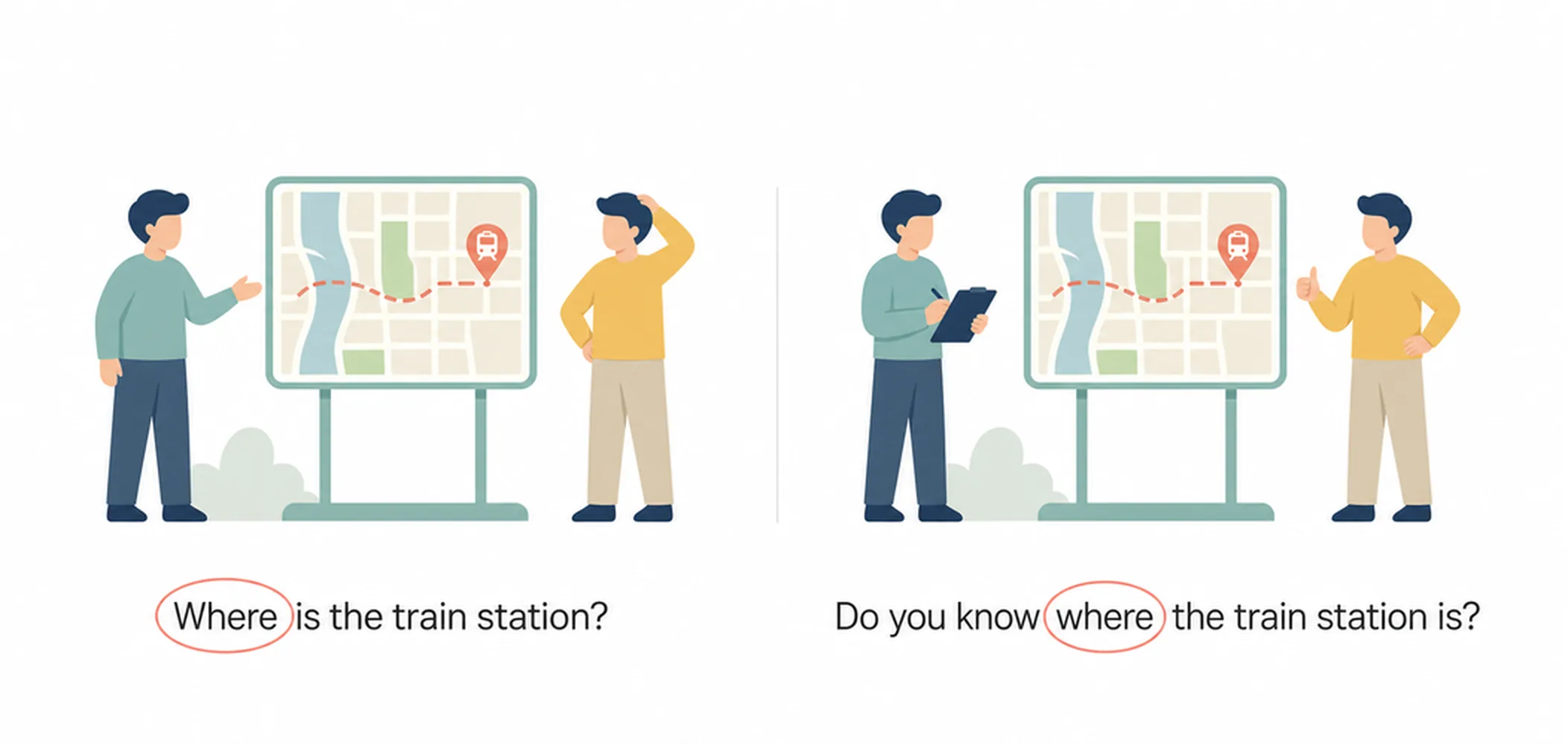
An embedded question is a question inside another sentence. Instead of asking directly, we use a reporting verb like 'do you know', 'can you tell me', or 'I wonder' before the question. This makes our request more polite and natural in everyday conversation. For example, instead of 'Where is the station?' we can say 'Do you know where the station is?'
How to Form Embedded Questions
When you embed a question, the word order changes. The embedded question follows normal statement word order, not question word order. This means: no 'do/does' at the beginning, and the subject comes before the verb. The reporting phrase (like 'Do you know') ends with a question mark, and the sentence sounds more polite and friendly than a direct question.
Common Reporting Phrases
Popular phrases for embedded questions include: 'Do you know...?', 'Can you tell me...?', 'Could you tell me...?', 'I wonder...', 'I don't know...', and 'Could you help me find...?'. You can use these with both wh- questions (where, what, when, who, why, how) and yes/no questions (use 'if' or 'whether' for yes/no questions).
Direct Questions vs Embedded Questions
| Direct Question | Embedded Question | |
|---|---|---|
| Form | Question word + auxiliary verb + subject + main verb (Wh- / Yes-No + inversion) |
Main clause + question word / if / whether + subject + verb (no inversion) (statement word order inside) |
| When to use | Asking directly for information; used alone as a complete question | Asking politely or indirectly; reporting what you want to know; used inside a larger sentence (e.g. after Do you know…, I wonder…, Can you tell me…, I'd like to know…) |
| Wh- Question Example | Where is the station? What time does the film start? Who did she call? How long have they been waiting? |
Do you know where the station is? Can you tell me what time the film starts? I'd like to know who she called. I wonder how long they have been waiting. |
| Yes/No Question Example | Is there a bank nearby? Has he finished yet? Do they speak English? |
Do you know if / whether there is a bank nearby? Could you tell me whether he has finished yet? I'm not sure if they speak English. |
| Negative Example | Why didn't she come? Where isn't he working? |
I wonder why she didn't come. Do you know where he isn't working? |
| Word Order Rule | Auxiliary verb comes before the subject (inversion): auxiliary + subject + verb "Where is the train?" |
Subject comes before the verb (no inversion) — same as a statement: subject + verb "…where the train is." |
| Punctuation | Ends with a question mark (?) | Ends with a question mark (?) if the main clause is a question; ends with a full stop (.) if the main clause is a statement "I wonder where she is." vs "Do you know where she is?" |
| Key Signal Words / Phrases | Who, What, Where, When, Why, How, Which + inversion Is / Are / Do / Does / Did / Have / Has / Can / Will + subject |
Wh- embedded: where, what, when, why, how, which, who Yes/No embedded: if, whether Introducing phrases: Do you know…, Can you tell me…, I wonder…, I'm not sure…, I'd like to know…, Could you explain…, I have no idea… |
| Common Mistakes | — | ❌ Do you know where is the station? (incorrect inversion) ✅ Do you know where the station is? ❌ I wonder does he know. (incorrect auxiliary) ✅ I wonder if he knows. |
| 🔑 Key Difference: The critical distinction is word order. In a direct question, the auxiliary verb is inverted before the subject ("Where is the train?"). When the same question is embedded inside a larger clause, inversion disappears and normal statement word order is used instead ("Do you know where the train is?"). For yes/no direct questions, the words if or whether must be added to introduce the embedded version, since there is no question word to serve as the connector. | ||
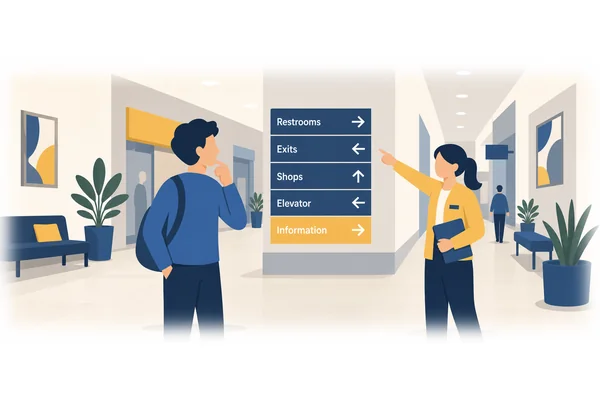
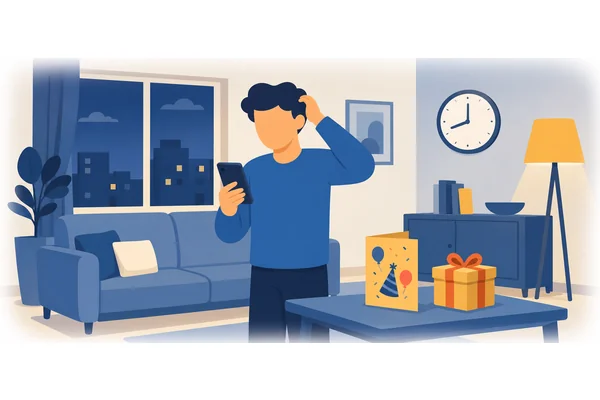
Examples




What to Remember
- An embedded question is a question placed inside another sentence using a reporting verb.
- Use reporting verbs like 'do you know', 'can you tell me', or 'I wonder' before embedded questions.
- Embedded questions use statement word order, not question word order, even though they contain question words.
- In embedded questions, the subject comes before the verb: 'Do you know where the station is?'
- Embedded questions make requests more polite and natural than direct questions in everyday conversation.