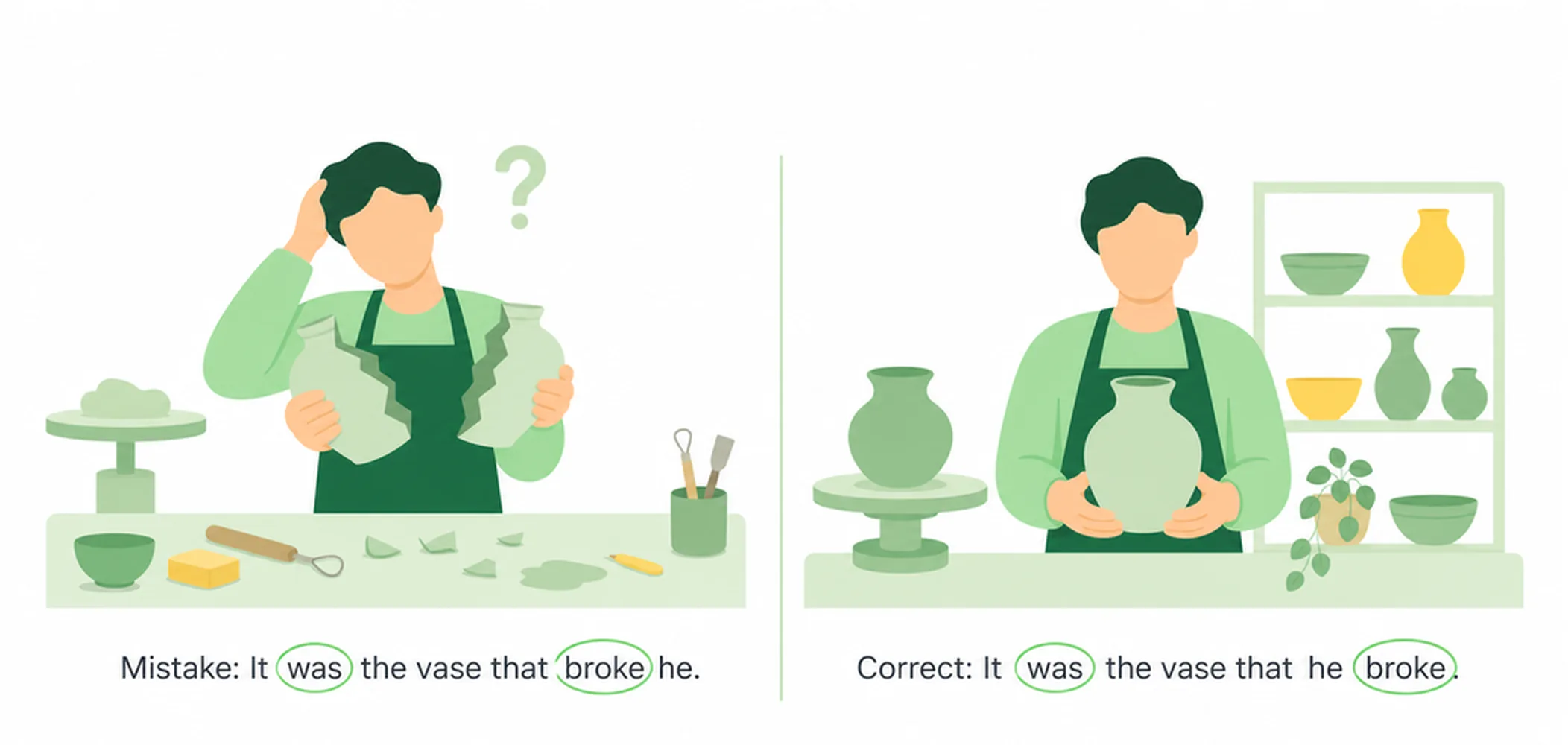
Common Cleft Sentence Mistakes
Cleft sentences are tricky because they split information in an unusual way. Many learners forget the correct structure, mix up 'it is' with other patterns, or use the wrong relative pronoun. These mistakes often change your meaning or make sentences sound unnatural. Understanding the common errors below will help you use cleft sentences confidently and correctly.
Cleft Sentence Formulas
Pattern 1 — It-cleft
| Type | Formula | Example |
|---|---|---|
| Affirmative | It + is/was + [emphasized element] + that/who + [remaining clause] | It was Sarah who fixed the problem. |
| Negative | It + is/was + not + [emphasized element] + that/who + [remaining clause] | It is not the price that concerns me. |
| Question | Is/Was + it + [emphasized element] + that/who + [remaining clause]? | Was it the manager who called you? |
Pattern 2 — Wh-cleft (Pseudo-cleft)
| Type | Formula | Example |
|---|---|---|
| Affirmative | What/Who + [subject + verb clause] + is/was + [emphasized element] | What really bothered him was her silence. |
| Negative | What/Who + [subject + verb clause] + is/was + not + [emphasized element] | What we need is not more money. |
| Question | What/Who + [subject + verb clause]? | What made you change your mind? |
In it-clefts, use "who" for people and "that" for things. The wh-cleft emphasizes the result or consequence rather than a specific part of the original sentence.
Examples

It was Sarah who organized the entire event.
Emphasizing the person responsible · Standard cleft sentence
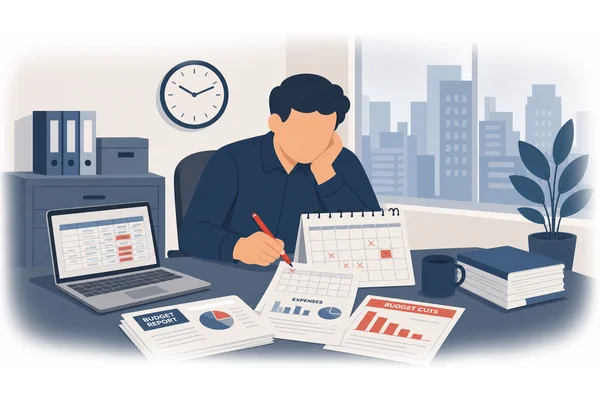
It was the budget cuts that caused the delay.
Emphasizing the reason · Formal written English

It is this skill that will help you succeed in your career.
Emphasizing importance · Future perspective
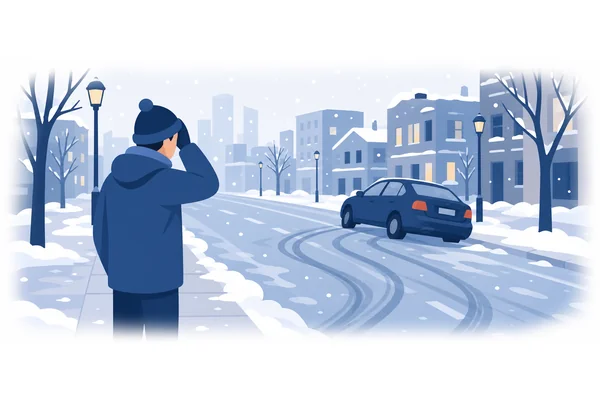
It was last winter when the accident happened.
Emphasizing a time period · However, 'that' is preferred over 'when'
Signal words
It is
It was
that
who
which
when
where
why
Common Mistakes
✕
Wrong
It was the manager who he told about the problem.
✓
Correct
It was the manager who he told the problem to. OR It was the manager to whom he told the problem.
After a cleft structure with 'who,' you cannot repeat the object. Use the correct preposition or restructure the sentence.
✕
Wrong
It is important that you understand this.
✓
Correct
It is understanding this that is important.
This uses an impersonal 'it is' structure, not a cleft sentence. For a true cleft, emphasize the specific action or thing, not the adjective.
✕
Wrong
It was yesterday when she arrived on time.
✓
Correct
It was yesterday that she arrived on time.
Use 'that' for time expressions in cleft sentences, not 'when.' The relative pronoun 'that' is standard in formal cleft structures.
✕
Wrong
It was because of the rain that the game was cancelled yesterday.
✓
Correct
It was because of the rain that the game was cancelled.
Avoid adding extra time information after the cleft clause; it weakens the emphasis. Keep the cleft focused on one key element.
✕
Wrong
It was the solution what we needed most.
✓
Correct
It was the solution that we needed most.
'What' is incorrect in cleft sentences. Use 'that' for objects and 'who' for people. 'What' is used in pseudo-cleft sentences instead.
✕
Wrong
It is them who is responsible for this mistake.
✓
Correct
It is they who are responsible for this mistake.
After 'who' in a cleft sentence, the verb agrees with the original subject. Use the subject pronoun 'they,' not the object pronoun 'them.'
✕
Wrong
It was not until Monday that the shop was open again.
✓
Correct
It was not until Monday that the shop opened again.
In cleft sentences with 'not until,' avoid passive voice when active voice is clearer. The structure emphasizes the timing better with the active verb.
KEY TAKEAWAYS
What to Remember
- Use 'it is/was' followed by the emphasized part and a relative clause in cleft sentences.
- The relative pronoun must agree with the emphasized noun and cannot be omitted.
- Don't confuse cleft sentences with regular sentences; cleft sentences emphasize one specific piece of information.
- The relative clause in cleft sentences needs a verb, even if information seems complete.
- Remember that 'what' clauses replace the relative pronoun when no specific noun is emphasized.