
Why Learners Struggle with Coordinating Conjunctions
Coordinating conjunctions connect equal grammatical elements—words, phrases, or independent clauses. The most common mistake is using them incorrectly or placing commas in the wrong position. This happens because learners often confuse coordinating conjunctions with subordinating conjunctions, or they forget the comma rule when joining independent clauses. Understanding the correct patterns will make your sentences clearer and more grammatically accurate.
Common Mistakes at a Glance
| Conjunction | Incorrect | Correct | Why the Error Occurs |
|---|---|---|---|
| and | "I like cats, and." | "I like cats and dogs." | And must join two elements; it cannot end a clause or stand alone without a second item. |
| and | "She sings, and dances, and acts." | "She sings, dances, and acts." | Overusing and between every item in a list creates a run-on feel; use it only before the final item (Oxford comma style). |
| but | "He is tall but he is smart." | "He is tall, but he is smart." | When but joins two independent clauses, a comma is required before it. Learners often omit the comma. |
| but | "She likes tea but not coffee, but she drinks juice." | "She likes tea but not coffee, and she also drinks juice." | Using but repeatedly causes confusion; reserve it for genuine contrast, not addition. |
| or | "You can have cake or pie or cookies or ice cream." | "You can have cake, pie, cookies, or ice cream." | Like and, or should appear once before the last item in a list, not between every pair. |
| or / nor | "He doesn't eat meat or drinks alcohol." | "He doesn't eat meat or drink alcohol." / "He neither eats meat nor drinks alcohol." | After a negative, both joined elements must be parallel in form. Nor pairs with neither for double negatives. |
| nor | "She can't swim, nor she can't ride a bike." | "She can't swim, nor can she ride a bike." | Nor triggers subject–auxiliary inversion in the second clause; learners mistakenly keep normal word order or add a second negative. |
| so | "It was raining so therefore we stayed inside." | "It was raining, so we stayed inside." | Pairing so with therefore is redundant; each expresses consequence on its own. Also note the required comma before so. |
| for | "I stayed home for I was tired." | "I stayed home, for I was tired." (formal) / "I stayed home because I was tired." | For as a coordinating conjunction (meaning because) is formal and literary, and needs a comma; learners confuse it with the preposition for. |
| yet | "He studied hard yet but failed." | "He studied hard, yet he failed." | Mixing yet and but is redundant—both signal contrast. Use one or the other, preceded by a comma before an independent clause. |
| Parallelism (all) | "She likes hiking, to swim, and reading." | "She likes hiking, swimming, and reading." | Coordinating conjunctions require grammatically parallel elements on each side. Mixing forms (gerund, infinitive, noun) is a very common error. |
| Comma splice (all) | "I was hungry, I ate a sandwich." | "I was hungry, so I ate a sandwich." | Two independent clauses cannot be joined by a comma alone; a coordinating conjunction (FANBOYS) must be added after the comma. |
Examples

She wants to study abroad, but her parents want her to stay home.
Contrast between two ideas · Comma required
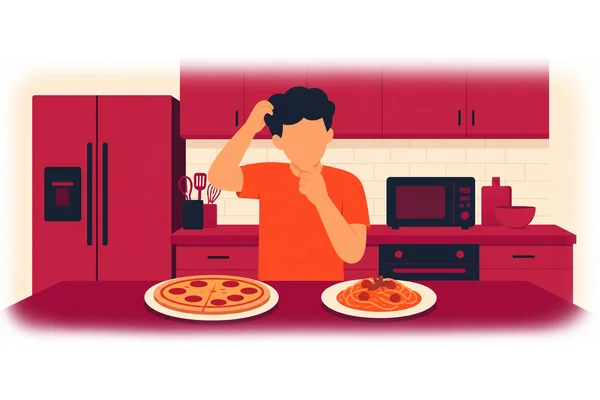
You can choose pizza or pasta for dinner.
Offering alternatives · No comma needed (short clauses)
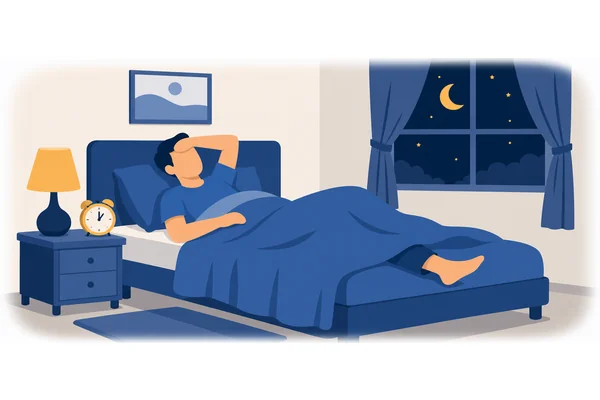
He was tired, so he went to bed early.
Showing cause and effect · Comma required

We bought apples, oranges, and bananas at the market.
Listing three items · Serial comma before 'and'
When to use it
Adding Similar Ideas
Use 'and' to connect ideas that are equally important or similar in meaning.
"She is a teacher and a writer."
Showing Contrast
Use 'but' to introduce an idea that contrasts with the previous one.
"The movie was long, but it was worth watching."
Offering Choices
Use 'or' to present alternatives or options to the reader.
"Do you prefer tea or coffee?"
Showing Cause and Effect
Use 'so' to show that one action causes another.
"It was raining, so we cancelled the picnic."
Signal words
and
but
or
nor
for
yet
so
Common Mistakes
✕
Wrong
I want to go to the cinema, but I don't have time, and I'm tired.
✓
Correct
I want to go to the cinema, but I don't have time and I'm tired.
Don't use a comma before the second 'and' when joining two short independent clauses. Use a comma only before the first conjunction.
✕
Wrong
She is intelligent but hardworking.
✓
Correct
She is intelligent and hardworking.
Use 'and' to connect similar positive ideas. 'But' introduces a contrast, which doesn't exist here.
✕
Wrong
We can go or stay home or invite friends over.
✓
Correct
We can go, stay home, or invite friends over.
When using 'or' to list more than two items, add a comma before the last 'or' (serial comma).
✕
Wrong
The weather was cold so we decided to stay inside.
✓
Correct
The weather was cold, so we decided to stay inside.
Use a comma before 'so' when it joins two independent clauses.
✕
Wrong
He studied hard but he failed the exam.
✓
Correct
He studied hard, but he failed the exam.
Use a comma before 'but' when joining two independent clauses. This shows the contrast clearly.
✕
Wrong
I like tea, but coffee, but hot chocolate too.
✓
Correct
I like tea, coffee, and hot chocolate.
Don't repeat 'but' to list items. Use commas and 'and' before the final item instead.
KEY TAKEAWAYS
What to Remember
- Coordinating conjunctions (and, but, or, nor, for, yet, so) connect equal grammatical elements like words, phrases, or independent clauses.
- Use a comma before a coordinating conjunction only when joining two independent clauses together.
- Don't use a comma before a coordinating conjunction if it connects only two words or phrases.
- Remember the difference: coordinating conjunctions join equal elements, while subordinating conjunctions introduce dependent clauses.
- Check that both sides of a coordinating conjunction have the same grammatical structure for parallel construction.