What is Inversion in Conditionals?
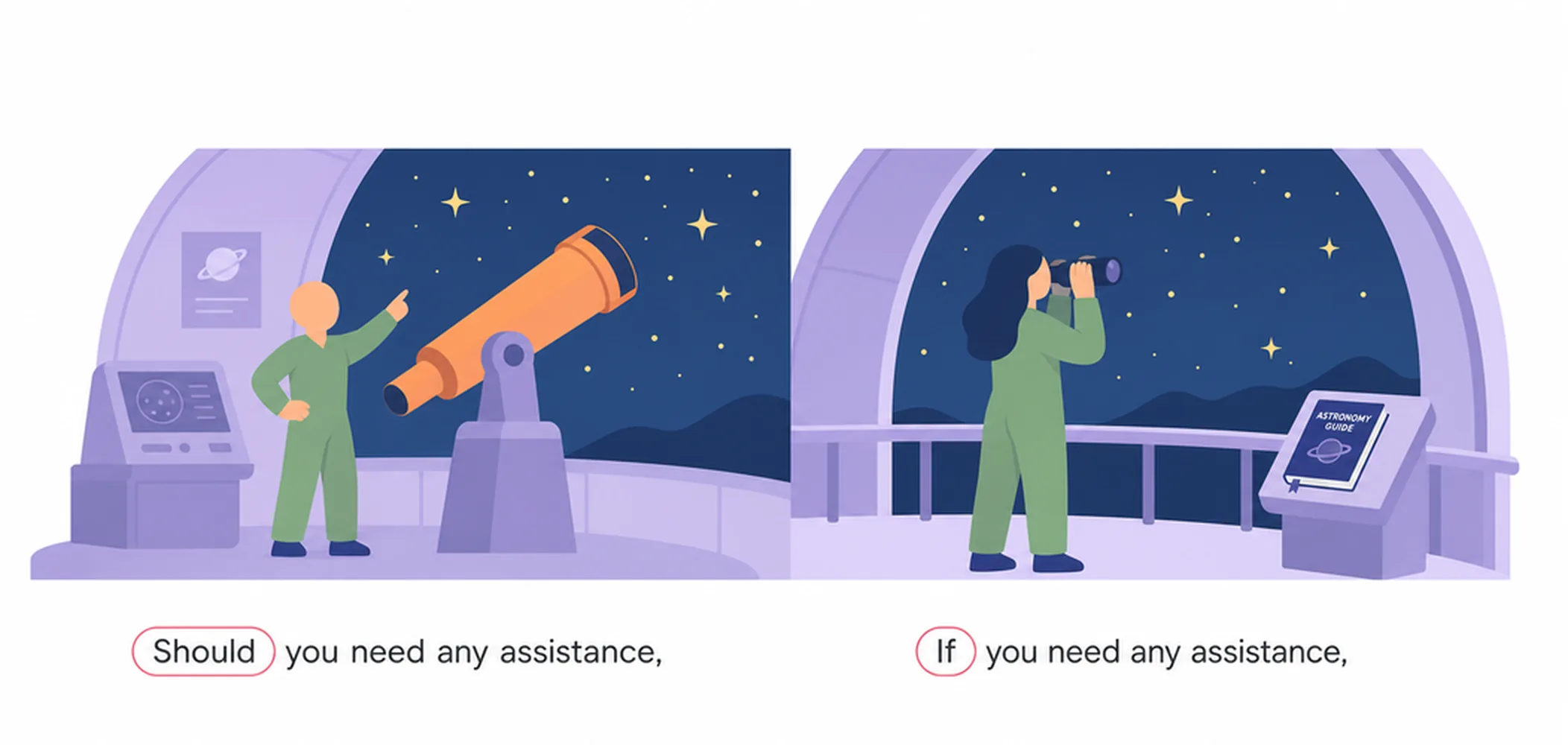
Inversion in conditionals is a formal way to write conditional sentences without using 'if'. Instead of saying 'If you need help...', you can say 'Should you need help...'. This happens when we move the auxiliary verb (like should, had, were) to the beginning of the sentence. Inversion makes sentences more formal and is commonly used in professional writing, legal documents, and academic English.
Three Types of Conditional Inversion
There are three main types. First, 'should' inversion is used for possible conditions: 'Should you change your mind, contact us.' Second, 'had' inversion is used for impossible past conditions: 'Had we known earlier, we would have helped.' Third, 'were' inversion is used for impossible present conditions: 'Were I in your position, I would agree.' All three types are grammatically correct alternatives to 'if' sentences, but they sound more formal and sophisticated.
When and Where to Use Inversion
Use conditional inversion in formal contexts such as business emails, official letters, academic writing, and professional communications. It is less common in everyday spoken English. The inverted form shows that you are careful about your language and helps your writing sound more educated. However, using 'if' is always correct, so do not feel pressured to use inversion if you are uncomfortable with it.
Inversion vs. Standard 'If' Conditionals: Side-by-Side
| Aspect | Should (Type 1 — Future Possibility) | Had (Type 3 — Past Unreal) | Were (Type 2 — Present Unreal) |
|---|---|---|---|
| Form |
Standard:
If + subject + should + infinitive, …
Inverted:
Should + subject + infinitive, …
|
Standard:
If + subject + had + past participle, …
Inverted:
Had + subject + past participle, …
|
Standard:
If + subject + were + complement/infinitive, …
Inverted:
Were + subject + complement/infinitive, …
|
| When to use | To describe a possible but unlikely future event, especially in formal writing, legal texts, or polite requests. | To describe an imaginary or regretted past situation — something that did not happen. Common in formal and literary contexts. | To describe a hypothetical or impossible present/future situation. Used in formal registers and set phrases. |
| Positive example |
Standard:
If you should need assistance, please call us.
Inverted:
Should you need assistance, please call us.
|
Standard:
If she had arrived earlier, she would have caught the train.
Inverted:
Had she arrived earlier, she would have caught the train.
|
Standard:
If I were the manager, I would change the policy.
Inverted:
Were I the manager, I would change the policy.
|
| Negative example |
Standard:
If you should not receive a reply, contact us again.
Inverted:
Should you not receive a reply, contact us again.
|
Standard:
If they had not signed the contract, we would have lost the deal.
Inverted:
Had they not signed the contract, we would have lost the deal.
|
Standard:
If it were not so expensive, we would buy it.
Inverted:
Were it not so expensive, we would buy it.
|
| Question example |
Standard:
What would you do if a problem should arise?
Inverted (embedded):
What would you do should a problem arise?
|
Standard:
What would you have done if you had known sooner?
Inverted (embedded):
What would you have done had you known sooner?
|
Standard:
What would you choose if you were in my position?
Inverted (embedded):
What would you choose were you in my position?
|
| Key signal words | Should at the start of the clause; no if; auxiliary would / will / can / please in the result clause. | Had at the start of the clause; no if; would have + past participle in the result clause. | Were at the start of the clause; no if; would / could / might in the result clause. |
| Key Difference: All three structures replace if by moving the auxiliary verb (should / had / were) to the front of the clause — a process called subject–auxiliary inversion. The choice of auxiliary signals the conditional type and time frame: Should indicates future possibility (Type 1 equivalent); Had indicates past unreal or impossible situations (Type 3 equivalent); Were indicates present or future hypothetical situations (Type 2 equivalent). Inverted conditionals are more formal than their standard if-clause counterparts and are never contracted in the negative (for example, Should not, never Shouldn't). | |||
Examples





What to Remember
- Inversion replaces 'if' by moving the auxiliary verb to the sentence start for formality.
- Should, had, and were are the three main auxiliary verbs used in conditional inversion.
- 'Should' inversion expresses possible conditions; 'had' expresses unreal past; 'were' expresses unreal present.
- Inversion is common in formal, professional, legal, and academic writing, not casual speech.
- The main clause word order stays normal; only the conditional clause is inverted.