What Are Subordinating Conjunctions?
Subordinating conjunctions connect a main clause to a dependent clause. They show the relationship between ideas—such as cause and effect, time, contrast, or condition. Understanding these conjunctions helps you write more complex, natural English sentences. Below are 50 real examples across different contexts and registers.
Examples — page 1 of 5
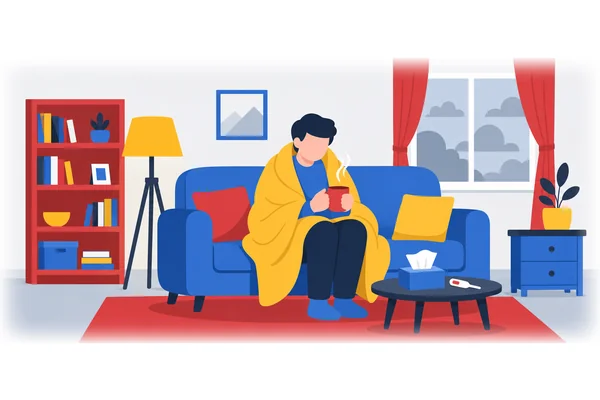
I stayed home because I was feeling ill.
Cause and effect · Common usage

Although the weather was bad, we decided to go hiking.
Contrast · Formal writing

She left the office before the meeting finished.
Time sequence · Neutral
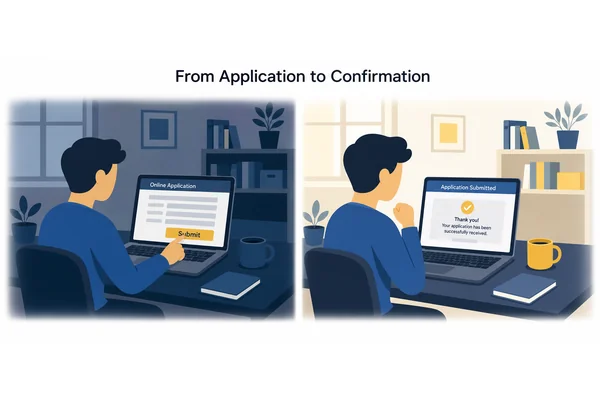
After you submit the application, you'll receive a confirmation email.
Time sequence · Instructional

I was working while my colleague was on holiday.
Time (simultaneous action) · Neutral
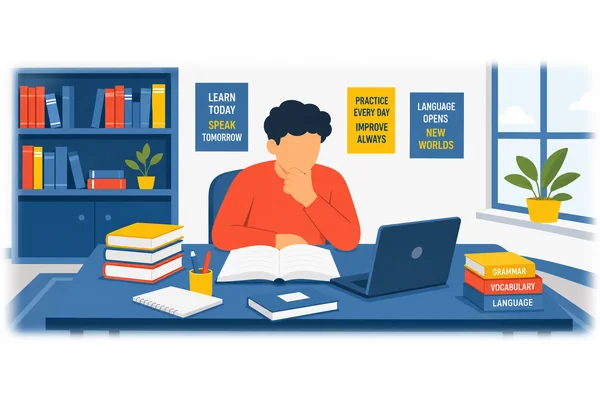
If you study regularly, your English will improve quickly.
Condition · Educational

Unless you have a ticket, you can't enter the concert.
Negative condition · Formal

We'll wait here until the bus arrives.
Time · Everyday speech

Whenever it rains, my cat hides under the bed.
Repeated time · Conversational

Even though she had never traveled abroad, she felt confident.
Strong contrast · Narrative
When to use it
Cause & Effect
Explain why something happened or what caused an action. Use: because, since, as.
"I couldn't attend the meeting because my flight was delayed."
Time Relationships
Show when something happened relative to another event. Use: when, before, after, while, until.
"Call me after you finish work."
Contrast
Show opposing or surprising ideas. Use: although, though, even though, whereas.
"Although he's young, he has lots of experience."
Conditions
Express real or hypothetical situations. Use: if, unless, in case, provided that.
"Unless you change your approach, you won't succeed."
Purpose
Explain the goal or intention behind an action. Use: so that, in order that.
"I'm saving money so that I can buy a house."
Comparison
Compare two things or ideas. Use: than, rather than, as if.
"She acted as if nothing had happened."
Signal words
because
although
though
even though
while
whilst
before
after
when
whenever
if
unless
until
till
as soon as
as long as
since
whereas
in order that
so that
as if
as though
once
provided that
in case
lest
where
wherever
as
than
rather than
suppose
supposing
considering that
given that
Common Mistakes
✕
Wrong
Because I was tired, but I went to work.
✓
Correct
Because I was tired, I still went to work. / Although I was tired, I went to work.
Don't use 'because' + main clause + 'but'. Use 'although/even though' for contrast instead.
✕
Wrong
If you will study hard, you will pass the exam.
✓
Correct
If you study hard, you will pass the exam.
In conditional sentences, use simple present in the 'if' clause, not future.
✕
Wrong
I waited until he will arrive.
✓
Correct
I waited until he arrived.
Use past tense in the dependent clause when the main clause is past.
✕
Wrong
While I was eating, my phone rings.
✓
Correct
While I was eating, my phone rang.
Keep verb tenses consistent. Use past tense for both clauses when describing past events.
✕
Wrong
Whenever you see him, tell about me.
✓
Correct
Whenever you see him, tell him about me.
The indirect object 'him' should follow the verb 'tell' for clarity and correct structure.
KEY TAKEAWAYS
What to Remember
- Subordinating conjunctions connect a dependent clause to a main clause to show relationships between ideas.
- Common subordinating conjunctions include because, although, if, when, while, since, unless, and before.
- A dependent clause introduced by a subordinating conjunction cannot stand alone as a complete sentence.
- When a dependent clause begins a sentence, use a comma before the main clause starts.
- The dependent clause can come before or after the main clause without changing the meaning.