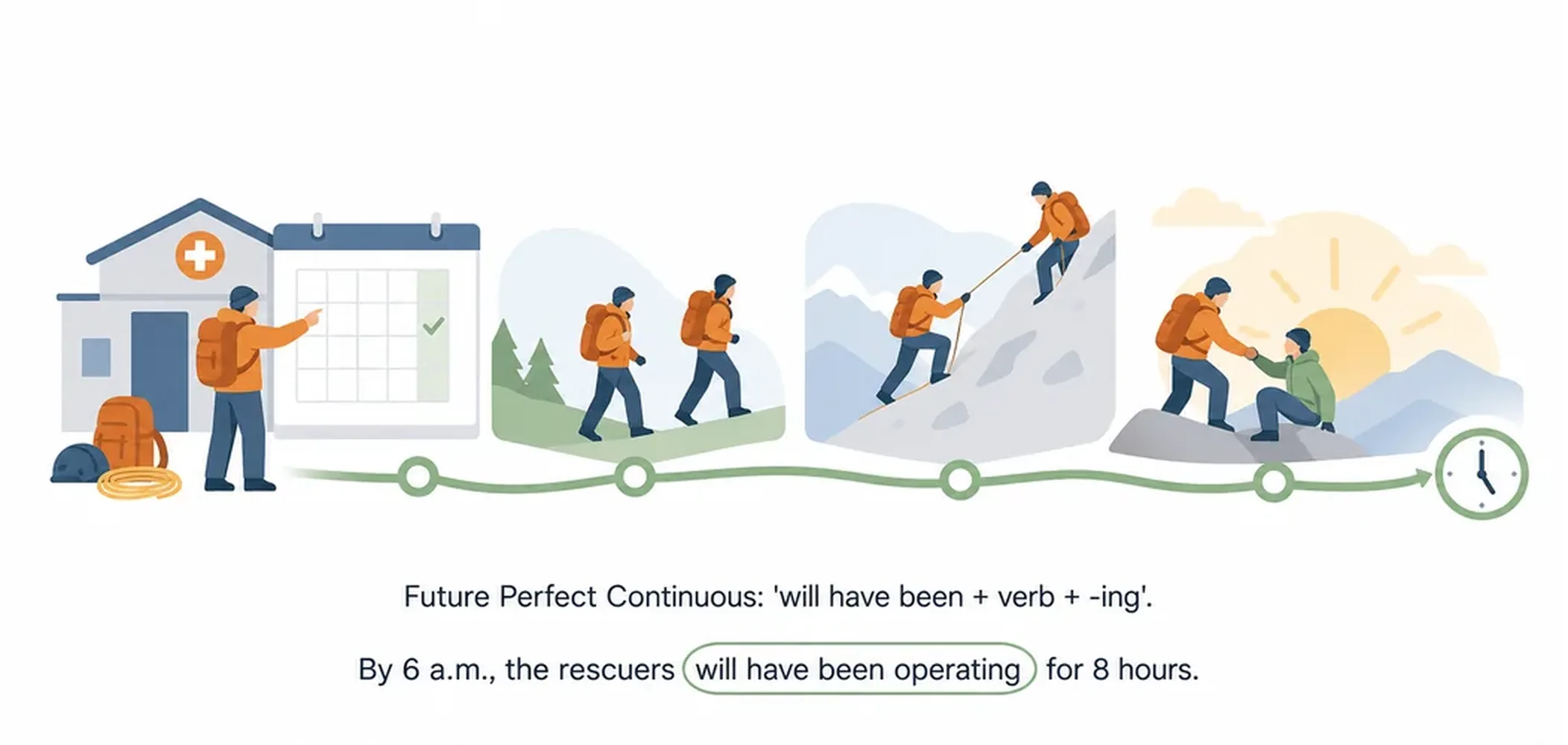
What is the Future Perfect Continuous?
The future perfect continuous (also called the future perfect progressive) is an advanced tense used to describe actions that will have been continuing up to a specific point in the future. It combines the future perfect with the continuous aspect, allowing speakers to emphasize both completion and duration. This tense is particularly useful when you want to highlight how long an action will have been happening by a certain future moment, rather than simply stating that it will be completed. For C1 learners, mastering this tense enables more sophisticated temporal expression and greater precision when discussing future scenarios.

Key Characteristics and Formation
The future perfect continuous is formed using will + have + been + present participle (-ing form). The structure emphasizes the duration of an action leading up to a point in the future. Unlike the simple future perfect, which focuses on completion, this tense foregrounds the ongoing nature of the activity. It is commonly paired with time expressions indicating duration (for two hours, for five years) or future reference points (by next Tuesday, when you arrive). Understanding this distinction is crucial: "I will have finished" (future perfect) states completion, while "I will have been working" (future perfect continuous) underscores the duration of the work.
Future Perfect Continuous vs. Future Perfect Simple
| Dimension | Future Perfect Continuous | Future Perfect Simple |
|---|---|---|
| Form | will + have + been + verb‑ing (e.g., will have been working) |
will + have + past participle (e.g., will have worked) |
| Focus | Emphasises the duration or ongoing process of an action leading up to a future point | Emphasises the completion or result of an action before a future point |
| When to use | Use when you want to highlight how long something will have been happening by a specific future moment, or to explain a future situation through its ongoing cause | Use when you want to state that an action will be finished before a specific future time, focusing on the end result rather than the process |
| Positive example | By next year, she will have been studying French for five years. | By next year, she will have studied all the French grammar chapters. |
| Negative example | By midnight, he will not have been sleeping for long enough to feel rested. | By midnight, he will not have finished the report. |
| Question example | Will you have been working here for ten years by the time you retire? | Will you have finished the project by Friday? |
| Key signal words | for (a period of time), by (a future point), how long, all day/week/year | by (a future point), before, by the time, already, once |
| Stative verbs | Cannot be used with stative verbs (e.g., know, love, own, believe) | Can be used with stative verbs (e.g., By then, I will have known her for a decade.) |
| Key Difference: Both tenses refer to actions connected to a future point in time, but they answer different questions. The future perfect continuous asks "How long will something have been happening?" — it stresses the duration and ongoing nature of the activity. The future perfect simple asks "Will something be done by then?" — it stresses that an action will be completed and the result achieved. When duration matters, choose the continuous; when completion matters, choose the simple. | ||
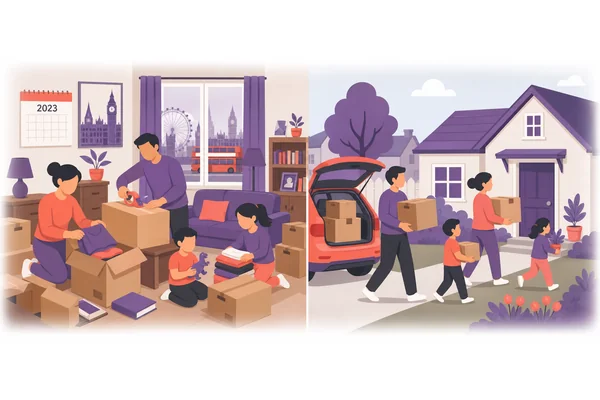
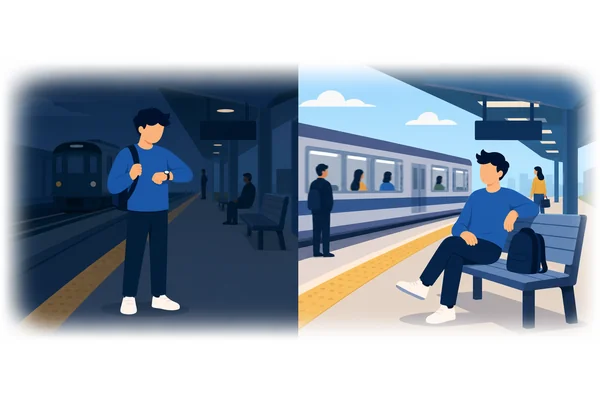
Examples




What to Remember
- The future perfect continuous describes actions that will have been ongoing until a specific future moment.
- Form it with "will have been" plus the present participle (verb + -ing) of the main verb.
- Use this tense to emphasize duration and how long an action will have continued, not just completion.
- By a future time marker, use this tense: "By next year, I will have been working here for five years."
- Avoid confusing it with future perfect simple, which focuses on completion rather than the duration of the action.