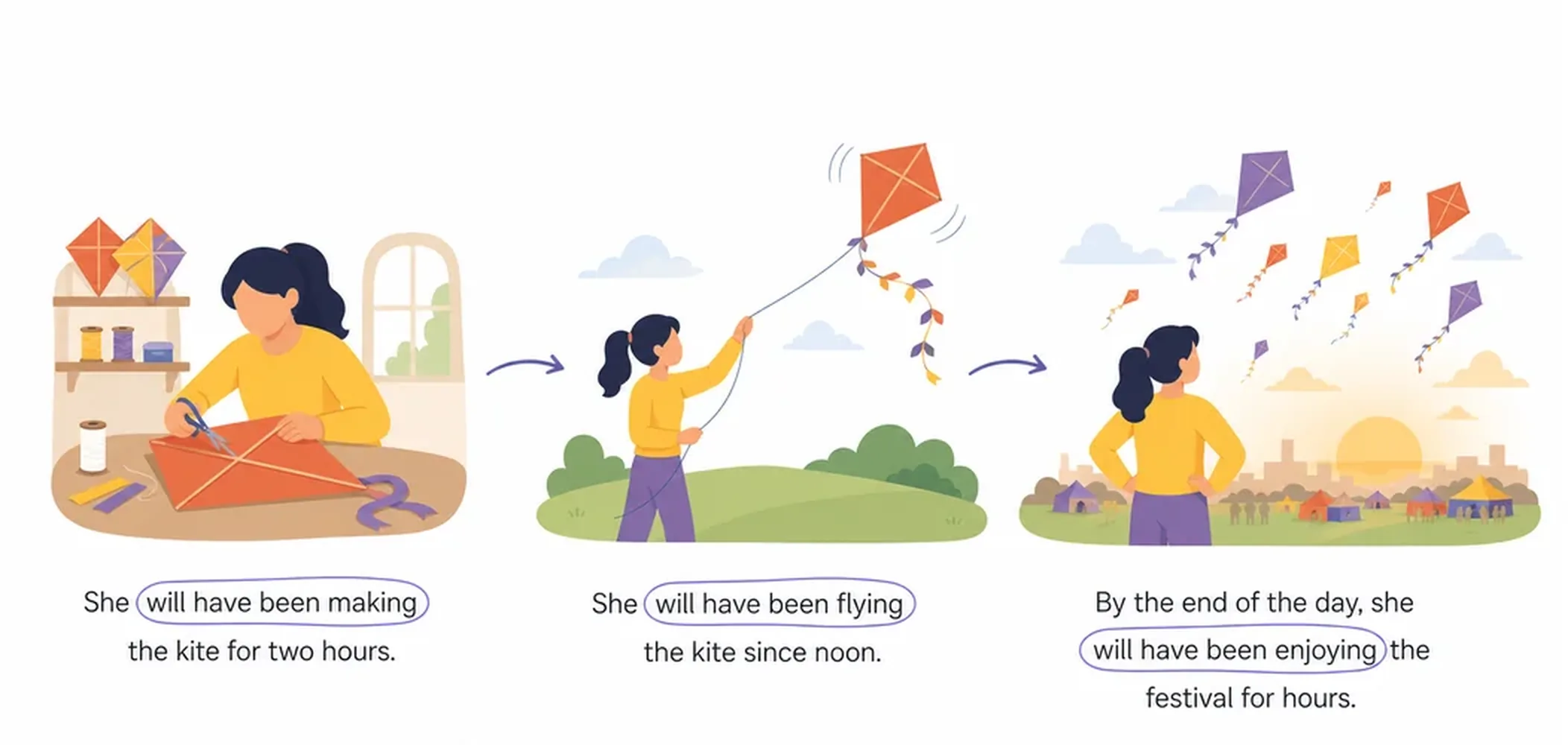
Introduction to the Future Perfect Continuous
The future perfect continuous (also called the future perfect progressive) is used to express an action that will have been in progress at a specific point in the future. This tense combines the future perfect aspect with continuous duration, allowing you to describe how long something will have been happening. At C1 level, mastering this tense enables you to articulate complex temporal relationships and convey precise nuance in academic, professional, and formal contexts. Understanding its formation is essential for fluent, sophisticated English communication.

Future Perfect Continuous Conjugation Table
| Pronoun | Positive | Negative | Question |
|---|---|---|---|
| I | I will have been working | I will not have been working I won't have been working |
Will I have been working? |
| You (singular) | You will have been working | You will not have been working You won't have been working |
Will you have been working? |
| He / She / It | He will have been working She will have been working It will have been working |
He will not have been working She won't have been working It won't have been working |
Will he have been working? Will she have been working? Will it have been working? |
| We | We will have been working | We will not have been working We won't have been working |
Will we have been working? |
| You (plural) | You will have been working | You will not have been working You won't have been working |
Will you have been working? |
| They | They will have been working | They will not have been working They won't have been working |
Will they have been working? |
Notes:
|
|||
Formula
✔ Positive
Subject
+
will
+
have
+
been
+
verb + -ing
+
(+ time marker)
By next June, I will have been working here for five years.
✖ Negative
Subject
+
will
+
not
+
have
+
been
+
verb + -ing
She will not have been living abroad by the time you graduate.
? Question
Will
+
subject
+
have
+
been
+
verb + -ing
+
(+ time marker)?
Will they have been studying the same topic for three months by then?
Examples
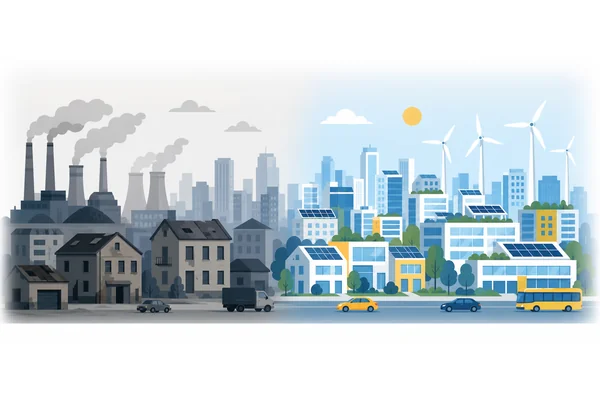
By the end of this decade, renewable energy will have been transforming global infrastructure.
Academic · Describing projected long-term change
①renewable energy transforms global infrastructure
→
②end of this decade

The researchers will have been conducting experiments in that laboratory for over a year.
Professional · Duration emphasised
①researchers start conducting experiments
→
②one year passes in the future
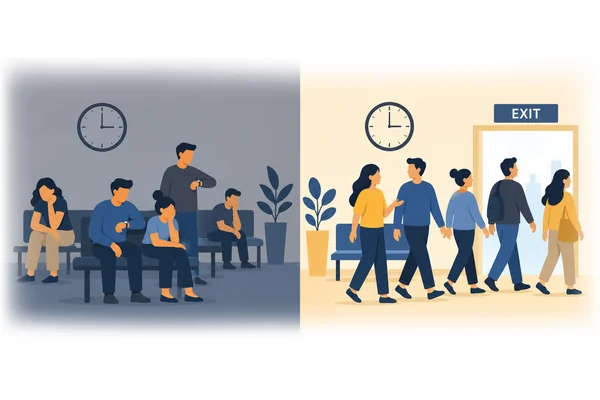
By tomorrow evening, we will not have been waiting for more than four hours.
Negative assertion · Time-bound event
①we start waiting
→
②tomorrow evening (4 hours will have passed)

How long will she have been living in that city when she retires?
Interrogative · Duration query
①she starts living in that city
→
②she retires

By the time the contract expires, they will have been negotiating with the supplier for nearly two years.
Formal · Complex business scenario
①They will have been negotiating with the supplier
→
②The contract expires
When to use it
Professional Planning
Discussing projected tenure, project duration, or organisational milestones in business contexts.
"By Q3, our team will have been managing this account for eighteen months."
Academic Research
Describing the anticipated duration of studies, experiments, or long-term investigations.
"By publication, the researchers will have been analysing data for over two years."
Future Temporal Precision
Emphasising how long an activity will have continued before a future moment or event.
"When you arrive, I will have been cooking dinner for an hour."
Career & Personal Development
Reflecting on anticipated experience, learning, or achievement milestones.
"By retirement, she will have been advocating for environmental reform for forty years."
Signal words
by
by the time
by then
by next/this [time period]
when
before
for [duration]
in [duration] from now
Common Mistakes
✕
Wrong
By next year, I will have been work here for ten years.
✓
Correct
By next year, I will have been working here for ten years.
After 'been', the main verb must take the -ing form (gerund), not the base form.
✕
Wrong
She will have been studied mathematics for five years by graduation.
✓
Correct
She will have been studying mathematics for five years by graduation.
The verb after 'been' requires the present participle (-ing), not the past participle form.
✕
Wrong
Will you have been finishing the project by Friday?
✓
Correct
Will you have finished the project by Friday?
For a completed action at a specific point (no duration emphasis), use future perfect (will have + past participle), not future perfect continuous.
KEY TAKEAWAYS
What to Remember
- Form the future perfect continuous with will have been + present participle (verb + ing).
- Use this tense to show an action's duration up to a specific future moment.
- By next year, she will have been working here for five years exactly.
- In questions, invert the subject: Will you have been studying when I arrive?
- Avoid confusing this with future perfect simple; use continuous for duration, not just completion.