Grammar A2 Past Continuous Tense

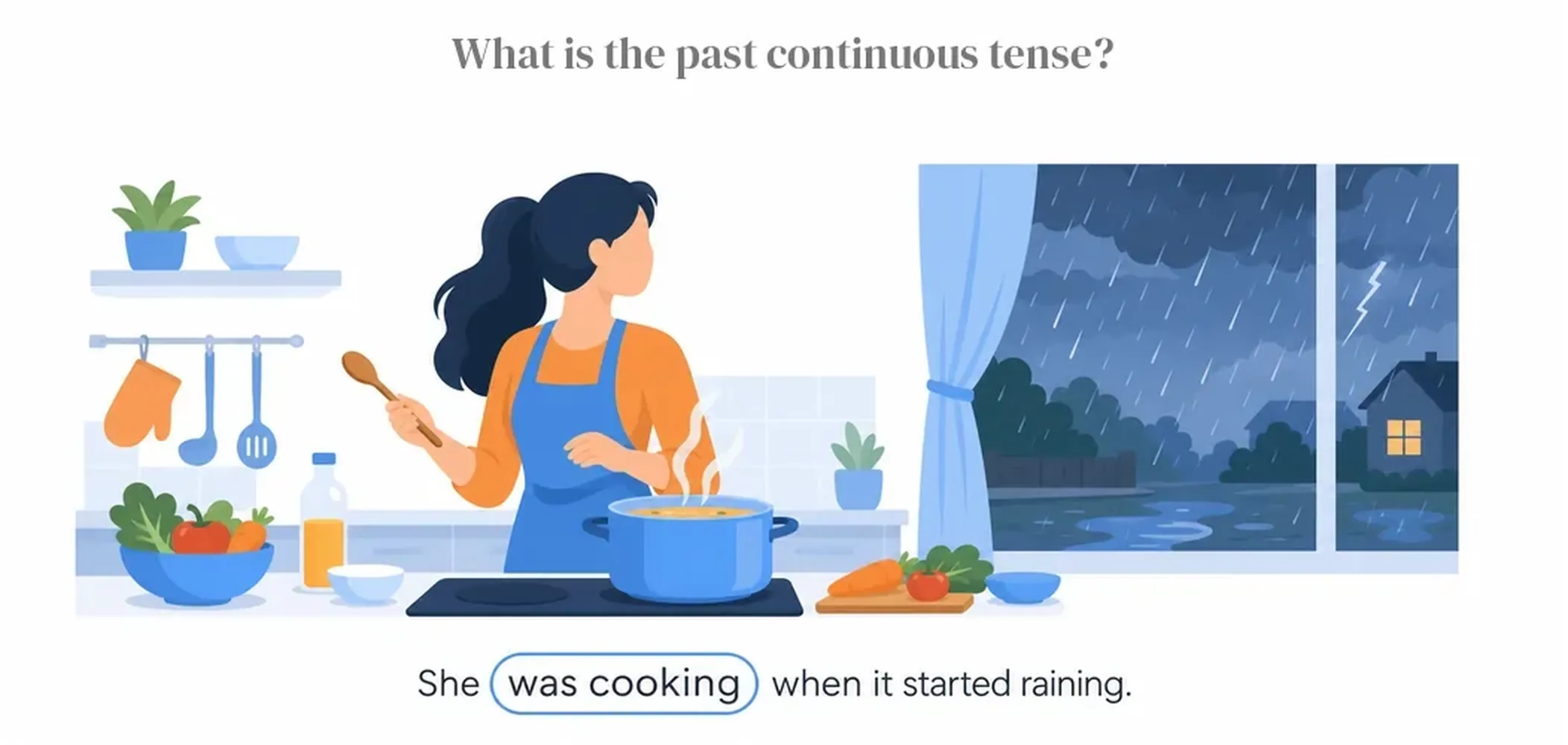
What is the past continuous tense?

What is the past continuous tense?

What is the Past Continuous Tense?

The past continuous tense (also called past progressive) describes an action that was happening at a specific moment in the past. It shows that the action started before that moment and continued for some time. For example, when you say 'I was studying at 8 PM', you mean that at 8 PM, the studying was already in progress. The action did not happen only at that exact time—it was ongoing.

Key Characteristics

The past continuous has two main characteristics. First, it always uses two verbs: 'was' or 'were' plus the -ing form of the main verb. Second, it often appears with a specific time in the past (like 'at 3 o'clock') or with a past simple action that interrupted it (like 'when he arrived'). The past continuous helps you paint a picture of what was happening in the background of your story.

Past Continuous Tense Conjugation

Pronoun Positive Negative Question
I I was working I was not working / I wasn't working Was I working?
you (singular) you were working you were not working / you weren't working Were you working?
he / she / it he/she/it was working he/she/it was not working / wasn't working Was he/she/it working?
we we were working we were not working / we weren't working Were we working?
you (plural) you were working you were not working / you weren't working Were you working?
they they were working they were not working / they weren't working Were they working?
Notes:  (1) Use was with I, he, she, it and were with you, we, they.  (2) Form the -ing participle by adding -ing to the base verb: work → working.  (3) For verbs ending in a single consonant preceded by a single stressed vowel, double the final consonant before adding -ing: run → running, sit → sitting.  (4) For verbs ending in a silent -e, drop the -e before adding -ing: make → making, write → writing.  (5) In questions, the auxiliary (was/were) is inverted to the front of the sentence before the subject.
Formula
✔ Positive
Subject + was/were + verb + -ing + time or context
She was reading a book when the phone rang.
✖ Negative
Subject + was/were not + verb + -ing + time or context
They were not listening to the teacher during the class.
? Question
Was/Were + subject + verb + -ing + time or context
Were you sleeping when I called you?

Examples

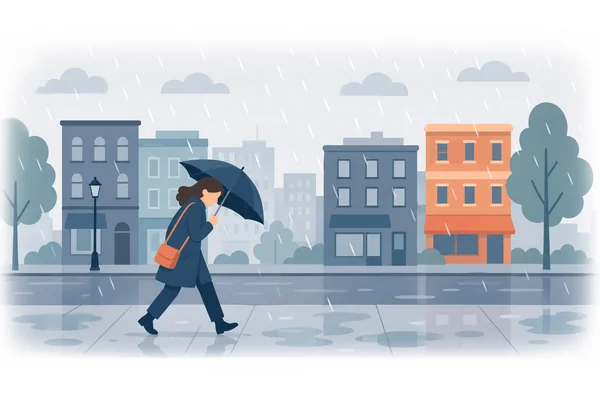
I was walking home when it started to rain.
Interrupted action · Action in progress
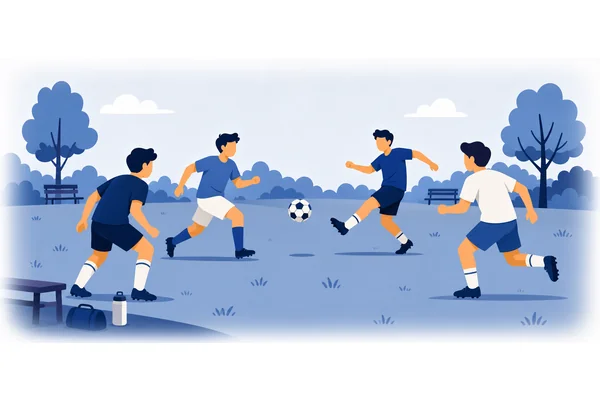
They were playing football at 5 o'clock yesterday.
Specific time in the past · Duration
She was not paying attention while the teacher was explaining.
Negative form · Simultaneous actions
What were you doing last night at 9 PM?
Question form · Past time expression
The sun was shining brightly as we arrived at the beach.
Background action · Atmospheric description
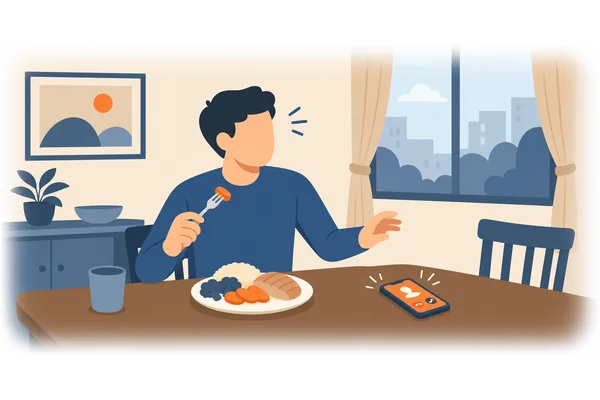
While he was eating lunch, his friend called him.
Interrupted action · 'While' usage
When to use it
Interrupted Actions
Use the past continuous for an action that was interrupted by another past action. The past continuous shows what was happening when something else occurred.
"I was showering when the doorbell rang."
Actions at a Specific Time
Use it to describe what was happening at a particular moment in the past. You usually include a time reference like 'at noon' or 'last Tuesday at 3 PM'.
"At 6 o'clock, I was cooking dinner."
Storytelling & Narratives
Use the past continuous to set the scene in a story. It provides background information about what was happening when the main event took place.
"It was raining heavily while they were waiting for the bus."
Simultaneous Past Actions
Use it to show two or more actions that were happening at the same time in the past. Both actions use the past continuous.
"While she was studying, he was cooking breakfast."
Signal words
while when as at that moment at 3 o'clock yesterday at... last night during all day the whole time
Common Mistakes
Wrong
I went to the shop when I saw my friend.
Correct
I was going to the shop when I saw my friend.
Use past continuous for the ongoing action interrupted by another past action; use past simple only for the interrupting event.
Wrong
She was sleeps all afternoon.
Correct
She was sleeping all afternoon.
After 'was/were', always use the -ing form, not the base verb.
Wrong
I calling you when you arrived home yesterday.
Correct
I was calling you when you arrived home yesterday.
The past continuous tense requires 'was' or 'were' before the -ing verb form; omitting it makes the sentence grammatically incomplete.
Wrong
They was playing in the park.
Correct
They were playing in the park.
Use 'were' with plural subjects like 'they', not 'was'.
Wrong
What did you do at 8 PM? I studied.
Correct
What were you doing at 8 PM? I was studying.
For ongoing actions at a past time, use past continuous, not past simple.
KEY TAKEAWAYS

What to Remember

  • Use was/were + verb-ing to describe an action in progress at a specific past moment.
  • The past continuous shows an action that started before and continued through a past time.
  • Use was for I/he/she/it and were for you/we/they in past continuous sentences.
  • The action was ongoing, not completed, so it emphasizes duration rather than completion.
  • Avoid using only the past simple when you need to show an action was happening.
← Previous
Simple past — common mistakes
Next →
How to form the past continuous tense