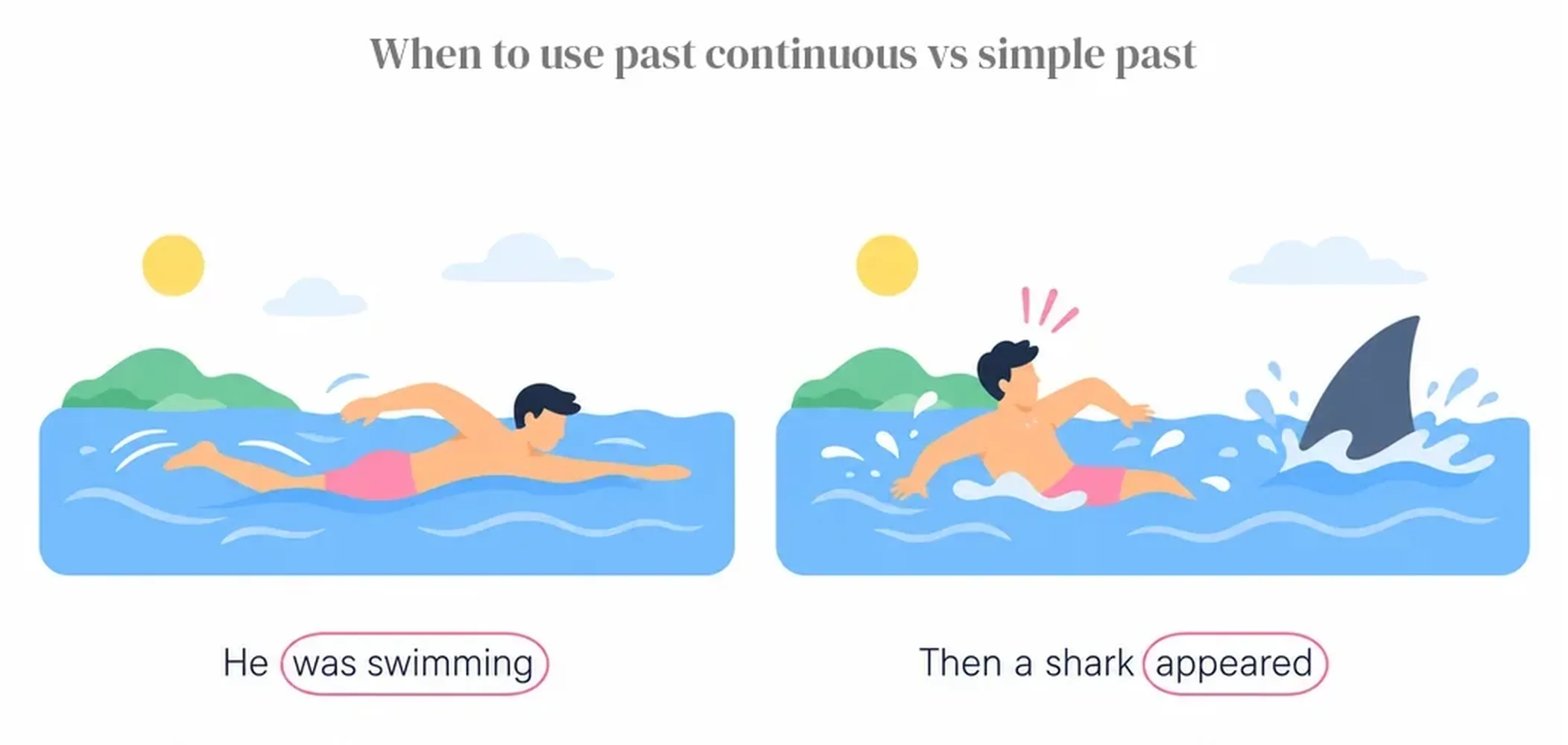
Past Continuous vs Simple Past
Both past continuous and simple past talk about the past, but they describe different situations. The simple past tells you about completed actions. The past continuous describes actions that were happening at a specific moment in the past. Understanding when to use each one will help you tell stories and describe events more clearly.

Past Continuous vs Simple Past: Side-by-Side Comparison
| Dimension | Past Continuous | Simple Past |
|---|---|---|
| Form | Subject + was/were + verb-ing (e.g., was walking, were eating) |
Subject + past tense verb (regular: verb+ed; irregular: varies) (e.g., walked, ate) |
| When to use |
• An action that was in progress at a specific moment in the past • A longer background action interrupted by a shorter event • Two simultaneous ongoing actions in the past • Setting the scene in a story |
• A completed action at a specific time in the past • A sequence of finished past events • A habit or repeated action in the past (no longer true) • A state that existed for a period but is now over |
| Positive example | She was reading a book when the phone rang. | She read a book last night. |
| Negative example | They were not listening when the teacher explained the rule. | They did not listen to the teacher yesterday. |
| Question example | Were you sleeping at midnight? | Did you sleep well last night? |
| Key signal words | while, when (background action), as, at that moment, at [specific time] yesterday, all day/morning/evening | yesterday, last week/month/year, ago, in [past year], when (completed event), once, then, finally, suddenly |
| 🔑 Key Difference: The past continuous emphasises that an action was ongoing or in progress at a point in the past — it highlights duration and background context. The simple past emphasises that an action was completed — it focuses on the fact that something happened and is fully finished. A classic combination of both: "I was cooking dinner when my friend arrived" — the past continuous sets the scene (cooking in progress) while the simple past marks the interrupting completed event (arrival). | ||
Formula
✔ Positive
Subject
+
was/were
+
-ing verb
+
when
+
Subject
+
simple past verb
I was cooking when she called me.
Examples
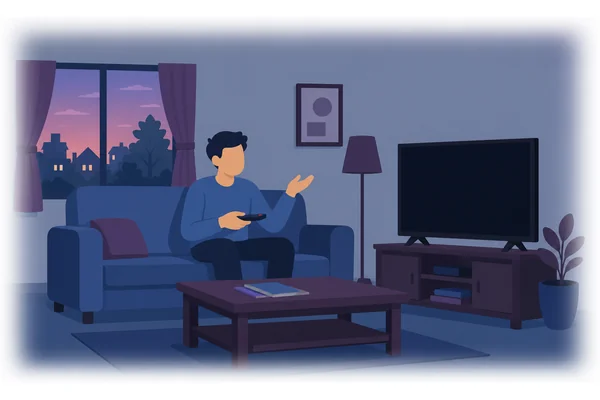
I was watching TV when the power went off.
Interrupted action · Past Continuous + Simple Past
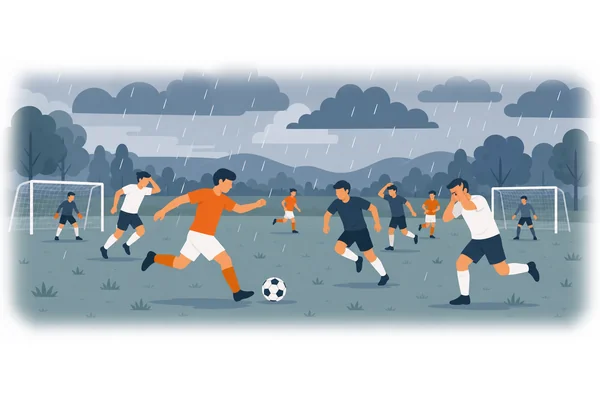
While they were playing football, it started to rain.
Two simultaneous actions · Connective 'while'

The children were laughing and talking as we entered the classroom.
Background scene · Narrative context
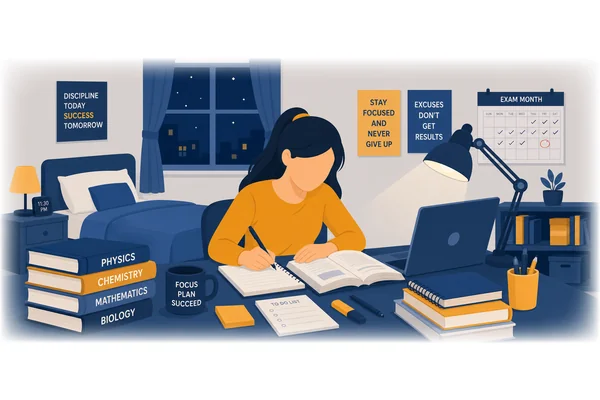
She was studying hard for her exams last month.
Ongoing situation · Past time period
When to use it
Action interrupted by another
Use past continuous for the longer action and simple past for the action that interrupted it.
I was reading a book when my phone rang.
Two things at the same time
Use past continuous when two actions happened at the same moment in the past.
While she was cooking dinner, he was setting the table.
Background action in a story
Use past continuous to describe the situation or background. Use simple past for the main events.
The sun was shining when we arrived at the beach.
Repeated or ongoing situation
Use past continuous to show that an action was in progress or repeated over a period of time.
Last year, I was working as a teacher.
Signal words
when
while
as
during
at that moment
just as
as soon as
at the same time
all day
the whole time
before
after
Common Mistakes
✕
Wrong
When I was arriving, he left.
✓
Correct
When I arrived, he was leaving.
Use simple past for the sudden/completed action, not past continuous with 'when'.
✕
Wrong
I worked in the office when my boss called me.
✓
Correct
I was working in the office when my boss called me.
Use past continuous for the longer action in progress that was interrupted.
✕
Wrong
While I read, he was sleeping.
✓
Correct
While I was reading, he was sleeping.
Use past continuous with 'while' for both actions happening at the same time.
KEY TAKEAWAYS
What to Remember
- Use simple past for actions that started and finished at a specific time in the past.
- Use past continuous for actions that were in progress at a specific moment in the past.
- Past continuous often describes background actions when another simple past action interrupted it.
- Form past continuous with was/were + verb + -ing, not just -ed ending.
- Past continuous alone doesn't show when an action ended, only that it was happening.