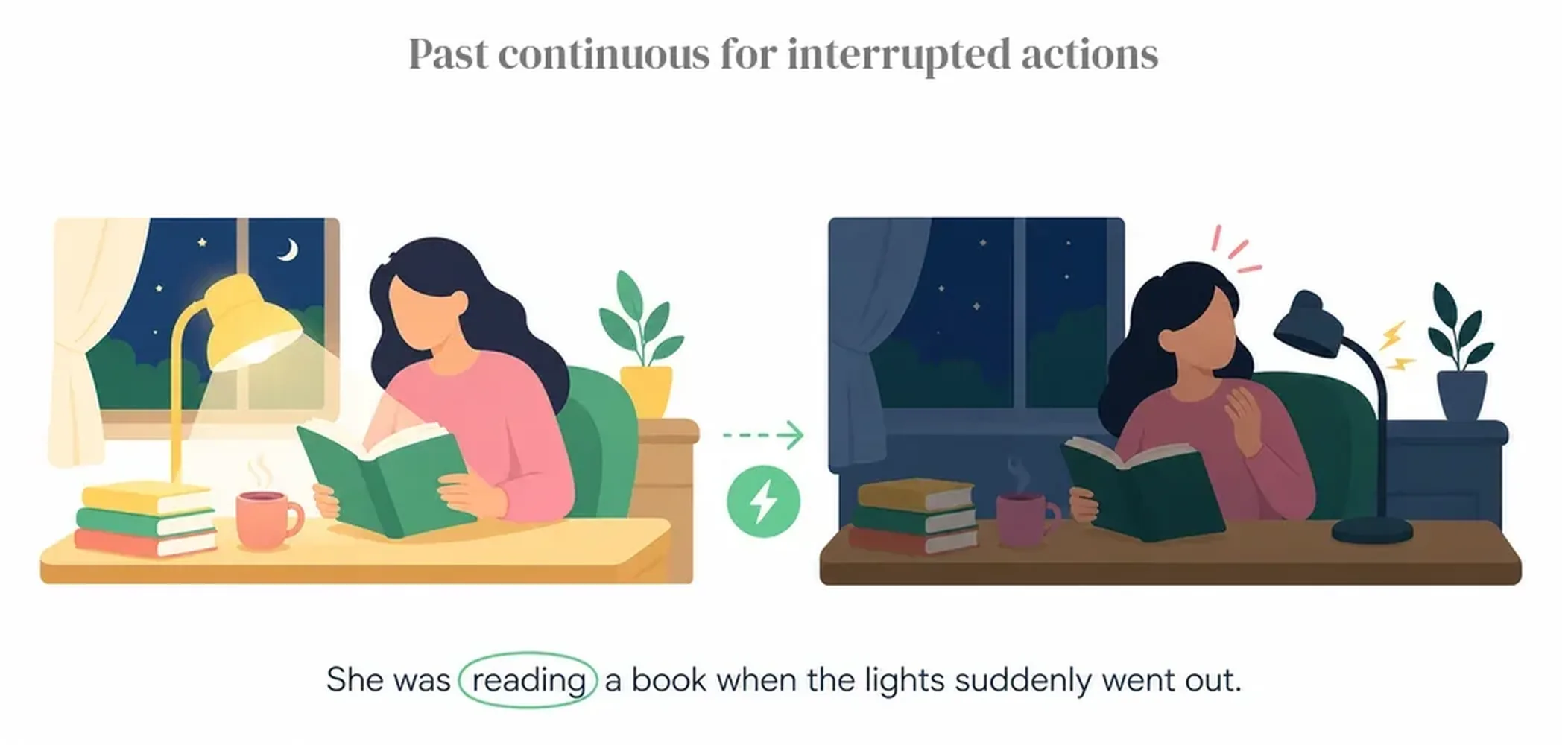
What is Past Continuous for Interrupted Actions?
The past continuous tense describes an action that was happening at a specific moment in the past. When we talk about interrupted actions, we use past continuous to show what was happening when something else interrupted it. The interrupting action is usually in the simple past tense. This helps us show the relationship between two events that happened at almost the same time.

How to Form Past Continuous
The past continuous is formed with was/were + the -ing form of the verb. Use 'was' with singular subjects (I, he, she, it) and 'were' with plural subjects (you, we, they). For example: 'I was reading' or 'They were playing'. To show an interrupted action, we connect it with a simple past sentence using 'when' or 'while': 'I was reading when the phone rang.'
Why Use It?
We use past continuous for interrupted actions to tell stories clearly and naturally. It shows that one action was in progress (longer action) when another action suddenly happened (shorter action). This is very common when describing accidents, unexpected events, or everyday situations. It helps listeners understand the timeline and context of what happened.
Past Continuous vs Simple Past in Interrupted Actions
| Aspect | Past Continuous (Background / Ongoing Action) | Simple Past (Interrupting Action) |
|---|---|---|
| Form | was / were + verb + -ing e.g., was reading, were walking |
verb in past simple (regular: -ed; irregular: unique form) e.g., called, rang, dropped |
| When to Use | To describe an action that was already in progress at a specific moment in the past; it sets the scene or background of the story. | To describe a shorter, sudden action that cut into or interrupted the longer background action. |
| Positive Example | I was watching TV when she arrived. (The watching was ongoing in the background.) |
I was watching TV when she arrived. (The arrival is the sudden interrupting event.) |
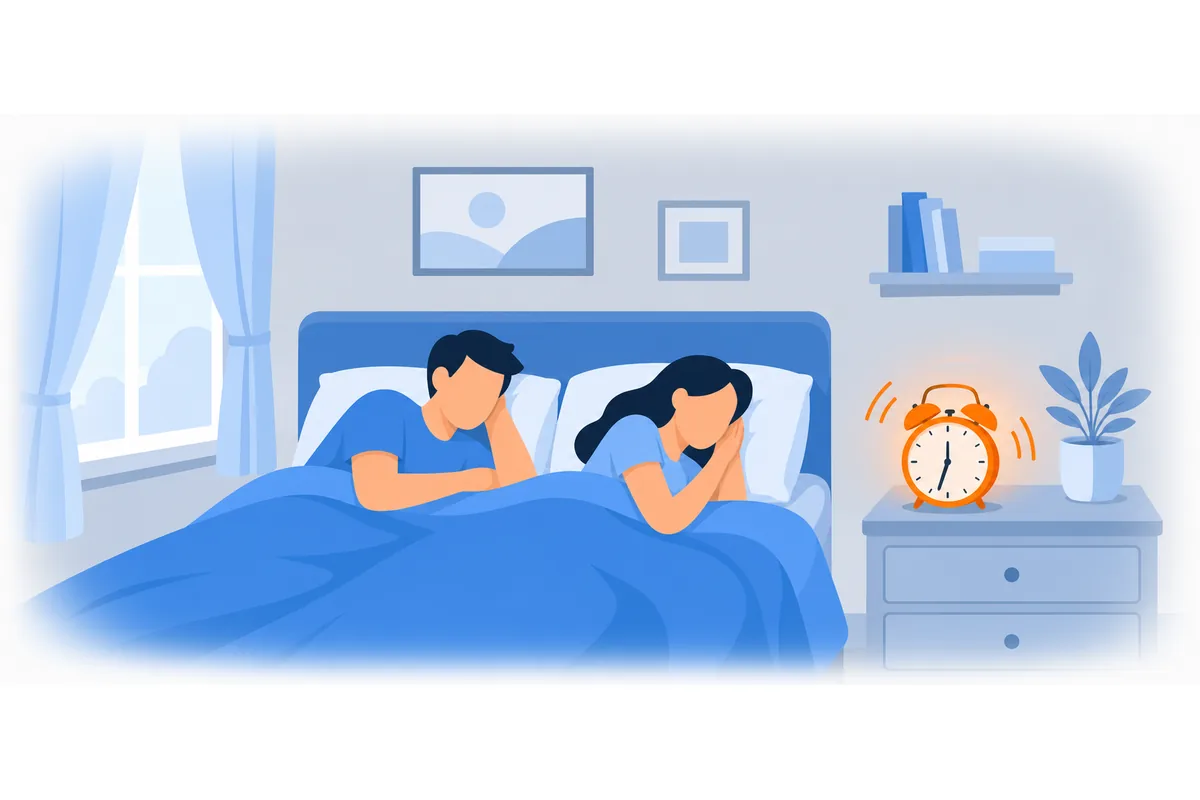
| Negative Example | She was not sleeping when the alarm went off. (Negates the ongoing background action.) |
The alarm did not go off while she was sleeping. (Negates the interrupting action itself.) |
| Question Example | Were you working when the power cut happened? (Asks about the ongoing action in progress.) |
What happened while you were working? (Asks about the interrupting event itself.) |
| Key Signal Words | while (most common); as e.g., While I was cooking… |
when (most common); suddenly, just then, at that moment e.g., …when the phone rang. |
| Duration & Completion | The action was not completed — it was still unfinished at the moment of interruption. | The action was completed — it happened quickly and fully at a specific point in time. |
Examples





What to Remember
- Use past continuous (was/were + -ing) for the action happening when an interruption occurred.
- The interrupting action uses simple past tense to show what interrupted the continuous action.
- Use 'was' with I, he, she, and it; use 'were' with you, we, and they.
- The past continuous shows the relationship between two events that happened at almost the same time.
- Common mistake: Don't use simple past for both actions; use past continuous for the interrupted one.