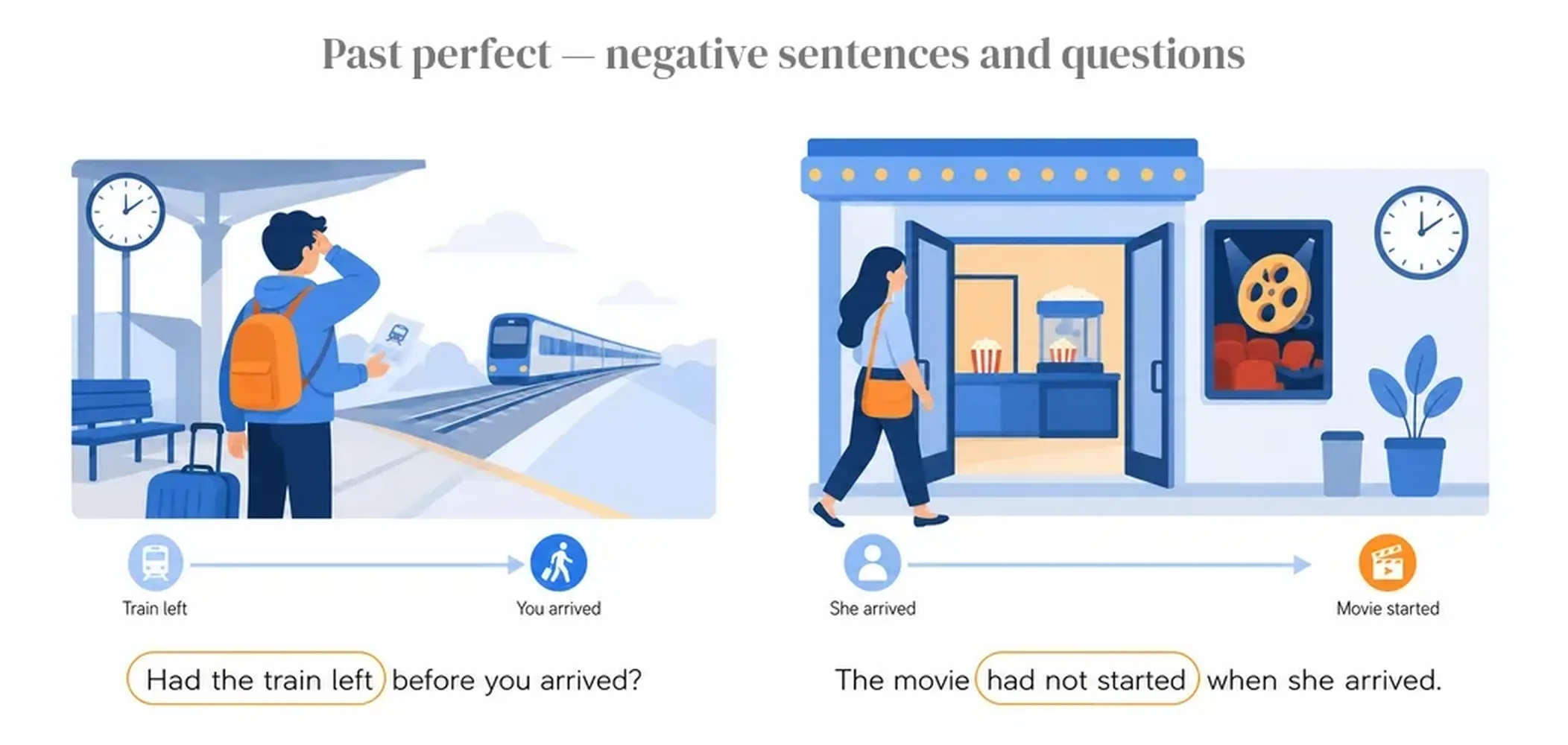
Past Perfect: Negatives and Questions
The past perfect tense describes an action that happened before another action in the past. To ask questions or make negative statements in past perfect, we use the auxiliary verb 'had' combined with 'not' or by inverting word order. Understanding these forms is essential for expressing complex time relationships in English, especially when telling stories or explaining sequences of events.

Sentence Structure Formulas
Affirmative
| Subject | Auxiliary | Past Participle | Object / Rest |
|---|---|---|---|
| She | had | finished | her homework before dinner. |
Negative
| Subject | Auxiliary | Negation | Past Participle | Object / Rest |
|---|---|---|---|---|
| They | had | not | seen | the film before last night. |
| They | hadn't | seen | the film before last night. | |
Contraction: had not → hadn't
Question
Yes / No Question
| Auxiliary | Subject | Past Participle | Object / Rest |
|---|---|---|---|
| Had | you | finished | your work before noon? |
Wh- Question
| Wh- Word | Auxiliary | Subject | Past Participle |
|---|---|---|---|
| What | had | they | discussed before the meeting? |
Examples

She hadn't realized how serious the problem was until her manager explained it.
Negative past perfect · Common usage
①problem occurred and became serious
→
②manager explained it to her
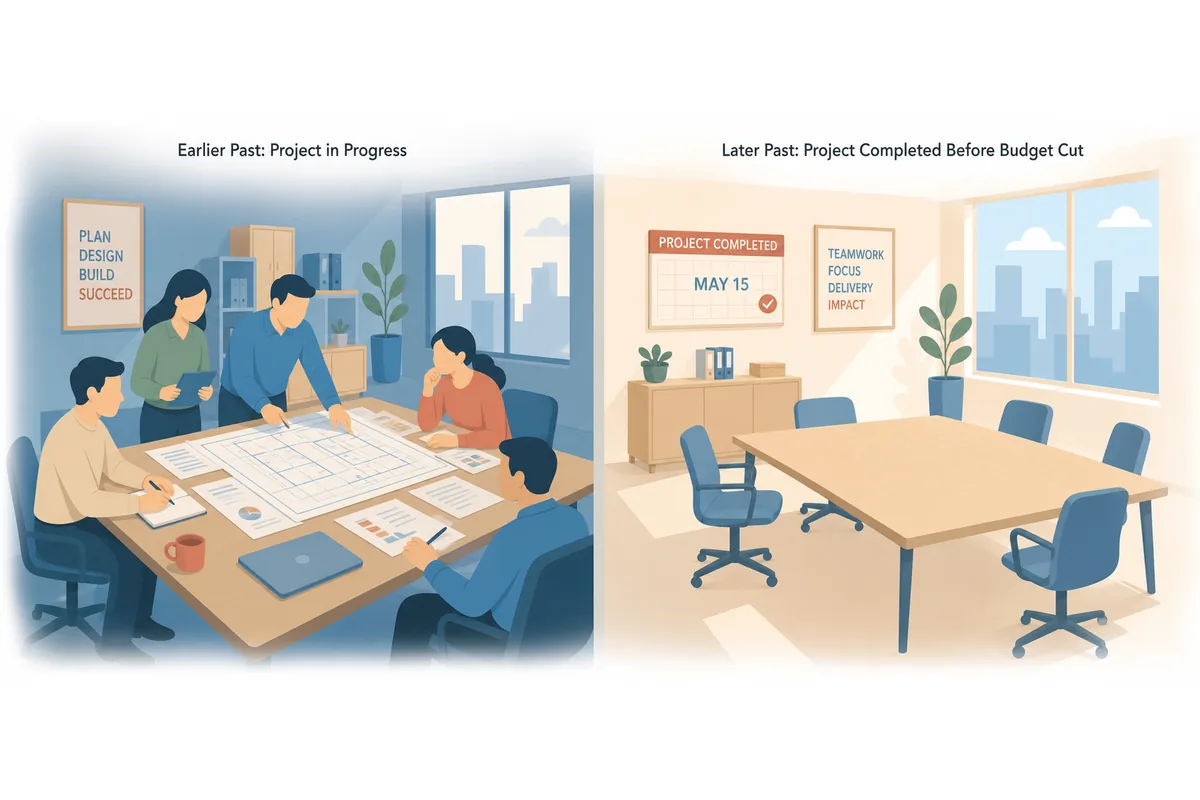
Had the project been completed before the budget was cut?
Negative question · Passive voice
①project completed
→
②budget was cut

We hadn't expected such a positive response to our proposal.
Negative past perfect · Story context
①we formed the proposal
→
②we received the positive response

Hadn't you told me that you had experience with this software?
Negative question · Challenge/surprise
①you told me about your software experience
→
②I asked you this question
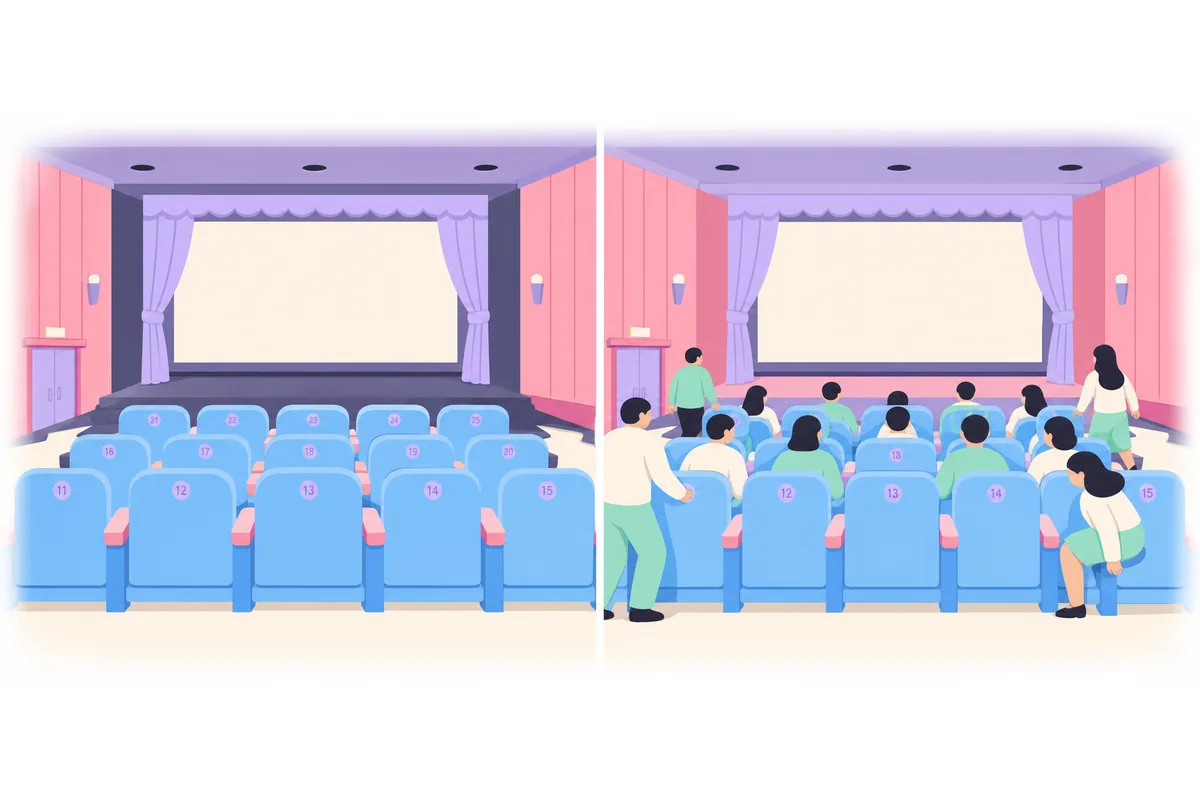
By the time the film started, the audience hadn't taken their seats yet.
Negative past perfect · Time sequence
①audience taking their seats
→
②film started

Had she not warned him beforehand, he wouldn't have prepared for the interview.
Formal negative question · Conditional context
①she warned him beforehand
→
②he prepared for the interview
When to use it
Storytelling
Use past perfect negatives to show what hadn't happened yet in a narrative. This creates suspense and clarifies the sequence of events.
"The detective hadn't discovered the truth when the suspect fled the country."
Clarifying Past Events
Ask past perfect questions to check whether previous actions occurred before a specific moment in the past.
"Had you finished reading the document before the meeting began?"
Expressing Regret or Surprise
Negative past perfect sentences often express missed opportunities or unexpected realizations about past situations.
"I hadn't imagined how differently things would turn out."
Showing Cause and Effect
Use these forms to emphasize the temporal relationship between two past events, especially with conditional structures.
"If she hadn't warned me, I would have made a serious mistake."
Signal words
by the time
before
after
once
until
never
not yet
already
when
as soon as
Common Mistakes
✕
Wrong
She had not went to the store before it closed.
✓
Correct
She had not gone to the store before it closed.
Use past participle (gone) not past tense (went) after 'had'.
✕
Wrong
Did he had finished his homework when you called?
✓
Correct
Had he finished his homework when you called?
For past perfect questions, invert 'had' to the beginning; don't use 'did'.
KEY TAKEAWAYS
What to Remember
- Use 'had' + past participle to form the past perfect tense in all negative and question forms.
- For negative statements, place 'not' directly after 'had': had not (or hadn't) + past participle.
- In questions, invert the subject and 'had': Had + subject + past participle + rest of sentence?
- The past perfect shows which past action happened first when two past events are mentioned.
- Remember that 'had' remains the same for all subjects; only the past participle changes the meaning.