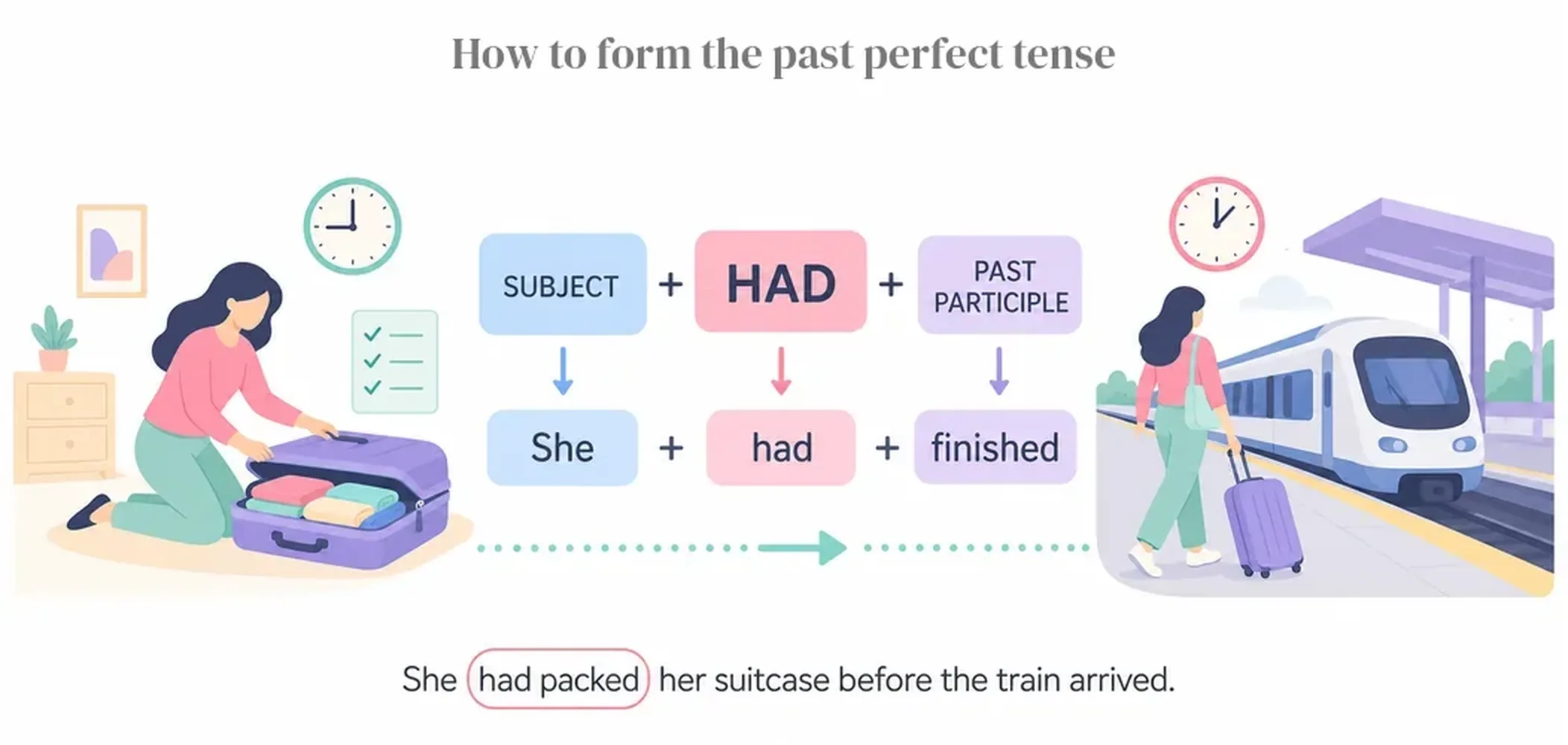
Understanding Past Perfect Formation
The past perfect tense describes an action that was completed before another action in the past. It is formed using the auxiliary verb 'had' followed by the past participle of the main verb. This tense is essential for showing the sequence of events and clarifying which past action occurred first. Understanding its formation will help you express complex past narratives with precision.

Past Perfect Conjugation Table
| Pronoun | Positive | Negative | Question |
|---|---|---|---|
| I | I had worked / I had gone | I had not worked / I hadn't gone | Had I worked? / Had I gone? |
| You (singular) | You had worked / You had gone | You had not worked / You hadn't gone | Had you worked? / Had you gone? |
| He / She / It | He had worked / She had gone / It had been | He had not worked / She hadn't gone / It hadn't been | Had he worked? / Had she gone? / Had it been? |
| We | We had worked / We had gone | We had not worked / We hadn't gone | Had we worked? / Had we gone? |
| You (plural) | You had worked / You had gone | You had not worked / You hadn't gone | Had you worked? / Had you gone? |
| They | They had worked / They had gone | They had not worked / They hadn't gone | Had they worked? / Had they gone? |
Notes:
|
|||
Formula
✔ Positive
Subject
+
had
+
past participle
She had finished her work before the meeting started.
✖ Negative
Subject
+
had not
+
past participle
They had not arrived when we called them.
? Question
Had
+
subject
+
past participle
+
?
Had you completed the project before the deadline?
Examples
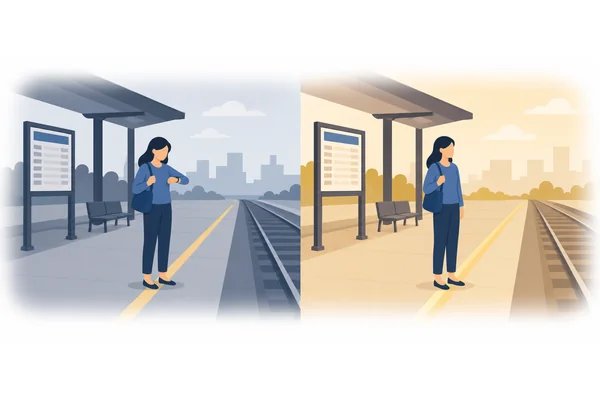
By the time she arrived at the station, the train had already left.
Positive form · Completed action before another past event
①train left the station
→
②she arrived at the station

He hadn't studied enough, so he failed the exam.
Negative form · Reason for a past consequence
①He hadn't studied enough
→
②He failed the exam

Had they discussed the problem before making a decision?
Question form · Enquiring about sequence of past events
①they discussed the problem
→
②they made a decision

We realised we had made a mistake in our calculations.
Positive form · Reported realisation of past action
①made a mistake in calculations
→
②we realised it
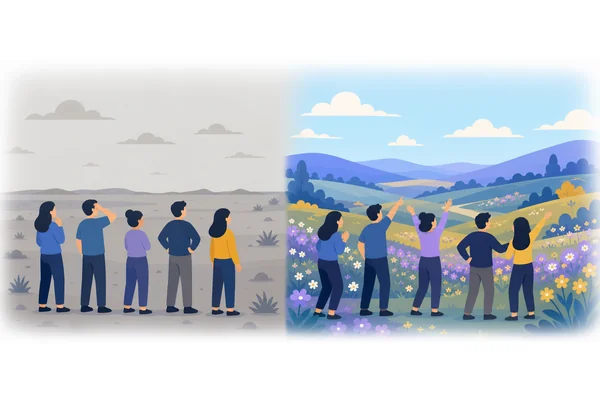
They had never seen such a beautiful landscape before that trip.
Negative form · Experience up to a point in the past
①They had never seen such a beautiful landscape
→
②Before that trip

Had you warned them about the risks beforehand?
Question form · Checking if prior action took place
①you warned them about the risks
→
②they faced the situation
When to use it
Showing Sequence of Events
Use past perfect to clarify which of two past actions happened first. It helps readers or listeners understand the chronological order.
"After she had studied for three hours, she finally took a break."
Narrative & Storytelling
Essential in stories and reports when describing events that occurred before the main past action.
"The detective discovered that the suspect had fled the country weeks earlier."
Reported Speech
Use past perfect when reporting what someone had done or experienced before they spoke.
"She told me she had worked there for five years."
Explaining Causes & Results
Connect a past action to its consequence by showing the earlier action with past perfect.
"Because he had forgotten his keys, he couldn't enter the building."
Signal words
before
after
by the time
when
earlier
previously
already
just
never
until
Common Mistakes
✕
Wrong
She had went to the shop before coming home.
✓
Correct
She had gone to the shop before coming home.
Past participle of 'go' is 'gone', not 'went'. Use base form + -ed or irregular past participle.
✕
Wrong
Did you had finished your homework?
✓
Correct
Had you finished your homework?
In past perfect questions, use 'had' as the auxiliary. Don't use 'did' with 'had'.
✕
Wrong
They have had completed the work before 5 PM.
✓
Correct
They had completed the work before 5 PM.
Use 'had' (simple past perfect), not 'have had' (present perfect). Check the time context carefully.
KEY TAKEAWAYS
What to Remember
- The past perfect uses 'had' + past participle to show an action completed before another past action.
- Use past perfect for the earlier action when describing two events that happened at different times.
- Common mistake: don't use past perfect for both actions; only use it for the first completed action.
- The past participle form is the same for all subjects: I had gone, he had gone, they had gone.
- Past perfect helps readers understand which past event occurred first and clarifies the sequence of your narrative.