Grammar B2 Past Perfect Tense

What is the past perfect tense?

What is the past perfect tense?

What Is the Past Perfect Tense?

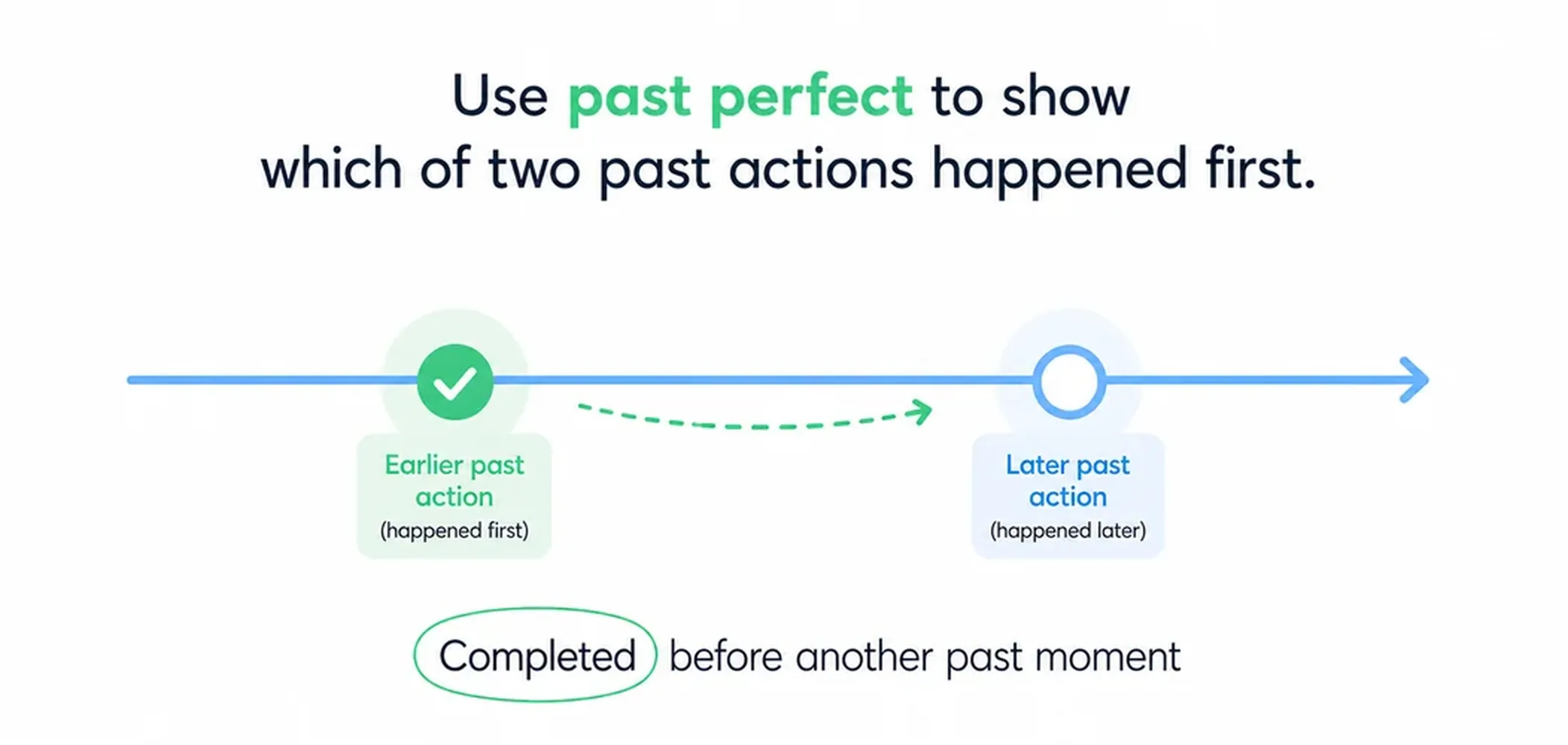
The past perfect tense is used to talk about an action that happened before another action in the past. It shows the order of events when two past actions occurred at different times. The past perfect is formed using the auxiliary verb 'had' plus the past participle of the main verb. This tense is essential in English storytelling and explanations because it clarifies which event happened first, creating a clear timeline of past events.

Where the Past Perfect Tense sits on the English tense timeline

Where the Past Perfect Tense sits on the English tense timeline

Key Characteristics

The past perfect tense always refers to a time before a specific past moment or before another past event. It is frequently used in complex sentences that contain both past perfect and simple past actions. The auxiliary 'had' remains the same for all subjects (I, you, he, she, it, we, they), making it straightforward to conjugate. Understanding this tense helps you express the logical sequence of historical events, personal experiences, and narrative contexts with precision.

Past Perfect Conjugation Table

Pronoun Positive Negative Question
I I had worked / I had gone / I had eaten I had not worked / I hadn't gone Had I worked? / Had I gone?
You (singular) You had worked / You had been / You had seen You had not worked / You hadn't seen Had you worked? / Had you been?
He / She / It He had worked / She had written / It had broken He had not worked / She hadn't written Had he worked? / Had she written?
We We had worked / We had spoken / We had taken We had not worked / We hadn't spoken Had we worked? / Had we spoken?
You (plural) You had worked / You had done / You had made You had not worked / You hadn't done Had you worked? / Had you done?
They They had worked / They had known / They had bought They had not worked / They hadn't known Had they worked? / Had they known?
Notes: The past perfect is formed with had + past participle for all subjects — unlike simple past or present perfect, had never changes form. Irregular verbs use their third form (V3): go → gone, eat → eaten, write → written, break → broken, see → seen, know → known, do → done, make → made, buy → bought, speak → spoken, take → taken, be → been. Regular verbs simply add -ed: work → worked. The contracted negative form is hadn't.
Formula
✔ Positive
Subject + had + past participle
She had finished her homework before her friends arrived.
✖ Negative
Subject + had not + past participle
They had not seen the film before last night.
? Question
Had + subject + past participle
Had you ever visited Paris before 2019?

Examples

By the time the meeting started, everyone had already arrived.
Action completed before another past event · B2
Everyone arrived Meeting started
She realized that she had made a terrible mistake.
Discovery of a prior completed action · Narrative
She made a terrible mistake She realized it
They hadn't known about the change until I told them.
Negative statement showing prior ignorance · B2
the change happened I told them about it
After he had studied for three hours, he took a break.
Temporal sequence with 'after' · B2
he studied for three hours he took a break
Had you finished the project before the deadline passed?
Question form requesting confirmation · B2
you finished the project the deadline passed
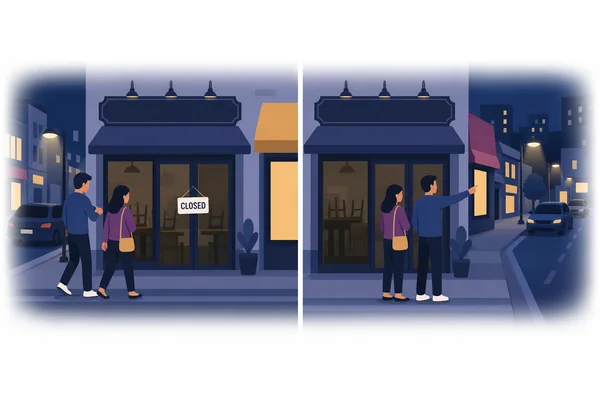
The restaurant had closed by the time we arrived at 10 PM.
One past action before another · Everyday
restaurant closed we arrived at 10 PM
When to use it
Narrative & Storytelling
Use the past perfect to establish the sequence of events in stories, historical accounts, or personal anecdotes. It clarifies what happened first.
"By the time the detective arrived, the criminal had already escaped with the jewels."
Expressing Prior Completion
Show that one action was completely finished before another past action began or occurred. This creates clarity about timing and order.
"She had completed the report before her boss asked for it."
Reported Thoughts & Realizations
Use it when describing what someone discovered, realized, or understood about events that happened earlier. Common in indirect speech.
"He hadn't realized that his best friend had already left the city."
Conditional & Hypothetical Contexts
In sentences with 'if' clauses, the past perfect expresses an unreal past situation and what might have happened as a result.
"If she had studied harder, she would have passed the exam."
Signal words
before after by the time when once already just previously earlier until
Common Mistakes
Wrong
By the time I arrived, he already left.
Correct
By the time I arrived, he had already left.
Use past perfect with 'had' to show action before another past event, not simple past.
Wrong
She had went to the store yesterday.
Correct
She had gone to the store yesterday.
Past participle of 'go' is 'gone', not 'went'. The auxiliary 'had' requires the past participle form.
Wrong
They had been finished the work when I called.
Correct
They had finished the work when I called.
For simple completed actions, use 'had' + past participle, not 'had been' + past participle (that's past perfect continuous).
Wrong
Did he had completed the task before noon?
Correct
Had he completed the task before noon?
In questions, invert 'had' and subject; do not use 'did' with past perfect tense.
KEY TAKEAWAYS

What to Remember

  • Use past perfect to show which of two past actions happened first.
  • Form past perfect with 'had' + past participle of the main verb.
  • Past perfect always refers to a time before another past event.
  • Use past perfect in complex sentences to clarify the order of events.
  • Don't use past perfect for single past events; use simple past instead.
← Previous
Present perfect continuous — common mistakes
Next →
How to form the past perfect tense