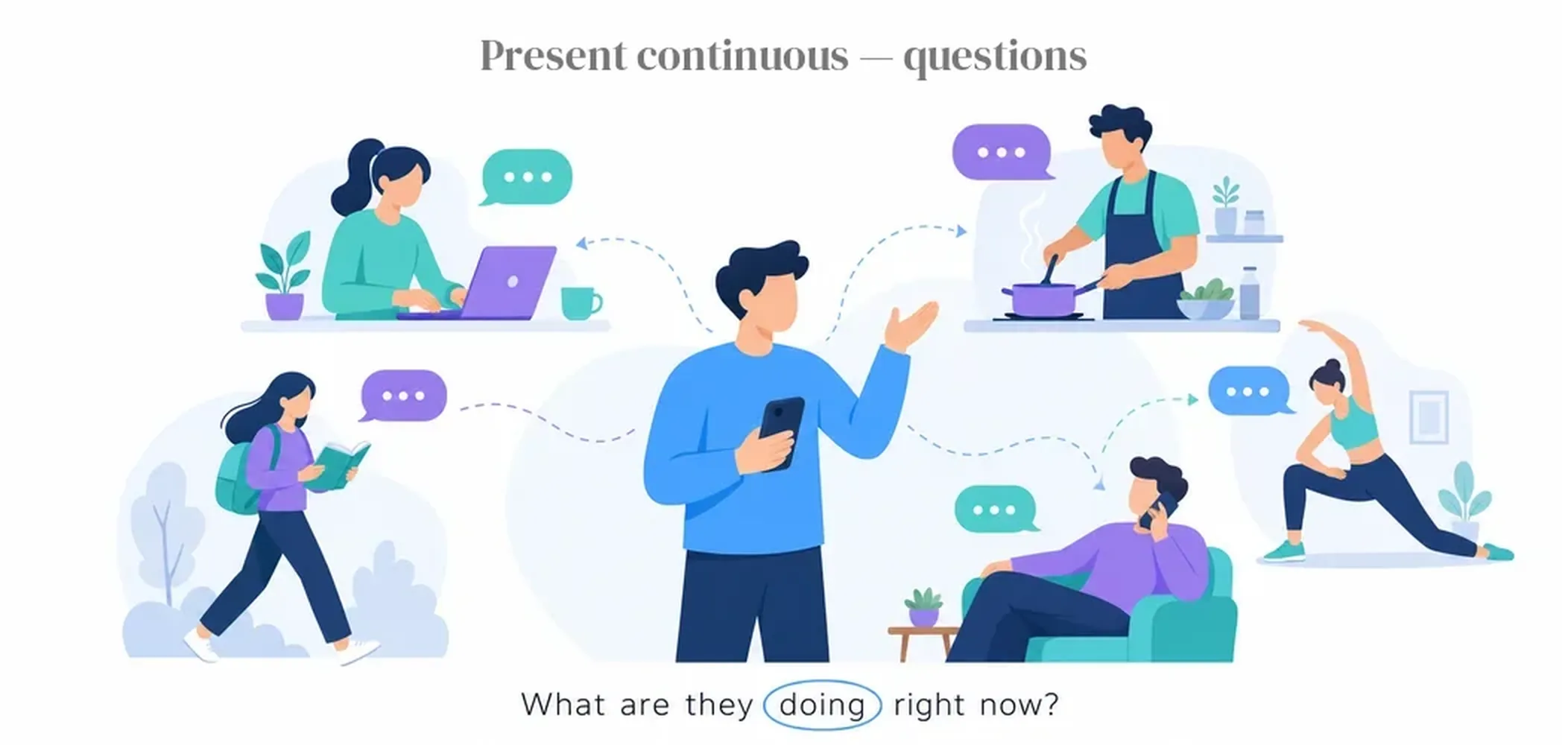
Present Continuous Questions
Questions in the present continuous follow a specific word order. We move the auxiliary verb 'am', 'is', or 'are' to the beginning of the sentence, before the subject. This is called inversion. You can ask yes/no questions or questions with question words like 'what', 'where', or 'who'.

Examples of Present Continuous Questions
Present Continuous — Questions
✅ Yes / No Questions
Are you listening to me right now?
Are is used with you. The main verb becomes listening (base verb + -ing) to form the question.
Is she working from home today?
Is is used with third-person singular subjects (he / she / it). The auxiliary moves before the subject to form a question.
Are they coming to the party tonight?
Are is used with plural subjects and they. The present continuous can describe a planned future event.
Am I sitting in your seat?
Am is exclusively used with the subject I. Even in questions, am cannot be replaced with is or are.
Is the baby sleeping at the moment?
Is agrees with the singular noun the baby. Time expressions like at the moment signal an action in progress right now.
❓ Wh- Questions
What are you doing this weekend?
The wh-word what comes first, followed by are + subject + verb-ing. Here the present continuous expresses a future arrangement.
Where is he going in such a hurry?
Where asks about place or direction. The structure is: wh-word + is + subject + verb-ing. The action is happening right now.
Why are they laughing so loudly?
Why asks for a reason. The auxiliary are agrees with the plural subject they, and the action is in progress now.
Who are you talking to on the phone?
Who asks about a person. When who is the object of the question, the standard question word order applies: wh-word + auxiliary + subject + verb-ing.
How are the children getting to school today?
How asks about the method or means. Are agrees with the plural noun the children, describing a current or planned activity.
What is she wearing to the interview?
Is is used with she. The present continuous here describes a future personal arrangement that has already been decided.
🔄 Negative Questions (for emphasis or surprise)
Aren't you coming with us?
Negative questions use aren't / isn't / am not + subject + verb-ing. They often express surprise or seek confirmation of something expected.
Isn't the team performing well this season?
Isn't contracts is + not. This negative question implies the speaker thinks the team is performing well and wants agreement.
Examples






What to Remember
- Move the auxiliary verb (am, is, are) to the beginning of the sentence before the subject.
- Use inversion in present continuous questions: auxiliary verb comes first, then subject, then verb-ing form.
- Yes/no questions follow the pattern: auxiliary + subject + verb-ing + object/complement?
- Question words (what, where, who, why) can start the sentence before the auxiliary verb.
- Don't forget the auxiliary verb—present continuous questions always require am, is, or are at the start.