Grammar A2 Present Continuous Tense

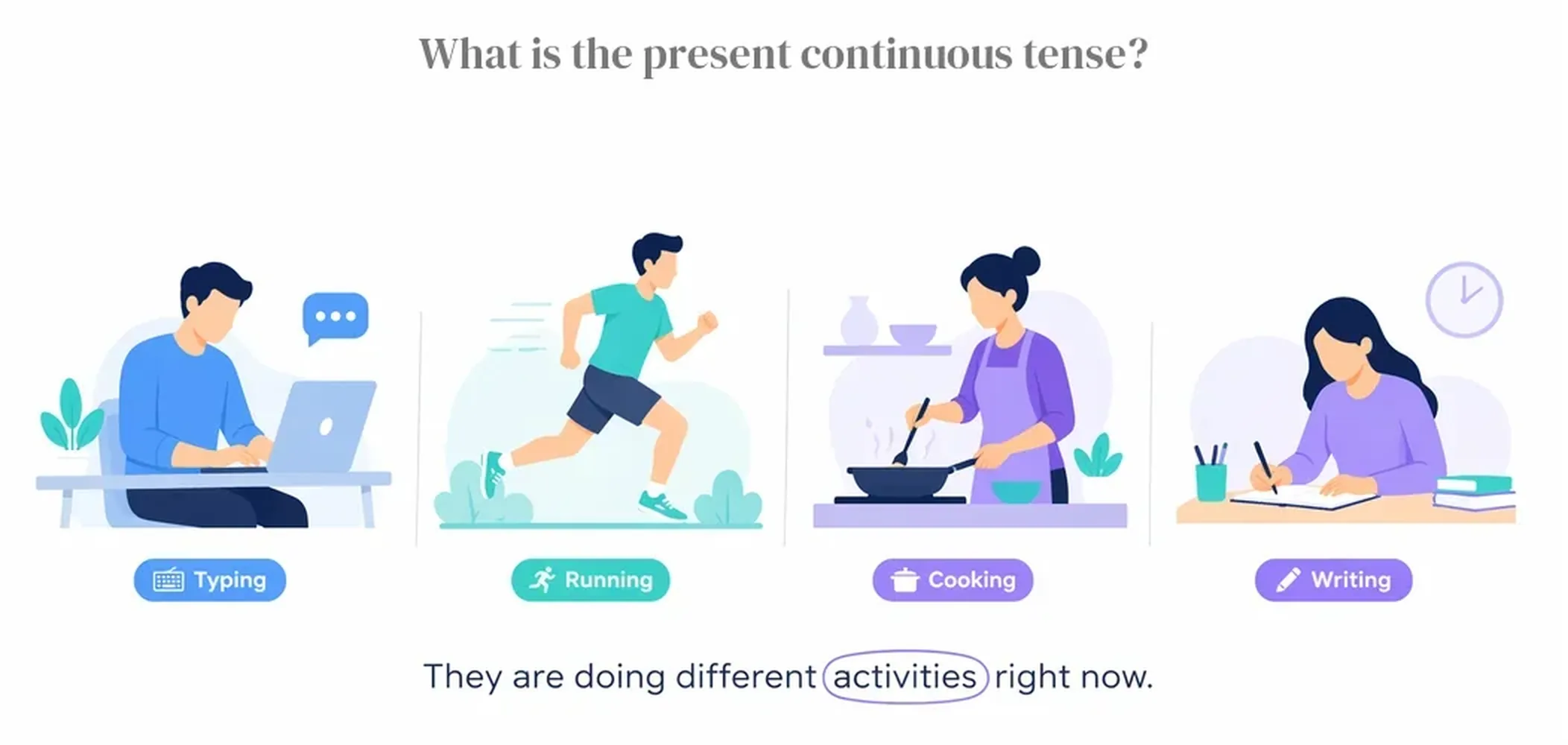
What is the present continuous tense?

What is the present continuous tense?

What is the Present Continuous Tense?

The present continuous tense describes actions that are happening right now, at this moment. We use it to talk about temporary activities that started before now and are still happening. For example, you might be reading this sentence right now. In English, we form the present continuous with the auxiliary verb 'to be' (am, is, are) plus the verb ending in '-ing'. This tense shows that an action is in progress.

Where the Present Continuous Tense sits on the English tense timeline

Where the Present Continuous Tense sits on the English tense timeline

Key Characteristics

The present continuous has three important features. First, it always uses two parts: a form of 'be' and a verb with '-ing'. Second, it describes actions that are temporary and in progress, not permanent situations. Third, you can use it for actions happening right now, this week, or this month if they are not finished. It is different from the simple present tense, which describes habits and permanent facts.

Present Continuous Conjugation

Pronoun Positive Negative Question
I I am working I am not working Am I working?
you (singular) you are working you are not working Are you working?
he / she / it he is working he is not working Is he working?
we we are working we are not working Are we working?
you (plural) you are working you are not working Are you working?
they they are working they are not working Are they working?
Notes:   (1) Contractions: I'm, you're, he's / she's / it's, we're, they're are common in spoken and informal written English.   (2) Negative contractions: isn't (he/she/it), aren't (you/we/they); note that I amn't is not standard — use I'm not instead.   (3) Spelling rules for -ing: drop a silent final -e before adding -ing (e.g., make → making); double the final consonant after a short stressed vowel (e.g., run → running, sit → sitting).   (4) Stative verbs (e.g., know, believe, love) are not normally used in the continuous form.
Formula
✔ Positive
Subject + am/is/are + verb + -ing
She is studying for her exam.
✖ Negative
Subject + am/is/are + not + verb + -ing
They are not watching television right now.
? Question
Am/Is/Are + subject + verb + -ing
Are you listening to me?

Examples

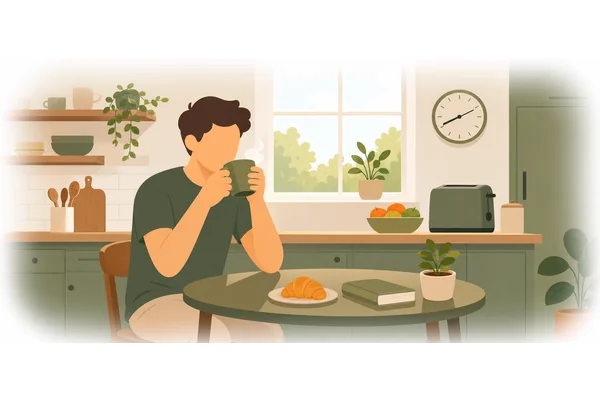
I am drinking coffee this morning.
Action happening now · Present moment
The children are playing in the park.
Activity in progress · Temporary situation
We are learning English at the moment.
Ongoing action · This period of time
It is raining outside right now.
Current weather · Happening now
My brother is not sleeping. He is working late.
Negative and positive · Contrast of actions
What are you doing this week?
Question form · Future plans in progress
When to use it
Actions Right Now
Use the present continuous to describe what is happening at this exact moment. These are temporary activities you can see or experience.
"I am writing an email right now."
Current Period
Use it to describe activities that are happening this week or month, even if not at this exact moment. The action is still in progress.
"She is working on a big project this month."
Temporary Situations
Use the present continuous for situations that are not permanent. It shows that something is changing or will change soon.
"He is learning Japanese this year."
Asking About Actions
Use questions in the present continuous to ask about what people are doing now or what activities they are involved in.
"Are you coming to the party tonight?"
Signal words
right now at the moment now currently this week this month this year at present still just now
Common Mistakes
Wrong
She is go to the store right now.
Correct
She is going to the store right now.
Must use verb + '-ing' form after 'is', not the base verb.
Wrong
We are study English in class.
Correct
We are studying English in class.
Forget to add '-ing' ending to the main verb 'study'.
Wrong
I am read a book now.
Correct
I am reading a book now.
The verb needs '-ing' form (reading), not base form (read).
Wrong
Are they sleeping right now? Yes, they are sleep.
Correct
Are they sleeping right now? Yes, they are sleeping.
In short answers, use the full auxiliary verb phrase with '-ing'.
KEY TAKEAWAYS

What to Remember

  • The present continuous describes actions happening right now or at this moment in time.
  • Form the present continuous with 'be' (am, is, are) + verb + '-ing'.
  • Use 'am' with I, 'is' with he/she/it, and 'are' with you/we/they.
  • The present continuous shows an action in progress, not a completed action.
  • This tense describes temporary activities, not permanent situations or habits.
← Previous
Simple present tense — common mistakes
Next →
How to form the present continuous tense