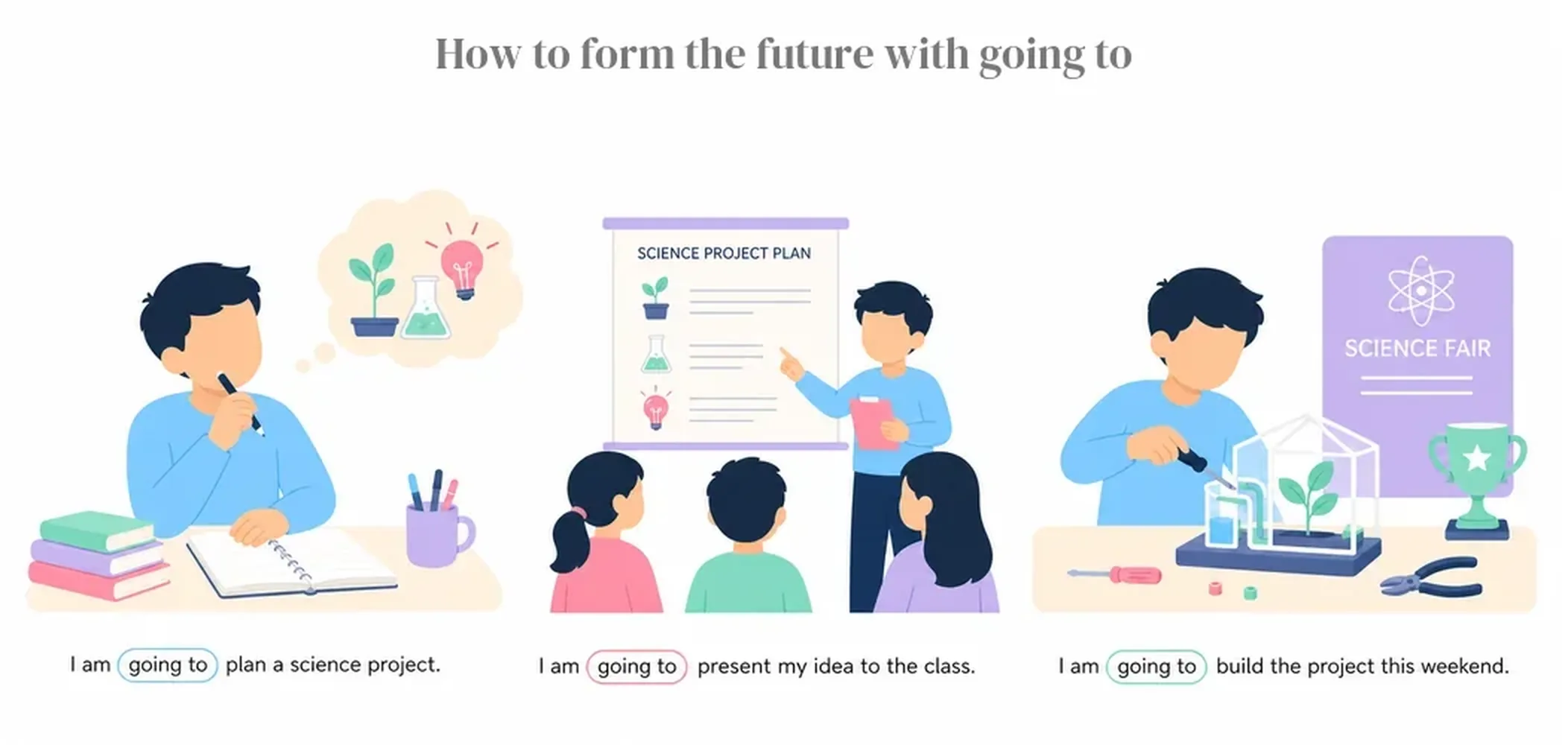
Introduction to Going To
The 'going to' structure is one of the most common ways to talk about the future in English. We use it to describe plans, intentions, or things we are sure will happen soon. It is formed with the verb 'be' in the present tense, followed by 'going to' and the base verb. This structure feels natural and is very useful for everyday conversations.

How to Form Going To: Full Conjugation
| Pronoun | Positive | Negative | Question |
|---|---|---|---|
| I | I am going to travel | I am not going to travel | Am I going to travel? |
| You (singular) | You are going to travel | You are not going to travel | Are you going to travel? |
| He / She / It | He is going to travel | He is not going to travel | Is he going to travel? |
| We | We are going to travel | We are not going to travel | Are we going to travel? |
| You (plural) | You are going to travel | You are not going to travel | Are you going to travel? |
| They | They are going to travel | They are not going to travel | Are they going to travel? |
| Notes: (1) Use am with I; use is with he / she / it; use are with you / we / they. (2) Common contractions: I'm, you're, he's / she's / it's, we're, they're + going to travel. (3) Negative contractions: isn't going to (he/she/it) and aren't going to (you/we/they); am not has no standard contraction in affirmative but aren't I? is used in questions. (4) The base verb after going to never changes form — always use the infinitive without to (e.g., travel, not travels or traveled). (5) In informal speech, going to is often reduced to gonna, but this form should be avoided in formal writing. | |||
Formula
✔ Positive
Subject
+
am/is/are
+
going to
+
base verb
I am going to study English tomorrow.
✖ Negative
Subject
+
am/is/are
+
not
+
going to
+
base verb
She is not going to arrive on time.
? Question
Am/Is/Are
+
Subject
+
going to
+
base verb
Are you going to visit your friends this weekend?
Examples

They are going to buy a new car next month.
Positive statement · Plan or intention
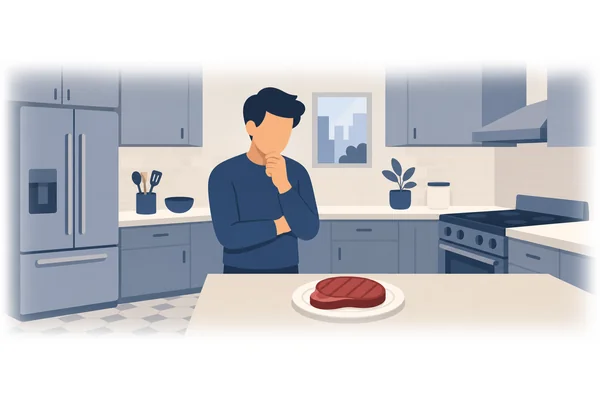
I am not going to eat meat anymore.
Negative statement · Personal decision

Is he going to call you later?
Question form · Asking about future plans

We are going to have a party on Saturday.
Positive statement · Planned event

It is not going to rain tomorrow, I think.
Negative statement · Prediction

What are you going to do after work?
Question with question word · Asking about plans
When to use it
Personal Plans
Use 'going to' when you have decided to do something in the future. This is perfect for talking about your intentions and arrangements.
I am going to study for my exam next week.
Predictions
Use 'going to' when you are sure something will happen based on what you see or know now. The evidence is visible or clear.
Look at those clouds! It is going to rain.
Everyday Conversation
The 'going to' structure is natural and common in spoken English. It is less formal than 'will'.
What are you going to have for lunch?
Signal words
tomorrow
next week
next month
this weekend
tonight
later
soon
in the future
Common Mistakes
✕
Wrong
I going to go to the cinema.
✓
Correct
I am going to go to the cinema.
You must use 'am/is/are' before 'going to'. Don't forget the auxiliary verb.
✕
Wrong
She is going go to school tomorrow.
✓
Correct
She is going to go to school tomorrow.
Use 'to' between 'going' and the base verb. The structure is 'going TO'.
✕
Wrong
Are they going to comes home soon?
✓
Correct
Are they going to come home soon?
After 'going to', always use the base form of the verb, not the third person singular form.
KEY TAKEAWAYS
What to Remember
- Use 'am/is/are' + 'going to' + base verb to talk about future plans and intentions.
- The base verb comes directly after 'going to' without any other words in between.
- Use 'going to' for predictions you are certain about, not just general future possibilities.
- In negative sentences, put 'not' after the form of 'be': 'is not going to'.
- Questions are formed by putting the form of 'be' before the subject: 'Are you going to?'