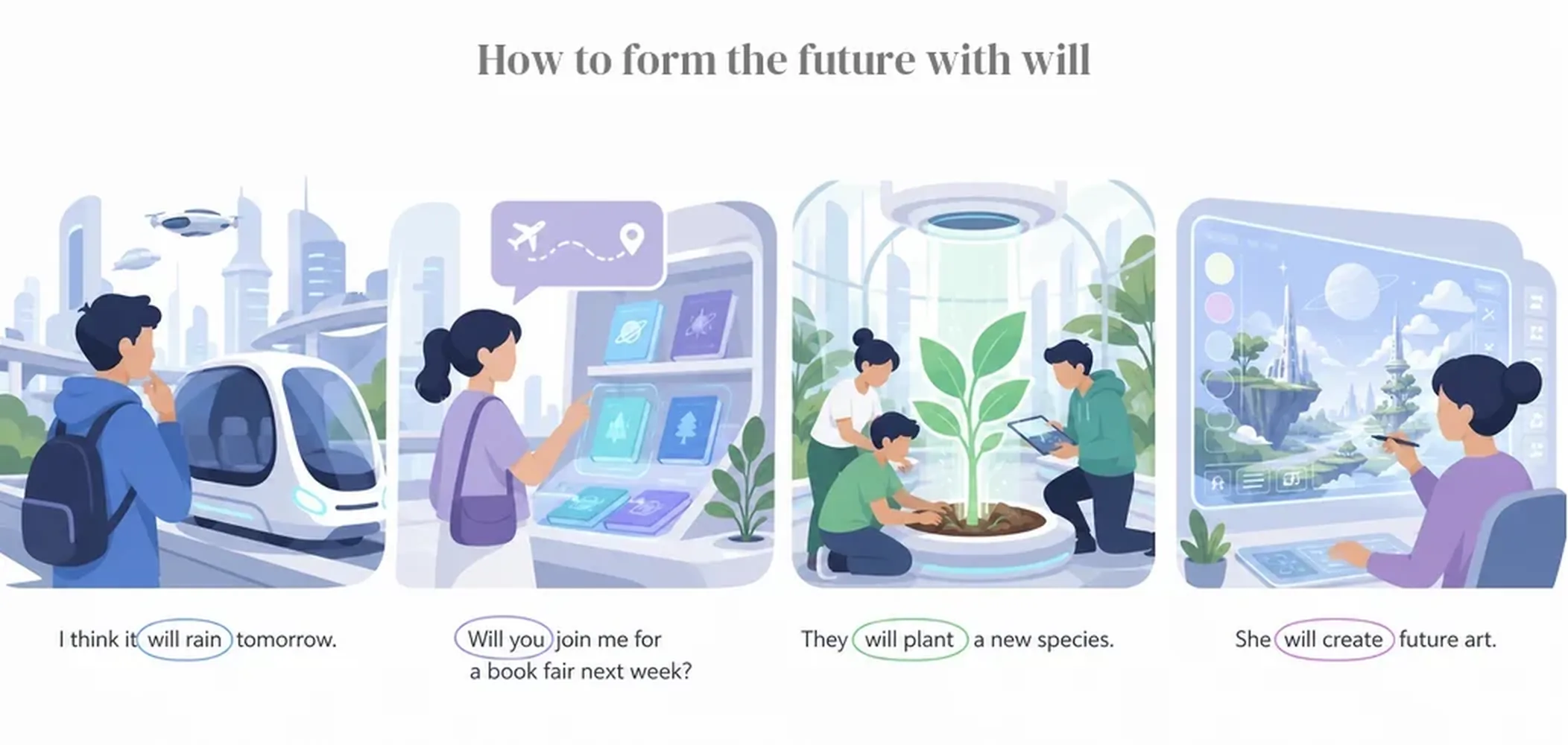
Introduction to Will for the Future
The future tense with 'will' is one of the simplest ways to talk about things that will happen in the future. We use 'will' + the base form of a verb (the infinitive without 'to'). This form works with all subjects: I, you, he, she, it, we, they. It never changes! You can use 'will' for predictions, promises, decisions, or facts about the future.

How Will Is Formed with Every Subject
| Pronoun | Positive | Negative | Question |
|---|---|---|---|
| I | I will travel | I will not travel / I won't travel | Will I travel? |
| you | you will travel | you will not travel / you won't travel | Will you travel? |
| he / she / it | he will travel | he will not travel / he won't travel | Will he travel? |
| we | we will travel | we will not travel / we won't travel | Will we travel? |
| you (plural) | you will travel | you will not travel / you won't travel | Will you travel? |
| they | they will travel | they will not travel / they won't travel | Will they travel? |
ⓘ Notes:
|
|||
Formula
✔ Positive
Subject
+
will
+
base verb
I will travel to Spain next summer.
✖ Negative
Subject
+
will not
+
base verb
She will not finish her homework today.
? Question
Will
+
subject
+
base verb
Will you help me tomorrow?
Examples

I will call you later this evening.
Promise · Positive form
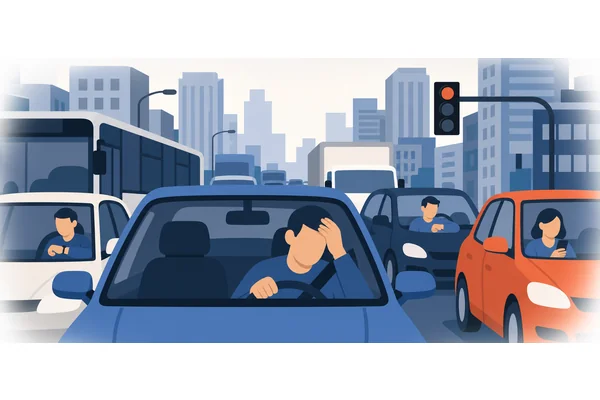
They will not arrive on time because of traffic.
Prediction · Negative form

Will it rain tomorrow?
Question · Question form

You will be happy with your new job.
Prediction · With verb 'be'

We will not go to the party next weekend.
Decision · Negative form
When to use it
Predictions
Use 'will' to say what you think will happen in the future, based on what you know now.
I think it will be very hot this summer.
Promises & Offers
Use 'will' to make promises to someone or offer to help them.
I will help you with your English homework.
Decisions
Use 'will' for decisions you make at the moment of speaking.
I'll have a coffee, please.
Facts
Use 'will' for facts you know about the future, like schedules or natural events.
The sun will rise at 6 a.m. tomorrow.
Signal words
tomorrow
next week
next month
next year
in the future
later
soon
tonight
this evening
in 2025
Common Mistakes
✕
Wrong
I will to go to the cinema tomorrow.
✓
Correct
I will go to the cinema tomorrow.
Never use 'to' after 'will'. Use the base verb form without 'to'.
✕
Wrong
She wills travel next month.
✓
Correct
She will travel next month.
'Will' does not change with subjects. Never add -s to 'will'.
✕
Wrong
Will you goes there?
✓
Correct
Will you go there?
After 'will' in questions, use the base verb form, not 'goes'.
KEY TAKEAWAYS
What to Remember
- Use 'will' + the base form of the verb (infinitive without 'to') to form the simple future.
- 'Will' stays the same with all subjects: I, you, he, she, it, we, they—no changes needed.
- Use 'will' for predictions, promises, decisions, and statements about future facts.
- Remember: don't add 'to' after 'will'—say "will go" not "will to go."
- Contractions are common in speech: 'll for will and won't for will not.