Simple Present Tense: Negative Sentences
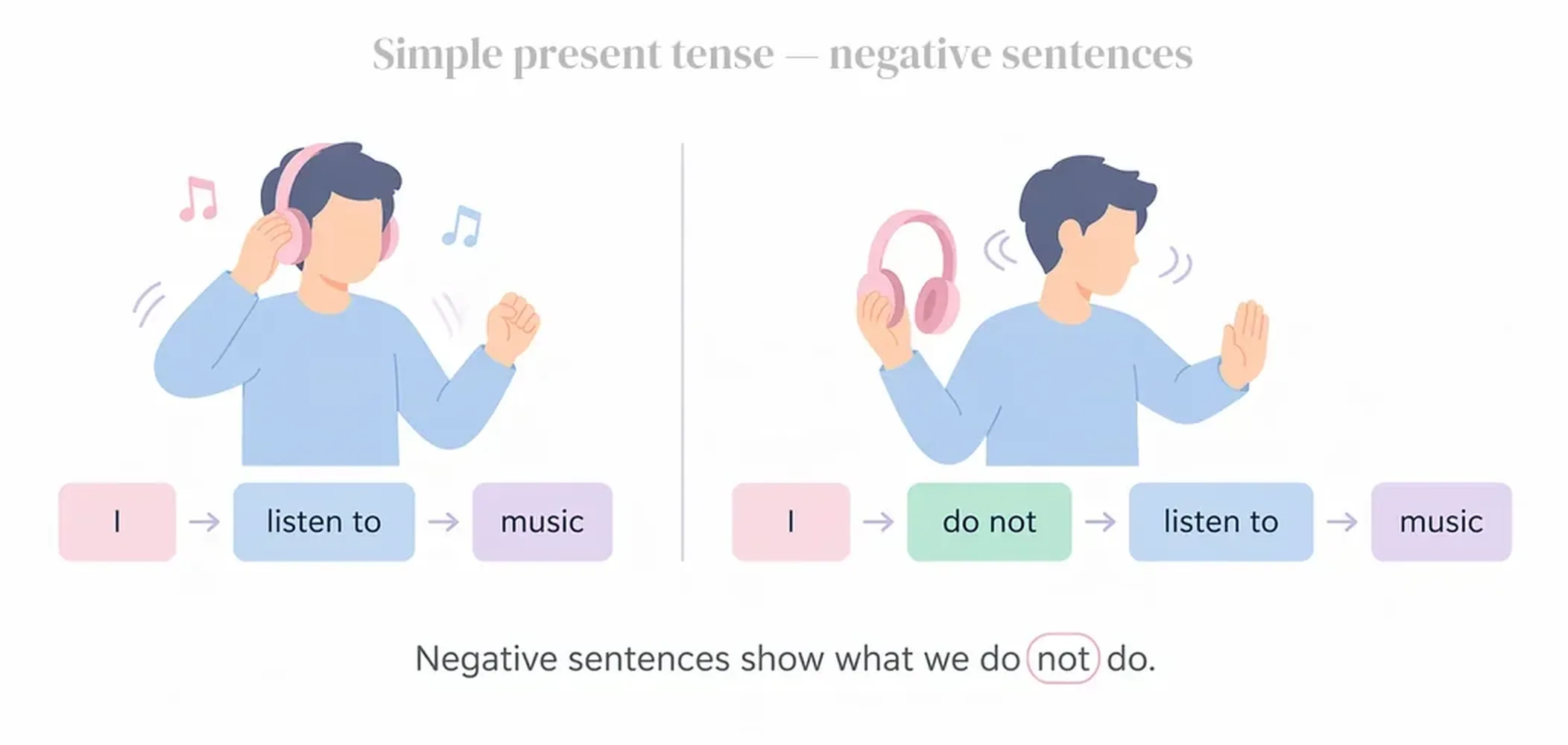
To make a negative sentence in the simple present tense, we use do not or does not with the base form of the verb. Use does not with he, she, and it. Use do not with I, you, we, and they. The negative form tells us what someone does NOT do.

Examples of Negative Sentences in the Simple Present Tense
Formula:
I / You / We / They + do not (don't) + base verb
He / She / It + does not (doesn't) + base verb
I / You / We / They + do not (don't) + base verb
He / She / It + does not (doesn't) + base verb
Group 1 — I & You (do not / don't)
Full form · I
I do not eat meat.
Use do not + base verb with I. The verb stays in its base form — never add -s.
Contracted form · I
I don't understand this question.
Don't is the contracted (short) form of do not. It is more common in everyday speech and informal writing.
Full form · You
You do not need a ticket.
Do not is used with you (singular and plural) in formal or emphatic contexts.
Contracted form · You
You don't have to worry.
Don't with you is standard in spoken English and casual writing.
Group 2 — He, She & It (does not / doesn't)
Full form · He
He does not work on Sundays.
With he / she / it, we use does not. The main verb returns to its base form — not works.
Contracted form · She
She doesn't like cold weather.
Doesn't = does not. Notice the main verb is like, not likes — the -s moves to the auxiliary.
Full form · It
It does not rain much here in summer.
It follows the same rule as he and she: always use does not.
Contracted form · It
This app doesn't cost anything.
Any singular third-person subject uses doesn't. Nouns like this app are treated as it.
Group 3 — We & They (do not / don't)
Full form · We
We do not own a car.
We uses do not, just like I and you.
Contracted form · We
We don't agree with that decision.
Don't is the natural contracted form for we in spoken English.
Full form · They
They do not speak French at home.
Plural subjects like they always use do not / don't, never does not.
Contracted form · They
The students don't study on Friday evenings.
Plural nouns (e.g. the students) act like they and take don't.
Group 4 — Watch Out! Common Mistakes
Correction · He/She
<p style="font-size:1.05rem;margin:0 0 6px 0;line-height:1.5
Formula
✖ Negative
Subject (I, you, we, they)
+
do not
+
verb (base form)
I do not like coffee.
Examples

I do not speak French.
A1 · Everyday negative statement

You do not like chocolate.
A1 · Second person negative

He does not work on Sundays.
A1 · Third person singular negative

She does not have a car.
A1 · Possession negative

We do not go to school on Saturday.
A1 · First person plural negative
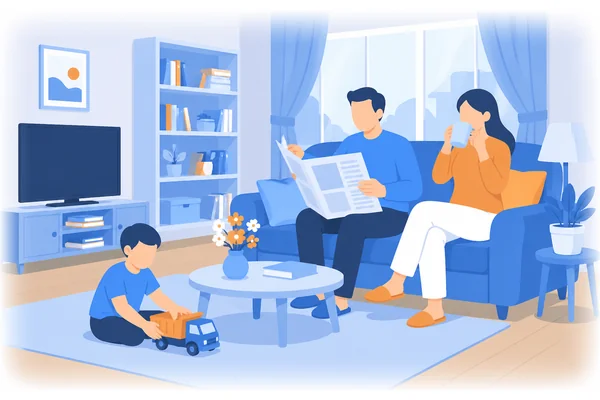
They do not watch TV in the morning.
A1 · Third person plural negative
When to use it
Saying What You Don't Do
Use negative simple present to tell someone what you do not do or what is not true about you.
"I do not drink tea. I drink coffee."
Disagreeing
Use negative sentences to politely disagree or correct information about others.
"She does not work here. She works at the hospital."
Stating Facts
Express general facts or regular situations that are NOT true.
"Cats do not eat plants. They eat meat."
Signal words
do not
does not
don't
doesn't
never
not
Common Mistakes
✕
Wrong
She not likes apples.
✓
Correct
She does not like apples.
Use does not + base verb, not not + verb. Never add -s to the verb.
✕
Wrong
I does not understand.
✓
Correct
I do not understand.
Use do not with I, you, we, they. Use does not only with he, she, it.
KEY TAKEAWAYS
What to Remember
- Use do not or does not plus the base form of the verb to make negatives.
- Use does not with he, she, and it; use do not with other subjects.
- Always use the base form of the verb after do not or does not.
- Negative sentences tell us what someone does NOT do, not what they do.
- Never add -s or -es to the verb when using do not or does not.