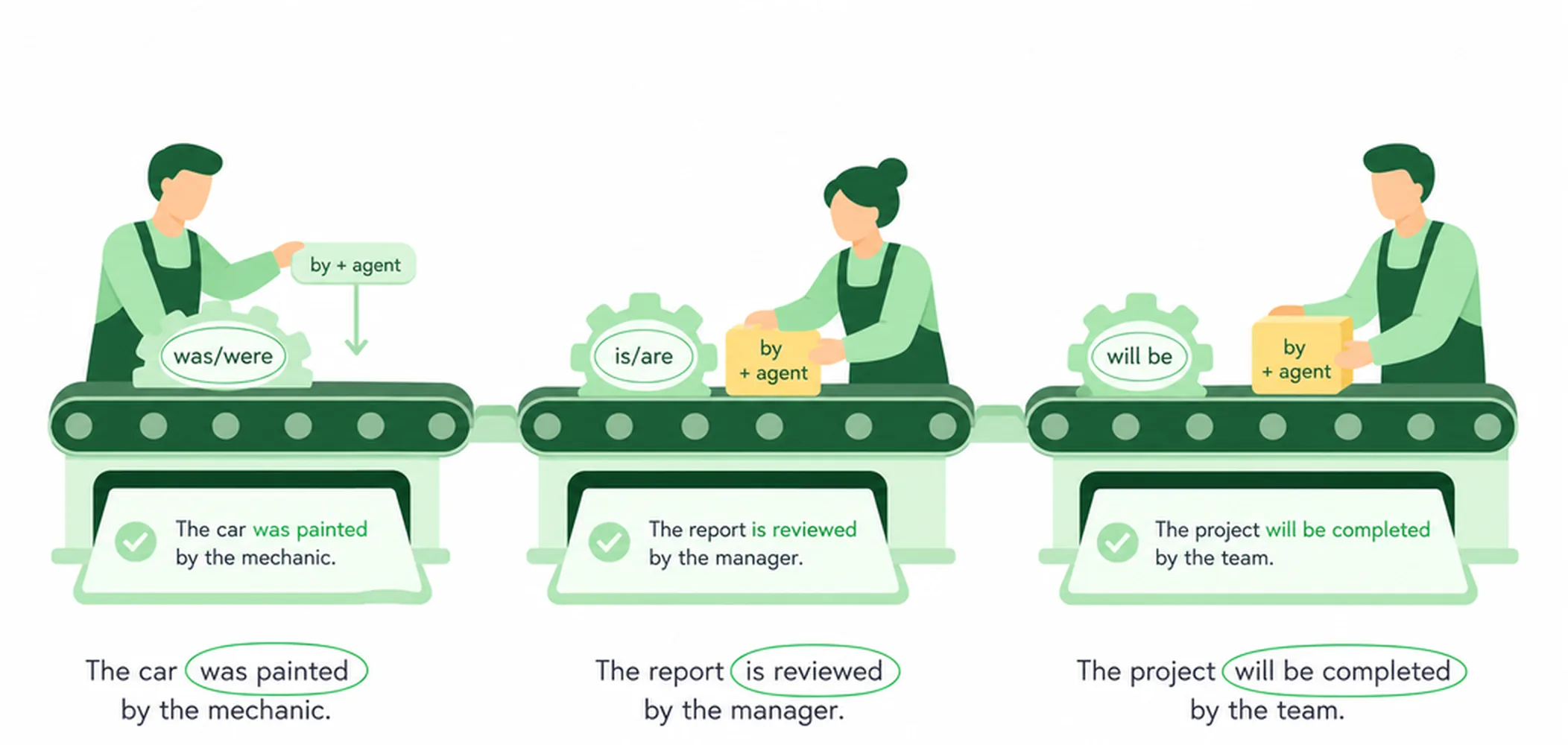
Introduction to Passive Voice Formation
The passive voice shifts focus from who does the action (the agent) to what receives the action (the object). To form the passive voice, we use the auxiliary verb 'be' in the appropriate tense, followed by the past participle of the main verb. This structure works across all English tenses—present simple, past simple, present perfect, future, and more. Understanding passive formation helps you write more sophisticated English and communicate ideas more flexibly.
Passive Voice Forms Across All Tenses
| Passive Voice — Present Simple (am/is/are + past participle) | |||
|---|---|---|---|
| Pronoun | Positive | Negative | Question |
| I | I am invited | I am not invited | Am I invited? |
| you | you are invited | you are not invited | Are you invited? |
| he/she/it | he/she/it is invited | he/she/it is not invited | Is he/she/it invited? |
| we | we are invited | we are not invited | Are we invited? |
| you (plural) | you are invited | you are not invited | Are you invited? |
| they | they are invited | they are not invited | Are they invited? |
| Passive Voice — Past Simple (was/were + past participle) | |||
|---|---|---|---|
| Pronoun | Positive | Negative | Question |
| I | I was invited | I was not invited | Was I invited? |
| you | you were invited | you were not invited | Were you invited? |
| he/she/it | he/she/it was invited | he/she/it was not invited | Was he/she/it invited? |
| we | we were invited | we were not invited | Were we invited? |
| you (plural) | you were invited | you were not invited | Were you invited? |
| they | they were invited | they were not invited | Were they invited? |
| Passive Voice — Present Continuous (am/is/are + being + past participle) | |||
|---|---|---|---|
| Pronoun | Positive | Negative | Question |
| I | I am being invited | I am not being invited | Am I being invited? |
| you | you are being invited | you are not being invited | Are you being invited? |
| he/she/it | he/she/it is being invited | he/she/it is not being invited | Is he/she/it being invited? |
| we | we are being invited | we are not being invited | Are we being invited? |
| you (plural) | you are being invited | you are not being invited | Are you being invited? |
| they | they are being invited | they are not being invited | Are they being invited? |
| Passive Voice — Past Continuous (was/were + being + past participle) | |||
|---|---|---|---|
| Pronoun | Positive | Negative | Question |
| I | I was being invited | I was not being invited | Was I being invited? |
| you | you were being invited | you were not being invited | Were you being invited? |
| he/she/it | he/she/it was being invited | he/she/it was not being invited | Was he/she/it being invited? |
| we | we were being invited | we were not being invited | Were we being invited? |
| you (plural) | you were being invited | you were not being invited | Were you being invited? |
| they | they were being invited | they were not being invited | Were they being invited? |
| Passive Voice — Present Perfect (have/has + been + past participle) | |||
|---|---|---|---|
| Pronoun | Positive | Negative | Question |
| I | I have been invited | I have not been invited | Have I been invited? |
| you | you have been invited | you have not been invited | Have you been invited? |
| he/she/it | he/she/it has been invited | he/she/it has not been invited | Has he/she/it been invited? |
| we | we have been invited | we have not been invited | Have we been invited? |
| you (plural) | you have been invited | you have not been invited | Have you been invited? |
| they | they have been invited | they have not been invited | Have they been invited? |
| Passive Voice — Past Perfect (had + been + past participle) | |||
|---|---|---|---|
| Pronoun | Positive | Negative | Question |
| I | I had been invited | I had not been invited | Had I been invited? |
| you | you had been invited | you had not been invited | Had you been invited? |
| he/she/it | he/she/it had been invited | he/she/it had not been invited | Had he/she/it been invited? |
Formula
✔ Positive
Subject
+
+ be (correct tense)
+
+ past participle
+
+ (by agent)
The letter is written by Sarah every Monday.
✖ Negative
Subject
+
+ be (correct tense)
+
+ not
+
+ past participle
The cake was not baked by the chef yesterday.
? Question
Is/Was/Will be
+
+ subject
+
+ past participle
+
+ (by agent)?
Was the package delivered by the courier on time?
Examples

The emails are sent by the marketing team every morning.
Present Simple Passive

The project was completed by the entire department last week.
Past Simple Passive

The report is not finished by the deadline.
Present Simple Negative Passive

Will the new office be opened by next month?
Future Simple Question

The documents have been reviewed by the manager.
Present Perfect Passive

The building had been renovated before the pandemic started.
Past Perfect Passive
When to use it
News & Media
Passive voice is common in news articles where the action is more important than the agent. It sounds formal and objective.
"The suspect was arrested by police officers at dawn."
Business & Formal Writing
Use passive voice in professional reports and emails to sound impersonal and focus on the action or result.
"The proposal has been approved by the board of directors."
Academic & Scientific Writing
Science and research writing often use passive voice to focus on the experiment or result, not the researcher.
"The samples were analyzed using a new laboratory technique."
Signal words
by
is/are
was/were
has been/have been
had been
will be
would be
past participle (-ed, -en)
Common Mistakes
✕
Wrong
The homework is doing by the students.
✓
Correct
The homework is done by the students.
Use the past participle after 'be', not the present participle (-ing form).
✕
Wrong
The meal was eating by the family yesterday.
✓
Correct
The meal was eaten by the family yesterday.
Always use the past participle (eaten), not the gerund or base verb form.
✕
Wrong
Is the concert will be attended by many people?
✓
Correct
Will the concert be attended by many people?
Don't combine 'is' and 'will'—use only one auxiliary verb in the correct tense.
KEY TAKEAWAYS
What to Remember
- The passive voice shifts focus from the agent (who acts) to the object (what receives the action).
- Form the passive with the auxiliary verb 'be' in the correct tense plus the past participle.
- The past participle form of the main verb always stays the same across all tenses.
- Different tenses change the form of 'be' (is, was, will be, has been) not the participle.
- The agent can be omitted entirely in passive sentences when it's unknown or unimportant to mention.