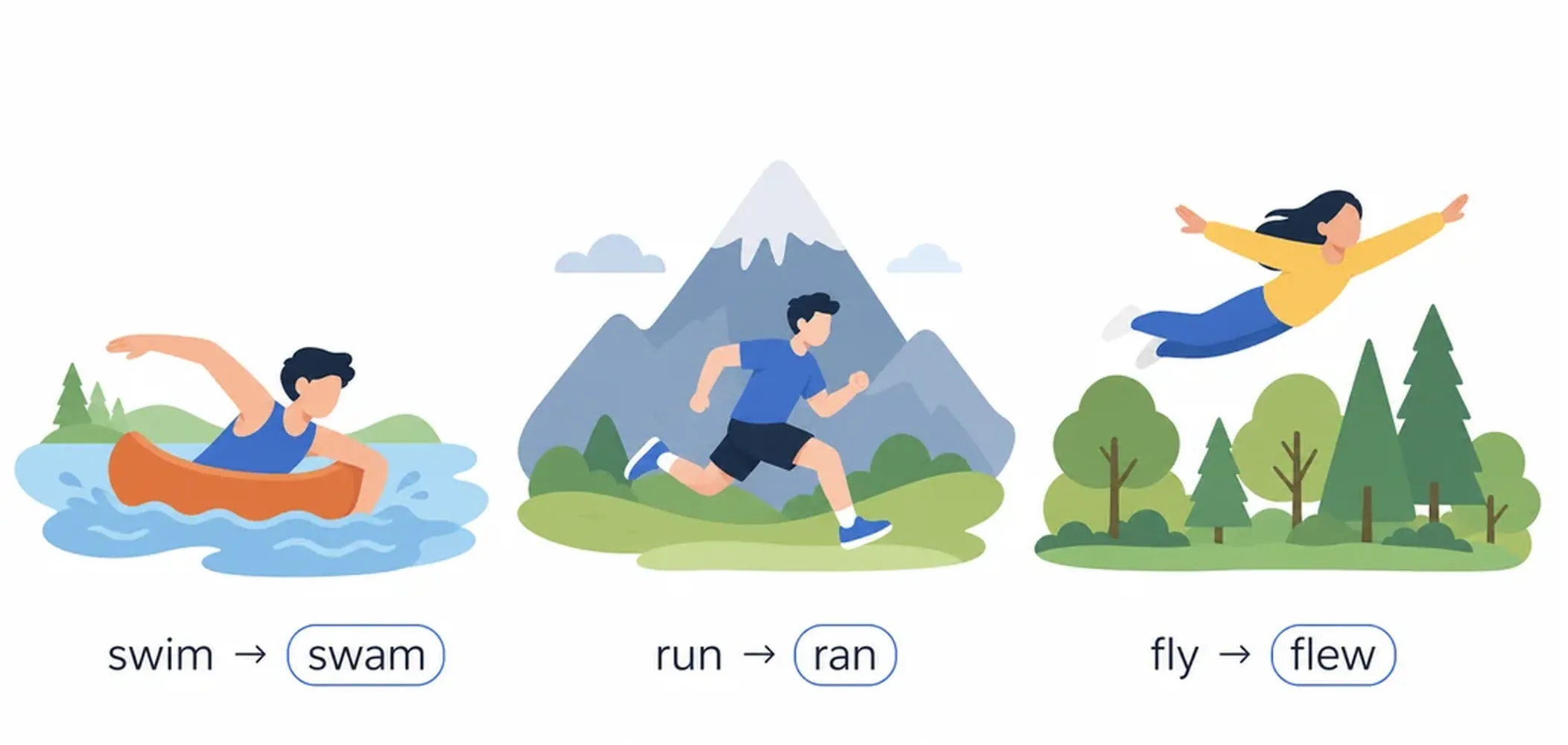
Understand the Pattern of Common Irregular Verbs
Irregular verbs don't follow the normal -ed rule. Instead, they change in their own way. The most common irregular verbs in English are: be, have, do, go, get, make, take, come, see, know, think, and say. Start by learning these 12 verbs first because you use them every day. When you learn irregular verbs, always learn three forms together: the base form (go), the past simple (went), and the past participle (gone).
Group Irregular Verbs by Type
Organize irregular verbs into groups with similar patterns. For example, some verbs change vowels: sing-sang-sung, drink-drank-drunk, swim-swam-swum. Other verbs stay the same in all forms: cut-cut-cut, put-put-put, let-let-let. Some verbs change completely: go-went-gone, be-was/were-been. When you group verbs by pattern, they become easier to remember because you see the connection between them.
Use Memory Techniques and Practice Daily
Create flashcards with the three verb forms and review them for 10-15 minutes each day. Write sentences using each form to practice them in context. You can also make rhymes or funny stories with irregular verbs to help you remember. For example: 'I sing, I sang, I have sung' sounds like a song. The key is to use the verbs regularly in speaking and writing. Read books and listen to English to see irregular verbs in real situations.
Complete List of Common Irregular Verbs by Group
| Pattern Group | Base Form | Past Simple | Past Participle | Memory Tip |
|---|---|---|---|---|
| i → a → u Same past & participle | begin | began | begun | The vowel shifts i → a → u. Think: "sing, sang, sung" as your anchor. |
| drink | drank | drunk | ||
| ring | rang | rung | ||
| sing | sang | sung | ||
| swim | swam | swum | ||
| All 3 Forms Same No change at all | cut | cut | cut | The easiest group — the verb never changes. Just memorise the list. |
| hit | hit | hit | ||
| let | let | let | ||
| put | put | put | ||
| set | set | set | ||
| Past = Participle –ought / –aught | bring | brought | brought | The ending –ought / –aught is shared. Group them together and drill as a set. |
| buy | bought | bought | ||
| catch | caught | caught | ||
| teach | taught | taught | ||
| think | thought | thought | ||
| Base = Participle Different past simple | become | became | become | The participle "returns" to the base form. Focus on memorising only the past simple. |
| come | came | come | ||
| run | ran | run | ||
| beat | beat | beaten | ||
| read | read (red) | read (red) | ||
| –en Participle Participle adds –en | break | broke | broken | The past participle gains –en or –n. Memorise the participle form carefully as it differs from the past simple. |
| choose | chose | chosen | ||
| drive | drove | driven | ||
| give | gave | given | ||
| speak | spoke | spoken |
Examples






What to Remember
- Irregular verbs don't follow the -ed rule; they change in their own unique way.
- Learn the 12 most common irregular verbs first: be, have, do, go, get, make, take, come, see, know, think, say.
- Always learn three forms together: base form, past simple form, and past participle form.
- Group irregular verbs by similar patterns to make them easier to remember and learn.
- Use irregular verbs daily in speaking and writing to practice and remember them better.