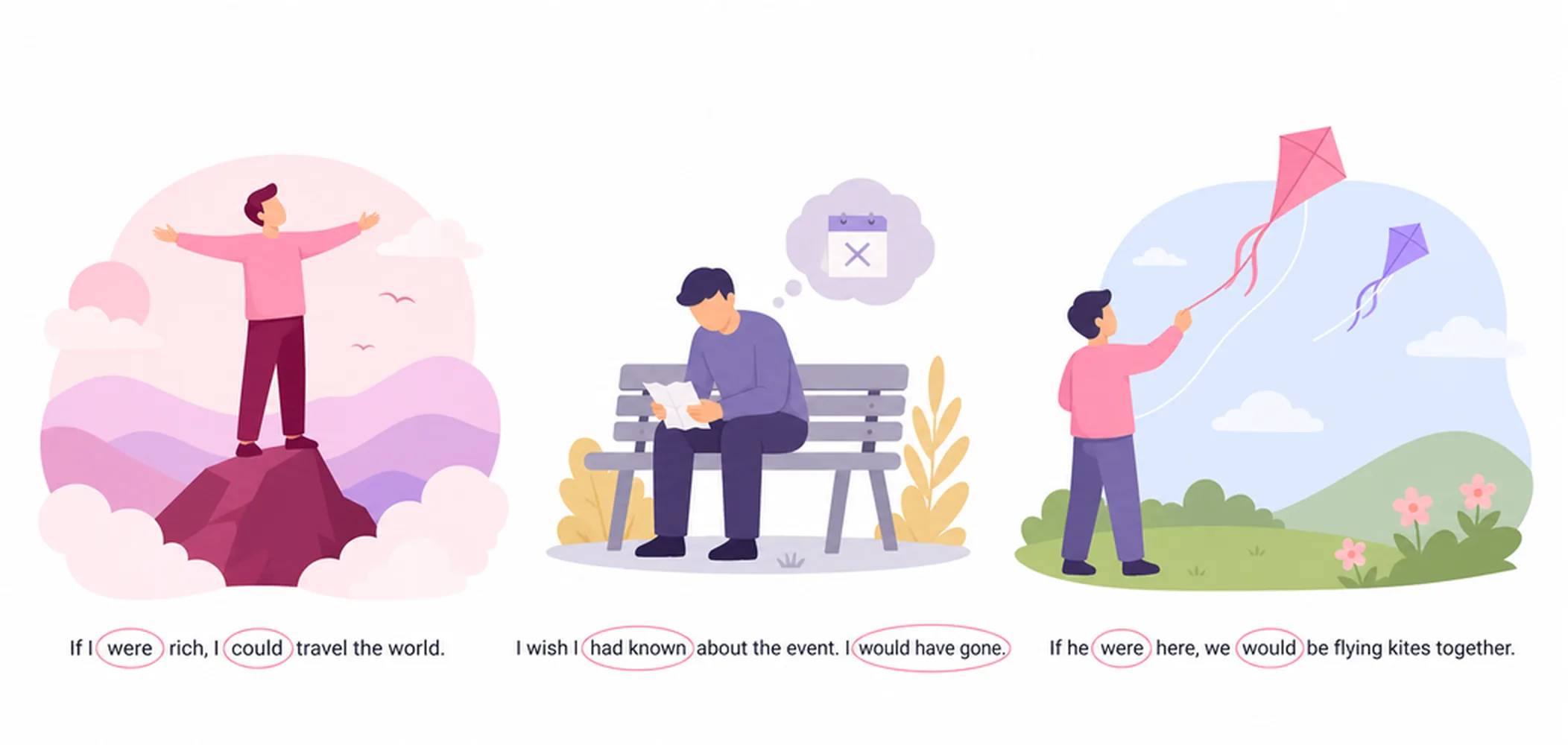
What is the Past Subjunctive?
The past subjunctive is a grammatical mood used to express hypothetical, counterfactual, or contrary-to-fact situations in the past. Unlike the indicative mood, which describes actual events, the subjunctive presents possibilities that did not or will not occur. In modern English, the past subjunctive is relatively rare and primarily appears in formal contexts, literary writing, and specific conditional structures. Its primary function is to distance the speaker from reality, signaling doubt, wishfulness, or theoretical scenarios.
Formation of the Past Subjunctive
The past subjunctive is formed using two primary auxiliary verbs: 'were' and 'had'. For simple past subjunctive contexts, 'were' replaces 'was' for all persons, including first and third person singular (I were, he/she/it were). For past perfect subjunctive expressions—which reference events prior to another past moment—use 'had' plus the past participle (had done, had gone). The key distinction is that 'were' creates a simple counterfactual about a past state, while 'had + past participle' expresses a sequence within the past: 'If I were you, I would study' versus 'If I had studied, I would have passed.'
Primary Uses and Register
The past subjunctive appears most frequently in second conditional statements (If... past subjunctive... would/could/might + infinitive), expressing what would happen if a past or present hypothetical condition were true. It also occurs in formal expressions of necessity, suggestion, or emotion introduced by verbs such as 'demand,' 'suggest,' 'wish,' and 'as if.' In contemporary English, particularly in American usage, the subjunctive is increasingly rare; many speakers use the indicative instead. However, at C1 level, recognizing and producing the subjunctive—especially in formal, academic, or literary contexts—demonstrates sophisticated grammatical control.
Past Subjunctive Conjugation by Person
| Past Subjunctive — Form and Use | ||||
|---|---|---|---|---|
| Pronoun | Verb | Simple Past Subjunctive | Past Perfect Subjunctive | Example in Context |
| Verb: be (irregular) | ||||
| I | be | were | had been | If I were rich… / If I had been there… |
| you (singular) | be | were | had been | If you were here… / If you had been ready… |
| he / she / it | be | were (not was) | had been | If she were a bird… / If it had been true… |
| we | be | were | had been | If we were older… / If we had been warned… |
| you (plural) | be | were | had been | If you were free… / If you had been invited… |
| they | be | were | had been | If they were here… / If they had been told… |
| Verb: know (irregular — knew / known) | ||||
| I | know | knew | had known | I wish I knew the answer. / I wish I had known sooner. |
| you (singular) | know | knew | had known | If you knew him… / If you had known the truth… |
| he / she / it | know | knew | had known | If he knew better… / If she had known earlier… |
| we | know | knew | had known | If we knew the way… / If we had known in time… |
| you (plural) | know | knew | had known | If you knew the rules… / If you had known sooner… |
| they | know | knew | had known | If they knew us… / If they had known the plan… |
| Verb: have (irregular — had / had) | ||||
| I | have | had | had had | I wish I had a car. / I wish I had had more time. |
| you (singular) | have | had | had had | If you had the key… / If you had had a choice… |
| he / she / it | have | had | had had | If he had a map… / If she had had help… |
| we | have | had | had had | If we had the budget… / If we had had more notice… |
| you (plural) | have | had | had had | If you had time… / If you had had a warning… |
| they | have | had | had had | If they had proof… / If they had had evidence… |
| Verb: go (irregular — went / gone) | ||||
| I | go | went | had gone | I wish I went there more. / I wish I had gone earlier. |
| you (singular) | go | went | had gone | If you went alone… / If you had gone with us… |
| he / she / it | go | went | had gone | If he went there… / If she had gone too… |
| we | go | went | had gone | If we went together… / If we had gone on time… |
| you (plural) | go | went | had gone | If you went now… / If you had gone yesterday… |
| they | go | went | had gone | If they went there… / If they had gone earlier… |
Examples






What to Remember
- The past subjunctive expresses hypothetical, counterfactual, or contrary-to-fact situations, distancing speaker from reality.
- In modern English, past subjunctive is rare and appears mainly in formal or literary contexts.
- Use past subjunctive in conditional clauses beginning with "if" to express unrealized past conditions.
- The past subjunctive form often matches the simple past, but "were" replaces "was" universally.
- Common mistake: using indicative mood instead of subjunctive in conditional structures weakens hypothetical meaning.